A Stabbed Cockpit, a Crashing Flight, and the Fraying of Gulf-Israel Ties
The alleged hijacking of a FlyDubai flight to Tel Aviv is not just a security failure — it is a direct assault on the fragile architecture of Gulf-Israel aviation normalization. What happens next could redefine the Abraham Accords.
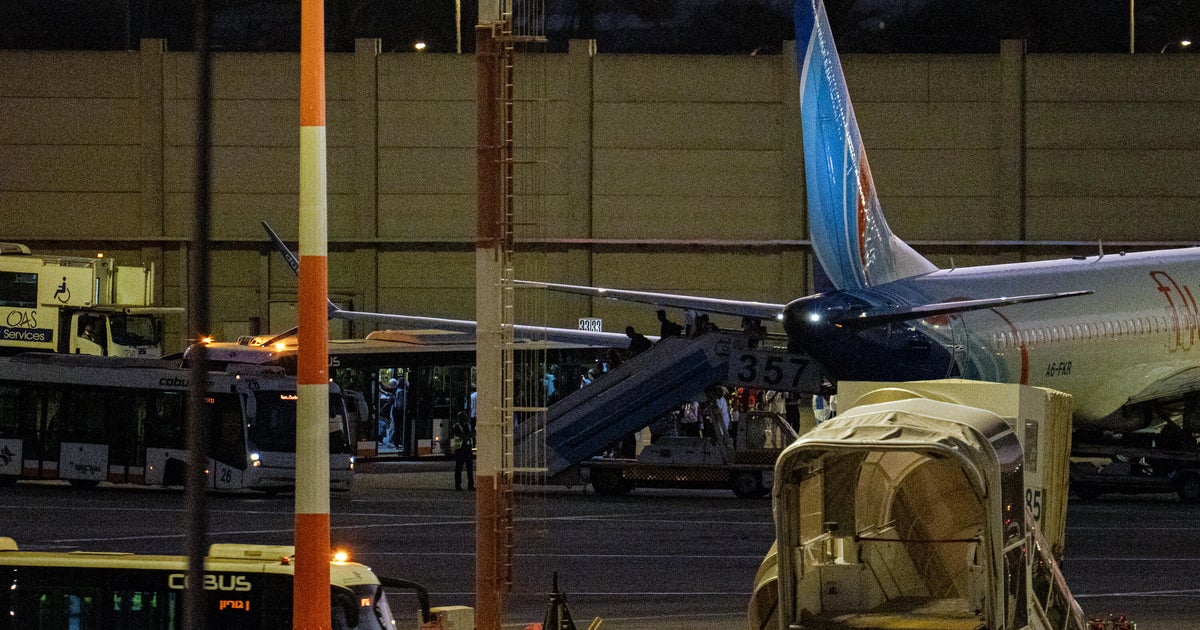
The Cockpit Stands Open, and So Does the Wound
The story passengers told from FlyDubai flight 1073 was visceral and immediate — a Boeing 737 Max 8 shuddering through violent maneuvers, a bloodied co-pilot stumbling from the cockpit, and ordinary people improvising heroics in the dark. Ron Levi described it as worse than free-fall. Adam Polo clutched his six-year-old son and lied to him about the turbulence. Miryam Shira Ohayon said the plane was coming apart over Jordanian airspace.
But the human drama, as harrowing as it is, is only the surface. Beneath it runs a deeper current: the attempted hijacking of a commercial flight between the United Arab Emirates and Israel represents something far more consequential than a single act of violence. It is an assault on the most visible symbol of the Abraham Accords — open skies between nations that still do not formally recognize one another.
Saudi Arabia Played the Role No One Expected
What the Western press is underplaying, almost entirely ignoring, is the Saudi dimension. The plane did not divert to Israel. It landed in Tabuk, Saudi Arabia. And an off-duty Saudi aircrew member aboard — not Emirati or Israeli — took the controls and brought it down safely.
This matters for several reasons. First, it reveals that Saudi Arabia remains an indispensable actor in the region’s security architecture, even as it maintains a publicly stated distance from the Abraham Accords. Riyadh did not close its airspace in protest. It did not refuse the landing. It accepted the emergency, provided the infrastructure, and produced a rescuer.
Second, it complicates the Israeli narrative immediately. Prime Minister Benjamin Netanyahu called the incident an attempted jihadist terror attack and praised passengers for neutralizing the co-pilot. Israel’s Defense Minister Israel Katz echoed the language of jihad. Both frames position the event squarely within the broader Middle East conflict ecosystem. But the aircraft bore a UAE flag, the pilot was Emirati, the diverted landing happened in Saudi territory, and the hero pilot was Saudi. The geography of the incident does not fit a simple axis.
Third, and perhaps most significantly, the Saudi involvement raises an uncomfortable question for UAE-Israel normalization: if the worst possible scenario unfolds on a Dubai-Tel Aviv route and the nearest safe harbor is Saudi airspace, then the very logic of these air corridors depends on Riyadh’s goodwill — a state that has not normalized with Israel and may never choose to.
The Real Target Was the Corridor, Not the Plane
Israeli officials are investigating whether the attack was meant to resemble a September 11-style coordinated strike — or whether the attacker was a lone operator, as one Israeli security official suggested. Neither scenario changes the strategic calculus. Whether planned or improvised, the attack lands where it was always aimed: at the credibility of Gulf-Israel aviation links.
Those links were never secure by design. They depend on a patchwork of security arrangements, shared intelligence, and political stamina that has been tested before and found adequate — until now. The UAE has experienced terror attacks on its soil. Israel has survived them too. But this incident carries a different texture because it occurs inside the normalized infrastructure itself.
The immediate consequence will be friction. FlyDubai flights to Israel may face heightened screening, temporary suspensions, or rerouting. Passengers like Levi noted reluctance to board alternative aircraft. Israeli carrier Eliq may see demand dips. The UAE’s aviation authority will scrutinize cockpit access protocols. Every airline in the region will audit its own procedures.
But the longer-term damage could be structural. Each successful attempt to weaponize a normalized route makes the next one harder to justify politically. In the UAE, where the government has staked considerable soft-power credibility on the Israel relationship, public patience is finite. In Israel, where security trauma runs deep, every incident becomes proof that normalization is a liability.
Who Gains, Who Loses
The primary beneficiary of this incident is not Israel, not the UAE, and not Saudi Arabia. It is the constellation of actors who have long argued that Gulf-Israel normalization is a strategic error — a fragility mask, not a foundation. Hezbollah, Iran, and their regional proxies gain a narrative tool they can deploy with renewed force: the claim that normalizing relations draws the Gulf into Israel’s wars and makes its citizens targets.
Iran, in particular, has a track record of seeking to exploit Gulf-Israel cooperation. The 2021 drone and missile strikes on Abu Dhabi and Dubai during the Israel-Hamas war were, in part, designed to make the costs of normalization viscerally clear to Emirati citizens. This incident achieves the same end with a different method — no drone required, just a co-pilot, a knife, and a plane full of passengers.
For the UAE, the political calculation is delicate. President Sheikh Mohamed bin Zayed Al Nahyan has invested heavily in the Israel relationship as a cornerstone of Gulf security strategy. He cannot afford to appear weak on terror after the fact, but he also cannot afford to let this incident harden Israeli public opinion against further concession — including the stalled normalization talks with Saudi Arabia, which the Trump administration has been pushing as the summit prize of the decade.
For Saudi Arabia, the incident is quietly advantageous. Riyadh has resisted full normalization with Israel for reasons that go beyond rhetoric. The kingdom wants leverage, concessions on Palestine, and a security guarantee before it takes the step. The chaos in Gulf-Israel aviation gives Riyadh exactly the kind of evidence it can point to domestically and internationally when arguing that the时间表 is not yet right.
The Aviation Security Question Is Unavoidable
On the operational side, the incident will force a reckoning in cockpit security that goes well beyond the UAE and Israel. The standard model — reinforced cockpit doors, two-pilot minimum, armed security officers on select flights — is being questioned in real time. A stabbing inside the cockpit by the co-pilot suggests a failure mode that most security frameworks did not fully anticipate: the threat coming from within the flight deck itself, not from the cabin or the terminal.
The International Civil Aviation Organization will likely issue guidance. The UAE’s General Civil Aviation Authority will conduct its own review. But the most immediate pressure falls on Emirates, FlyDubai, and any airline operating the Israel-Gulf route to either tighten cockpit protocols or accept that the new baseline for risk has shifted upward.
What Comes Next
The passengers will recover. Levi said he just wants to go home. Polo held his children through the night. Ohayon spoke on speakerphone from Tel Aviv, still shaken. They will return to normal lives that look different now — slightly more alert, slightly more wary.
The governments will respond with stronger rhetoric and tighter procedures. Netanyahu will announce enhanced security measures. The UAE will do the same. Both will frame the incident as an attack on shared values, not on a single flight path.
But the question that will linger — the one that will not appear in the press releases — is whether the next Dubai-Tel Aviv flight proceeds as usual. If it does, the normalization architecture holds. If it does not, or if flights are sporadic, or if screening requirements become so burdensome that demand collapses, then the real casualty of this incident will not be captured in casualty figures or arrest reports. It will be measured in canceled routes, reduced frequency, and the slow death of a connection that took decades to build.
The cockpit door is closed again. The plane is flying. But the window that opened in 2020 between the Gulf and Israel feels, for the first time, genuinely fragile.