Kaliningrad: The Nuclear Flashpoint Europe Refuses to See
Russia has warned it will use nuclear weapons if NATO isolates Kaliningrad, turning a Cold War relic into Europe's most dangerous standoff. The exclave is already waging hybrid warfare against the Baltics — and Moscow's latest rhetoric exposes how thin the line between coercion and catastrophe really is.
A fortress on Europe’s throat
Kaliningrad is not just a Russian exclave. It is a loaded weapon pointed at the heart of the Baltic states, and Moscow just made that explicit.
In a diplomatic document reported by Reuters, Russia warned NATO that it would deploy the full range of its military capabilities, including nuclear weapons, if alliance members attempted to isolate the territory from mainland Russia. The threat came alongside hints that Russian forces would target decision-making centers in NATO capitals from the opening hours of any conflict.
NATO called it irresponsible rhetoric. Lithuania rejected it outright, saying Russia was trying to fracture transatlantic unity. But dismissing the warning misses what is actually happening in Kaliningrad right now — and what it means for European security.
The hybrid war already under way
Kaliningrad hosts elements of Russia’s Baltic Fleet, but its military value goes far beyond naval power. According to Dr. Azeem Ibrahim of the U.S. Army War College’s Strategic Studies Institute, the exclave has become the front line of a Russian hybrid warfare campaign targeting European infrastructure and civilian society.
Russia is using the territory as a base for signals intelligence, electronic interference, and other non-kinetic operations designed to disrupt communications, power grids, and emergency services before any conventional attack begins. The goal is not to conquer — it is to paralyze.
This is a strategy that NATO was not built to counter. The alliance’s doctrine of collective defense hinges on the idea of a clear armed attack, something to point at and say: this is aggression. But hybrid operations thrive on ambiguity. They exploit gaps in attribution, testing thresholds without crossing them.
Ibrahim argues that NATO needs to treat serious hybrid attacks as equivalent to kinetic strikes — and consider whether they should trigger Article 5. Right now, they do not.
Why the nuclear escalation now?
The timing is significant. Carrie Filipetti of the Vandenberg Coalition pointed to several triggers: NATO jets scrambled over Russian aircraft, U.S. and NATO air drills near Kaliningrad last month, and mounting pressure on Moscow from the war in Ukraine. Each of these developments pushes Russia closer to the brink.
But the deeper explanation is structural. Putin lowered Russia’s formal threshold for nuclear use in 2024, placed nuclear forces on high alert, and resumed nuclear testing. These are not reactive measures. They are the steady calibration of a regime that sees nuclear threats as its primary tool of deterrence.
Filipetti’s assessment is straightforward: Putin believes nuclear threats stop Western support for Ukraine. The question is whether they will work again — or whether repeated deployment blunts their power while raising the risk of miscalculation.
The geography of danger
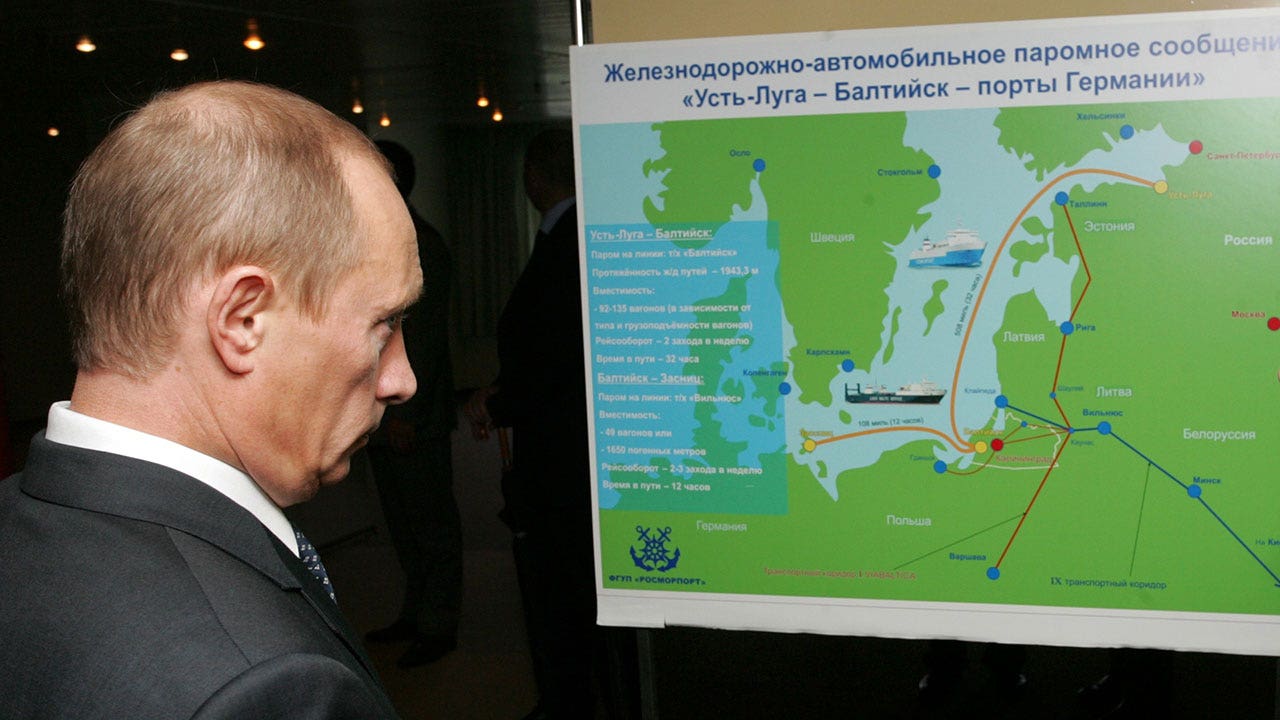
Kaliningrad is squeezed between Poland and Lithuania, both NATO members. The Suwalki Gap — a 104-kilometer stretch of border separating the exclave from Belarus — is the only land corridor connecting the Baltic states to the rest of the alliance. It is the kind of geographic vulnerability that military planners obsess over and civilians rarely notice.
A razor-wire fence now runs along that border. Polish soldiers train near the Lithuanian frontier. Migrant crises, cyberattacks, and jammed satellite signals are everyday features of life in the region. None of this is new. What is new is the nuclear overlay.
Retired Air Force Lt. Gen. Richard Newton drew a parallel to the months before February 2022, when warnings about a Russian invasion were met with skepticism. He said NATO should take Kaliningrad’s nuclear threat seriously for the same reason: because Russia has already been conducting gray-zone coercive actions against NATO territory, and the jump from coercion to escalation is shorter than most policymakers admit.
Who wins, who loses
If Moscow’s threat achieves its aim, the effect is immediate: European governments will hesitate before supporting Ukraine, and NATO’s eastern flank will feel abandoned. That is exactly the outcome Putin wants.
If NATO ignores the threat, it risks normalizing nuclear blackmail as a routine instrument of Russian statecraft — which would make every future crisis more dangerous. The alternative, treating hybrid aggression as a trigger for collective defense, requires a strategic shift that the alliance has so far resisted.
Lithuania and Poland are clearly feeling the pressure. Both are investing in air defense and training with NATO forces. But investment in hardware does not solve the problem of attribution, ambiguity, and the psychological weight of a nuclear weapon waved in the face of a small neighbor.
What comes next
The most consequential element of Russia’s warning is not the threat itself — it is the signal that Moscow now considers Kaliningrad vulnerable enough to justify nuclear language. That assessment is self-fulfilling: the more Russia treats the exclave as a besieged fortress, the more it will militarize, and the more it will provoke the very isolation it fears.
Europe faces a choice between three paths. The first is to continue downplaying hybrid warfare and hoping deterrence works by default. The second is to escalate militarily in the region, accepting higher risks of confrontation. The third — the path most experts are quietly pushing — is to rebuild the alliance’s understanding of what constitutes an attack, close the attribution gap, and make clear that coercion of any kind carries consequences.
None of these options are easy. All of them are urgent.
Kaliningrad is a small piece of land wedged between two NATO countries. But it is also the testing ground for a new kind of war — one fought in the spaces between peace and conflict, where the line between a signal jammer and airstrike is deliberately blurred, and where a nuclear threat is used not to start a war but to avoid losing one.
The question is no longer whether Europe is prepared for that war. It is whether it will admit the war has already begun.