Abu Dhabi Talks Signal a Shifting West, and Europe Is Nervous
The first US-Ukraine-Russia trilateral talks in months raise questions about who is driving the peace process — and whether European security interests are being pushed to the sidelines.
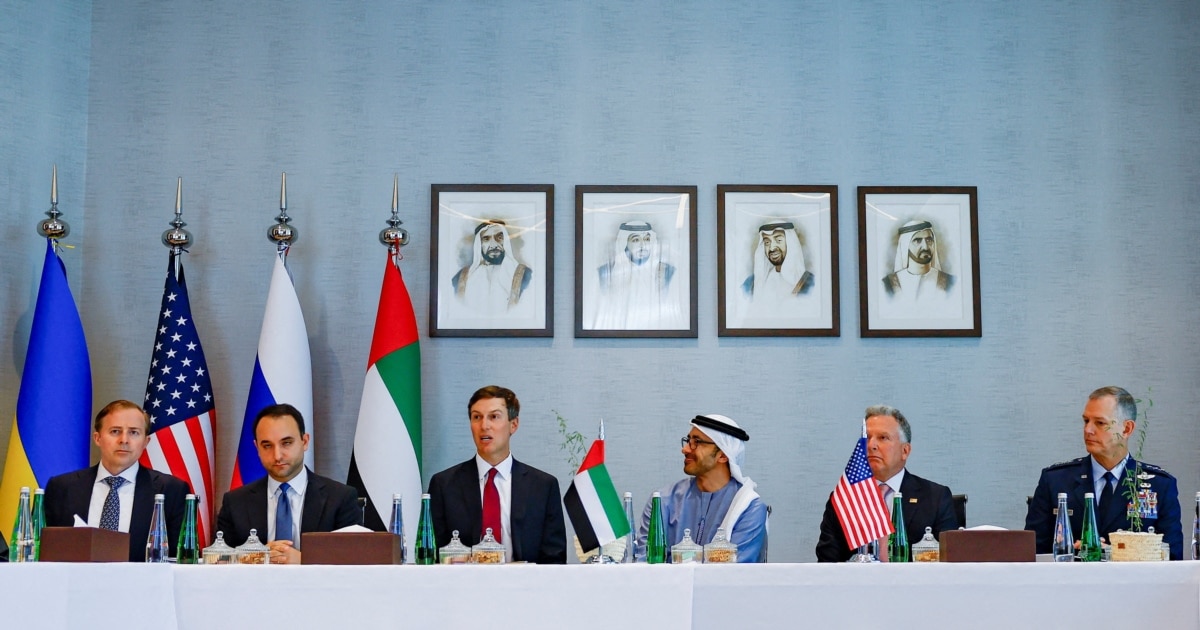
The Room Where It Happened
Four hours. That is how long the US-Ukraine-Russia delegation met in Abu Dhabi on November 10, 2026, since the last round of trilateral peace talks in February. The numbers alone do not tell you much — four hours is not a breakthrough, nor is it a failure. What matters is that the meeting happened at all, and that the format itself marks a shift in who gets to sit at the table when the fate of Europe’s longest war is discussed.
Jared Kushner, President Donald Trump’s son-in-law and special envoy, said Washington holds “several good ideas” to close the remaining gaps. He framed the process as one of learning from what failed previously so that a new architecture could sustain peace for decades, even centuries. That language suggests the US is thinking beyond a temporary ceasefire and toward something structurally different — a postwar order that reconfigures European security arrangements.
That is exactly why European capitals are paying close attention, and why many feel uneasy.
The American Playbook
Kushner posted on X that the crucial part of this process is urging every party to think seriously about the postwar landscape. He specifically noted that both Russia and European countries need to discuss the security regime that will directly affect them. The message is clear: the US wants a comprehensive settlement, not just a pause in fighting.
Behind the scenes, a senior US official told reporters on November 9 that Washington has asked Russia to accept security guarantees for Ukraine modelled on NATO’s mutual defense commitments. This is a significant ask — effectively inviting Russian acceptance of an Article 5-style commitment on Ukrainian territory, which would represent a dramatic change from Moscow’s stated red line against NATO expansion.
A second US official, speaking anonymously on the same call, confirmed that both sides showed “some flexibility” on territorial issues in private discussions. But the caveat was blunt: neither side is likely to agree on borders until the shape of the postwar security system becomes clear. You cannot decide where the line is drawn without first deciding who is allowed to station troops or weapons near it.
Trump told reporters at the White House the day before that US authorities sense a “very strong will” to end the war from both sides. His characterization of both Kyiv and Moscow as “tired of fighting” carries weight not because it reveals new intelligence but because it signals where Washington believes the window of opportunity lies.
Europe’s Anxiety
While the Americans were preparing for Abu Dhabi, their European partners held their own coordination meeting — the US, Ukraine, and European representatives gathering ahead of the trilateral talks. A statement issued afterward was careful in its language. It spoke of “close coordination,” “shared objectives,” and “ongoing consultations.” Those are diplomatic phrases that can mean anything from genuine inclusion to polite notification after the fact.
Secretary of State Marco Rubio acknowledged during the G7 foreign ministers’ meeting in Paris that bringing European countries directly into negotiations would be “ultimately” positive. The qualifier mattered. He added that there is still a long way to go. The implication is straightforward: Europe will eventually get a seat, but not yet.
Rubio also met with Ukrainian Foreign Minister Andrii Sybiha, discussing war termination efforts, Ukraine’s energy resilience, and defence cooperation. The pairing of peace talks with energy infrastructure is telling — Washington understands that any settlement must address the material conditions that keep a state functional after the guns fall silent.
The European concern is not abstract. If the US negotiates a deal that reshapes European security architecture without meaningful input from European governments, the credibility of transatlantic institutions weakens. That is a risk to NATO, to the EU’s strategic autonomy project, and to the unified diplomatic front that has defined Western policy since 2022.
Kyiv’s Dilemma
Ukraine’s chief negotiator, Rustem Umerov, opened the Abu Dhabi session by saying his people are waiting for the war to end. That is an understatement. Ukraine has endured two years of relentless bombardment, infrastructure destruction, and mobilization pressures that strain both its military and its society.
President Volodymyr Zelensky told Denmark’s DR broadcast that the fastest way to end the fighting is a ceasefire along the current front line followed by negotiations. He was direct in his assessment of Vladimir Putin: if the Russian president rejects a ceasefire and insists on a comprehensive plan instead, that means he does not intend to stop the war.
Zelensky’s framing places the onus on Moscow. A ceasefire first, politics later — that is the position Kyiv has held publicly throughout the conflict. It is also the position most vulnerable to manipulation. A ceasefire freezes the front lines, which could lock in territorial gains Russia has spent months trying to consolidate. From Kyiv’s perspective, that risk is acceptable compared to the alternative: continuing a war of attrition that favors the side with more bodies and more munitions.
Russia’s position is diametrically opposed. Foreign Minister Sergey Lavrov told reporters that settling the future European security architecture must come before addressing the war itself. A source close to the Russian delegation told Reuters that ending the Ukraine war is “subordinate to the principal objective” of establishing a new security order across the Eurasian continent.
This sequencing disagreement — ceasefire now versus security architecture first — is the central obstacle. Both sides understand each other’s demands. Neither side trusts the other to follow through.
The Violence Continues
The talks began against a backdrop of active combat. On the night of November 10, Russian forces struck ten Ukrainian regions, damaging five major power substations. At least two people died in Vinnytsia. The Ukrainian Air Force reported 162 Iranian-made drones and one ballistic missile launched overnight; Russia claimed to have intercepted 155 Ukrainian drones.
Serhiy Kozhokyro, Ukraine’s deputy prime minister, confirmed the attacks on substations in Kirovohrad, Vinnytsia, Dnipropetrovsk, and Poltava regions via Telegram. The targeting of energy infrastructure is deliberate — it increases pressure on civilian populations and weakens Ukraine’s capacity to withstand winter.
There is also a humanitarian development worth noting: a source close to the Ukrainian delegation told Ukrainska Pravda that both sides agreed on November 10 to carry out a large-scale prisoner exchange in the near term. It is the kind of concrete, incremental confidence-building measure that signals the talks have moved beyond procedural formalities — even if substantive agreements remain distant.
What Comes Next
The second round of talks is scheduled for November 11. Whether these discussions produce a framework for a ceasefire, a prisoner swap, or simply a schedule for further negotiations remains uncertain. What is clear is that the format itself — Washington mediating directly between Kyiv and Moscow — represents a departure from the coordinated Western diplomacy that characterized the early years of the war.
The question Europe needs to answer is not whether it will be included in future rounds — Rubio’s statements suggest that inclusion is inevitable — but whether it will be included early enough to shape the terms. Security architectures are not negotiated at the margin. They are determined in the first draft.
If the US secures a deal with Russia that limits NATO’s eastern footprint or creates demilitarized zones without European consensus, the alliance faces its most serious credibility challenge since the Cold War. If the deal stalls and the war resumes at full intensity, the human cost escalates and Western patience erodes further. Either outcome tests the cohesion of the transatlantic partnership.
The world is watching Abu Dhabi. Europe should be too.