AI Cheating Scandal Could Shake Asia's Exam Meritocracies
A top scorer on South Korea's national tax accountant exam admitted using AI to cheat — just days before the country's most consequential test of the year. What this reveals about credentialing will reverberate across East Asia.
One Wrong Answer Out of 160
Han, the candidate who topped both rounds of South Korea’s national tax accountant qualification exam this year, scored 397.5 out of 400 points in the April sitting. Only one question was wrong out of 160. In July, he again ranked first.
On Sunday, through his lawyer on YouTube, Han admitted that neither score reflected merit. He carried a microcamera during the exams, photographed each question, transmitted it to a generative AI tool on a smartphone, and recorded the answers. “My passing the exam with the top score was not the result of fair effort,” he said, still wearing a face mask.
Seoul police confirmed they received a written confession. Investigators have been assigned.
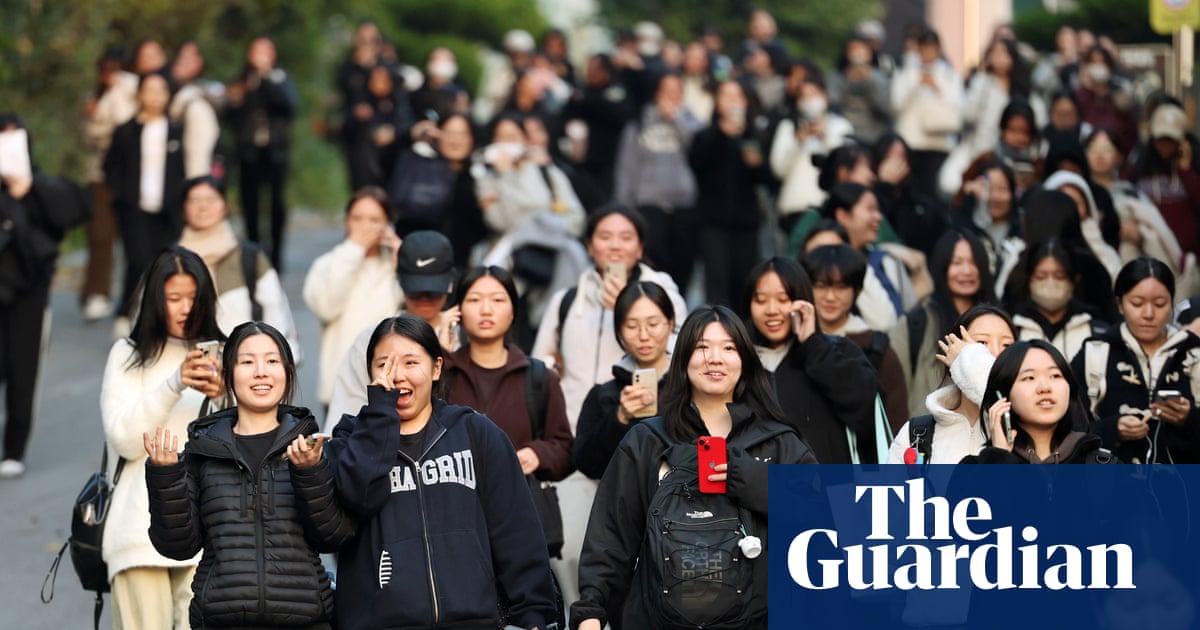
The scandal breaks at a moment when the stakes could hardly be higher. South Korea’s annual college entrance exam — the CSAT, or Suneung — is scheduled for Thursday. For a generation of students, it is the single event that determines university placement, which in turn shapes employment, marriage prospects, and social standing. It is treated with something approaching religious gravity: buildings nearby go silent on test mornings, flights are delayed to avoid disrupting candidates, and entire cities adjust their rhythms around a few hours of multiple-choice questions.
That pressure is precisely why this cheating case matters beyond its own subject. It is a controlled detonation beneath the foundation of an entire system.
The Credential Problem Isn’t New — But the Tools Are
Standardized testing as a meritocratic sorting mechanism has always had an Achilles’ heel: someone with the right resources and willingness can game it. Coaching centers, leaked questions, and hidden earpieces have plagued East Asian exam systems for decades. Japan’s National Civil Service Examination, China’s Gaokao, South Korea’s Suneung — all have faced cheating scandals stretching back generations.
What is different now is not the motive but the capability gap between the cheater and anyone trying to catch them.
Han didn’t need a accomplice inside the testing room or a broker selling past papers. He needed a camera and a subscription. A microcamera — small enough to hide in clothing or glasses — captured the questions. An LLM processed them and returned answers. A smartphone displayed the results. The entire apparatus cost far less than a single month at a hagwon, South Korea’s notorious private tutoring industry that consumes billions of dollars annually.
Detect-AI tools are improving, but they detect patterns in writing output, not real-time visual capture-and-response behavior under proctoring. There is currently no widely deployed technical solution that can reliably verify a test-taker is generating answers without external assistance when the assistance arrives as fast text on a phone screen hidden from view.
Who Wins, Who Loses
The immediate losers are the other candidates — thousands of people who studied for months or years under rules Han effectively rewrote. Their relative rankings shift based on whether scores reflect ability or access to consumer AI tools. If the tax accountant certification carries licensing weight, which it does, then a compromised top score doesn’t just distort a leaderboard; it potentially puts an unqualified person into a role regulating public revenue.
The broader loser is the system itself. South Korea’s entire social contract runs on the premise that these exams are fair sorters of talent. The government tells young people: work hard, study long hours, take the tests, and your position in life will reflect your effort and ability. When the best evidence available that a top score is genuine is simply that it looks implausible, that contract frays.
The presidential office already responded by convening an emergency meeting. Prime Minister Han Seong-sook promised tighter oversight. These are performative gestures aimed at restoring confidence before Thursday’s CSAT — but confidence cannot be legislated into existence when the underlying detection problem remains unsolved.
What Happens Next
Expect two parallel tracks. First, procedural tightening: more thorough searches, stronger signal jamming, bans on certain types of eyewear and wearable technology, possibly even metal-detector-level screening at exam centers. Second, a longer reckoning about what these exams are actually measuring.
The first track is cheap political theater. The second is where the real consequence lies.
Across East Asia, the same pattern repeats. Japan’s civil service exams, China’s Gaokao, South Korea’s college admissions and professional licensing tests — all treat standardized examination as the gold standard of legitimacy. The Chinese Ministry of Education already began experimenting with AI monitoring inGaokao centers last cycle. Korean universities have tightened search protocols annually since previous scandals. Each response addresses the last generation of cheaters without solving the structural problem.
The structural problem is simple: when LLMs can produce competent answers to domain-specific test questions in seconds, any exam format that allows retrieval of information becomes, by definition, a test of whether you can retrieve information rather than whether you know it.
This isn’t unique to East Asia. The same tension is emerging in Western professional certification, bar exams, and graduate admissions. But East Asian societies feel it sharper because their entire class structure depends on the exams being honest. When the exams are honest, inequality is at least defensible. When they aren’t, the whole architecture of social mobility becomes exposed as fiction.
Han’s case may turn out to be less alarming than it appears for the short term. One candidatedid exactly what the system currently fails to prevent. That failure is fixable with better hardware controls and procedural vigilance. The harder question is whether those fixes address the deeper issue: if a 17-year-old student can score near-perfect on a tax accountant qualifying exam using a phone and an AI model, what was the exam supposed to prove in the first place?
South Korea answered that question for nearly a century. The answer may no longer hold.