The AI Chip War Is Losing To The Power Grid
Nvidia GPUs are selling out, but the real bottleneck for AI infrastructure isn't semiconductors — it's electricity. A visit to Equinix's San Jose campus reveals how power density has surged 60x in two decades, reshaping where data centers can be built and who wins the AI infrastructure race.
The Bottleneck You’re Not Hearing About
Everyone is still writing about the GPU shortage. You can buy an Nvidia H100 for whatever price the market decides today — the chips exist, the fab capacity is expanding, and the supply chain has mostly reorganized around American demand. What nobody is talking about is what happens after you plug them in.
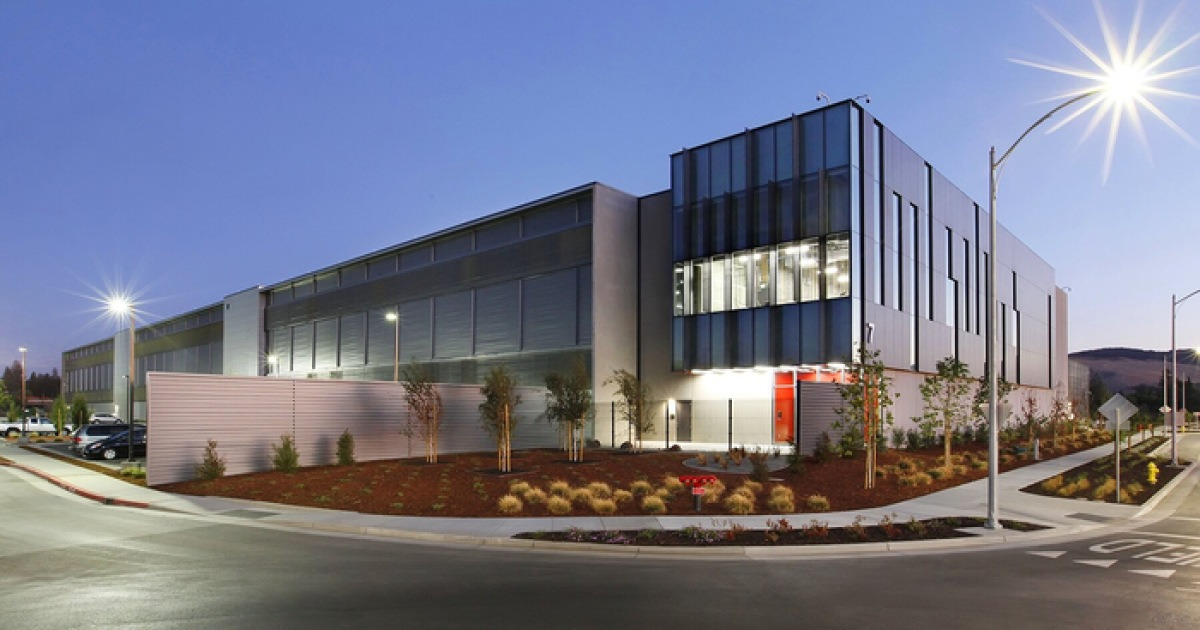
I visited an Equinix data center in San Jose last week, and the person who walked us through the facility kept steering the conversation away from silicon and toward something far less glamorous: the power grid.
“Think of us as a real estate company,” Bill Strong, Equinix’s senior vice president of operations for the Americas, told me. “I’m the landlord providing space, power, and cooling. The tenant brings their own servers. Whether they use Dell or Nvidia doesn’t matter — that’s their problem.”
That framing sounds modest. It should not. In the AI era, the landlord is becoming the more powerful player in the stack.
Sixty Times the Power in One Rack
The numbers are staggering and barely registered in the mainstream press. Twenty years ago, a single server rack in a data center drew roughly 2 kilowatts. By the time Equinix built its SV10 facility in 2018, the design standard had climbed to about 5kW — still comfortable for traditional workloads.
The new Nvidia zone in the latest building, SV11, draws 135kW per rack.
That is not a typo. A single server cabinet now consumes as much electricity as dozens of typical households. The increase over two decades is roughly sixty-fold. And it is not slowing down.
What that means in practice is that the economics of data center construction have been rewritten. You can no longer build a facility and then hope to secure enough power to fill it. The power comes first. The building follows. That sequence reversal is quietly redrawing the map of where AI infrastructure can actually live.
The Heat Problem Is Getting Worse, Not Better
We moved from SV10 to SV11 during the visit, and the difference was immediately apparent. SV10, built for conventional computing, was aggressively air-conditioned — the kind of cold that makes you reach for a jacket. SV11 felt warm. Not hot, but noticeably temperate.
“Thirty years ago, when I started as a network engineer, data centers were so cold you needed a parka and gloves,” Strong said. “Now they’re like this.”
The warmth is a sign of progress in one sense — liquid cooling and direct-chip refrigeration have made it possible to run facilities at higher ambient temperatures. But it is also a sign of how much heat is being generated. The servers inside SV11 are dumping enormous thermal loads into the building, and the only way to remove that heat efficiently is to stop blowing air and start circulating liquid directly to the chips.
Thick pipes ran along the ceiling of the high-density zone, carrying cooled fluid to individual server cabinets. The technology works, but it adds cost, complexity, and another constraint on where these facilities can be built. You need water access. You need space for the cooling infrastructure. You need electrical capacity that most grids simply do not have in sufficient quantity.
The Investment Shift Nobody Is Pricing In
The big tech companies are spending hundreds of billions on AI infrastructure. Most of the public narrative frames that spending as going to chips — Nvidia revenues, TSMC fab expansion, the geopolitics of semiconductor manufacturing. But the Equinix visit made clear that a growing share of that capital is flowing into something far less sexy: transformers, switchgear, cooling systems, and the physical buildings that house them all.
This is not a marginal shift. It is structural. The bottleneck has moved upstream from the fab to the substation.
A data center with 135kW per rack does not just need more electricity. It needs a completely different electrical architecture. The existing grid in many mature markets — the San Francisco Bay Area, parts of Japan, Seoul — was designed for a different era. Upgrading it to serve AI workloads requires years of planning, permitting, and construction. The lead time alone is a competitive advantage for whoever already has contracted capacity.
Who Wins When the Constraint Changes
The implication for the AI infrastructure race is significant and underappreciated. Countries and regions with abundant, cheap, and expandable power — whether from natural gas, nuclear, hydro, or renewable sources — are now the critical bottleneck, not the countries with the best semiconductor design capability.
The United States still leads in chip design. Nvidia, AMD, and Apple’s custom silicon teams remain unrivaled. But if you cannot plug those chips in because your local grid cannot deliver 135kW per rack, the design advantage means nothing in that location.
Ireland, the Netherlands, and parts of Germany are already seeing data center development slow because grid connections are unavailable. Japan and South Korea face similar constraints — high land costs, dense populations, and grids that were never designed for industrial-scale AI workloads. The Korean source material notes that domestic data center operators are acutely aware of this problem, even as the public discourse remains fixated on chip supply.
The companies that will dominate AI infrastructure in the next five years may not be the ones with the best GPUs. They may be the ones that secured power contracts first.
The Landlord Takes Over
Equinix’s model — provide the space, the power, the cooling, and let customers bring their own compute — is actually a rational response to a market where the scarcest resource has shifted. The company now competes on three metrics that matter more than location near a fiber node: how much power you can deliver, how efficiently you can remove the heat, and how quickly you can bring a new building online.
That last point is critical. A new data center in a mature market can take three to five years from ground-breaking to first customer, primarily because of grid interconnection timelines. An Nvidia GPU can be manufactured and shipped in months. The mismatch between these two timelines is what creates the bottleneck.
Strong’s casual comparison of his company to a landlord is deliberately reductive. In reality, Equinix and its peers have become gatekeepers to the AI economy. They control the one resource that no amount of venture capital or government subsidy can instantly create: electrons at scale.
What Comes Next
The chip shortage narrative will persist in financial media because it is easier to track — unit shipments, revenue per wafer, export controls. The power constraint is harder to write about. It involves utility commissions, transmission line permits, environmental impact studies, and the unglamorous physics of transformers.
But the power constraint is the real constraint. And it is getting tighter, not looser. AI training workloads are growing. Model sizes are growing. The power density per rack will continue to climb beyond 135kW. Every step up the curve requires more grid capacity, more cooling infrastructure, and more time.
The countries that can solve that problem — through nuclear, through next-generation grid investment, through regulatory speed — will determine who gets to train the next generation of models. The countries that cannot will watch from the sidelines, even if their designers invented the chips.
The GPU war is real. But the power war is the one that matters.