A 40-Year Math Problem Vanished in 8 Weeks. The Fields Medal May Not Survive
An AI-assisted team solved a decades-old Galois theory problem in two months. If machines are now doing the heavy lifting in pure mathematics, the criteria for humanity's highest math honor may collapse entirely.
The problem had resisted mathematicians for forty years. An AI finished it in eight weeks.
On the preprint server arXiv, a paper appeared last month with something unusual for a work of pure mathematics: the word “miraculously” appeared twice on the first page. The problem it addressed — known inside the field as M23 — had sat at the edge of solvability since the 1980s, a stubborn knot in inverse Galois theory that even the sharpest algebraists could not untie. The solution, reached in what the authors describe as a rapid collaboration between human mathematicians and artificial intelligence, involves a 23rd-degree polynomial whose coefficients contain fourteen-digit numbers in the trillions.
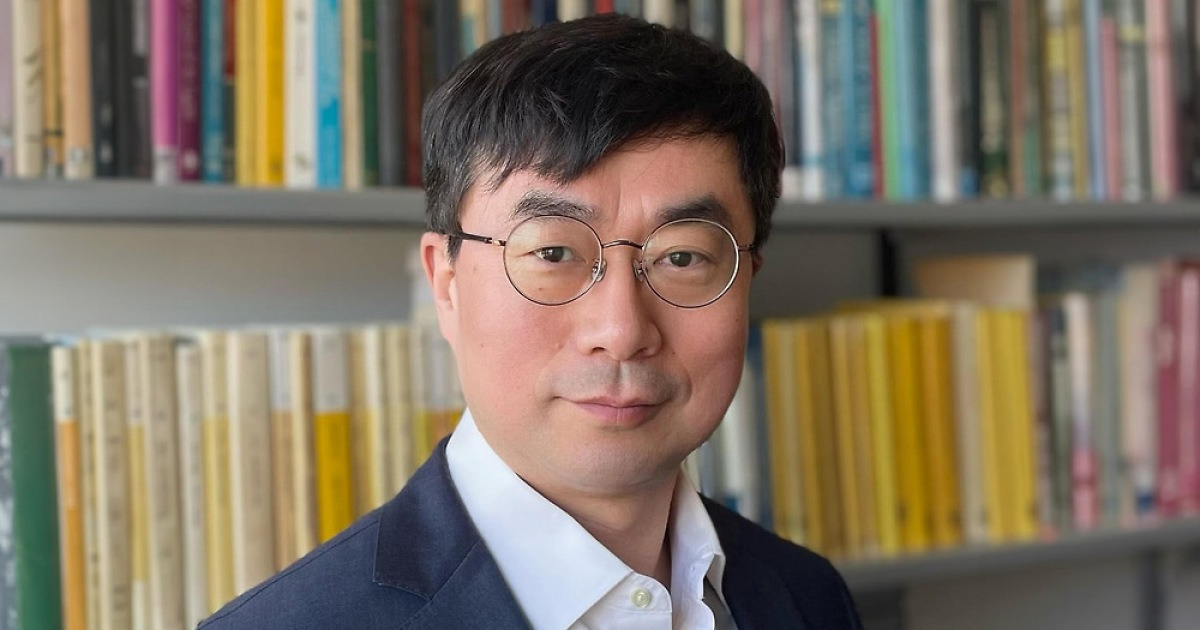
The speed is what makes this unsettling. Not just the two-month timeline — which is absurdly fast for a problem that held out for four decades — but the shape of the collaboration itself. The AI did not hand the answer to a human who then checked it. It produced intermediate results that the human team could not initially understand, only reverse-engineer after the fact. Kyu-Hwan Lee, a professor of mathematics at the University of Connecticut and a scalar at Korea Institute for Advanced Study, compared the experience to AlphaGo’s famous Move 37: a move no professional could justify at the time, which only made sense in retrospect.
“When AI moves ahead, humans have to follow behind and understand,” Lee said in an interview.
That inversion — machine first, human second — is the real break. It has been building quietly across mathematics, physics, and computer science for the past year. But M23 gives it a name, and a deadline.
What M23 actually is
To grasp why this matters, you need a crude picture of what the problem asks. Inverse Galois theory is a branch of algebra that studies symmetry in polynomial equations. The classical version starts with an equation and asks you to find its solutions. The inverse version flips the question: you specify a desired symmetry structure, and you must construct a polynomial that produces exactly that structure.
There are twenty-six known symmetry types in this particular framework. For twenty-five of them, someone eventually built the corresponding polynomial. M23 was the last holdout.
It is not an applied problem. It will not build a bridge or train a model. It is pure mathematics — abstract, formal, and seemingly far removed from anything with immediate consequence. That is precisely why its resolution matters. If a problem at this level of abstraction, requiring this degree of mathematical maturity, can be collapsed in two months with AI assistance, then the boundary between what counts as human insight and what counts as machine computation is already thinner than anyone admitted publicly.
Lee described the AI’s capability level as comparable to a late-stage doctoral student or a postdoctoral researcher. But the comparison is misleading. A graduate student learns to reason; the AI appears to leap. It handled the massive computations, wrote the code, and tested hypothesis candidates — tasks that normally consume weeks of tedious labor. What remained for the humans was steering: deciding which direction to push the calculation, interpreting whether the output was mathematically sound, and reconstructing the logical chain that the AI had somehow found but not explained.
“I don’t think the AI solved it independently,” Lee said. “But without AI, finding the answer this quickly would have been impossible.”
The Fields Medal’s clock is ticking
The most provocative claim in the article is not about M23 at all. It is about the Fields Medal.
Lee cited a view circulating among some mathematicians that 2030 could mark the last Fields Medal ceremony. The reasoning is structural, not conspiratorial. The Medal — awarded every four years to mathematicians under forty for outstanding contributions — rests on a simple assumption: that the work credited to a recipient is recognizably human. Collaboration is fine. Joint papers are common. But at some threshold, the line between a human who directed an AI and an AI that directed a human becomes blurry enough to make the award meaningless.
“If you can’t draw a clear line around how much collaboration with AI went into a result, then the Fields Medal really could disappear,” Lee said.
This is not speculation about the distant future. It is a prediction about a system that measures individual genius. The Fields Medal was designed for an era when a single mind, working over years, could produce a breakthrough. An AI-assisted collaboration that produces the same result in weeks does not just change the tempo. It changes the category of achievement the award was built to recognize.
The International Mathematical Union has not announced any policy shift. But the pressure will arrive before any policy does. Every major competition in mathematics — the Clay Millennium Prizes, the Abel Prize, national prizes — faces the same definitional crisis. The question is not whether AI will produce mathematical results. It already does. The question is whether those results can be fairly attributed.
The next five years will be chaotic
Lee predicted that the mathematical community will experience genuine turmoil over the next five to ten years. Graduate students trained in the traditional apprenticeship model — three years of grinding through problems to build intuition — will find their training schedule obsolete. An AI can solve in three days what used to take a student three years to learn. The justification for the old pacing collapses.
“Two years ago, people still thought mathematics was too far from AI’s reach,” Lee said. “The mood changed in less than six months.”
There is, however, a silver lining that many analysts overlook. Lee argued that as AI grows more powerful, human mathematical judgment becomes more important, not less. The people who can interrogate an AI’s output, detect when it is drifting toward a false conclusion, and redirect it are the ones who will remain indispensable. The skill shifts from calculation to verification, from derivation to diagnosis.
“The person who is not dragged along by AI but can control and monitor it will be someone with strong mathematical ability,” Lee said.
He called this figure homo mathematicus — the mathematical human — the one who retains the capacity to think independently and judge correctly. In a landscape where machines can generate plausible-looking proofs at speed, the ability to tell whether a result is true and understood becomes the rarest skill of all.
Why this reaches beyond mathematics
The M23 result is being discussed inside arXiv comments and conference chats. But its implications extend well past pure math. Any field that trains professionals through gradual problem mastery — physics, theoretical computer science, even parts of philosophy — faces the same structural disruption. The graduate student model assumes that difficulty compounds slowly, that you earn competence by spending time on hard things. AI short-circuits that assumption entirely.
The deeper implication is epistemological. Mathematics has always claimed a special status because its truths are certain and verifiable. But if verification itself requires a human to chase an AI’s lead, the traditional hierarchy — human discovers, machine verifies — inverts. The machine discovers. The human verifies. And sometimes, as the Move 37 analogy shows, the human verifies too late to claim ownership of the insight.
Lee’s orchestra metaphor captures the ambiguity: you cannot easily divide the conductor’s contribution from the musicians’. But metaphors do not resolve policy. Someone will have to decide, eventually, what counts as a human achievement in a world where AI can produce results faster than any individual could learn to judge them.
The last time mathematics faced a tool this disruptive, it was the invention of the computer itself — and that took decades to absorb. This time, the adjustment window may be measured in years, not generations. The Fields Medal may not survive it.