AI Designed a Novel Virus That Kills E. Coli. What Comes Next?
Stanford and Arc Institute researchers used generative AI to design new phage viruses from scratch — 16 of them killed E. coli, including strains resistant to existing phage therapy. The dual-use implications are already here.
The Short Version
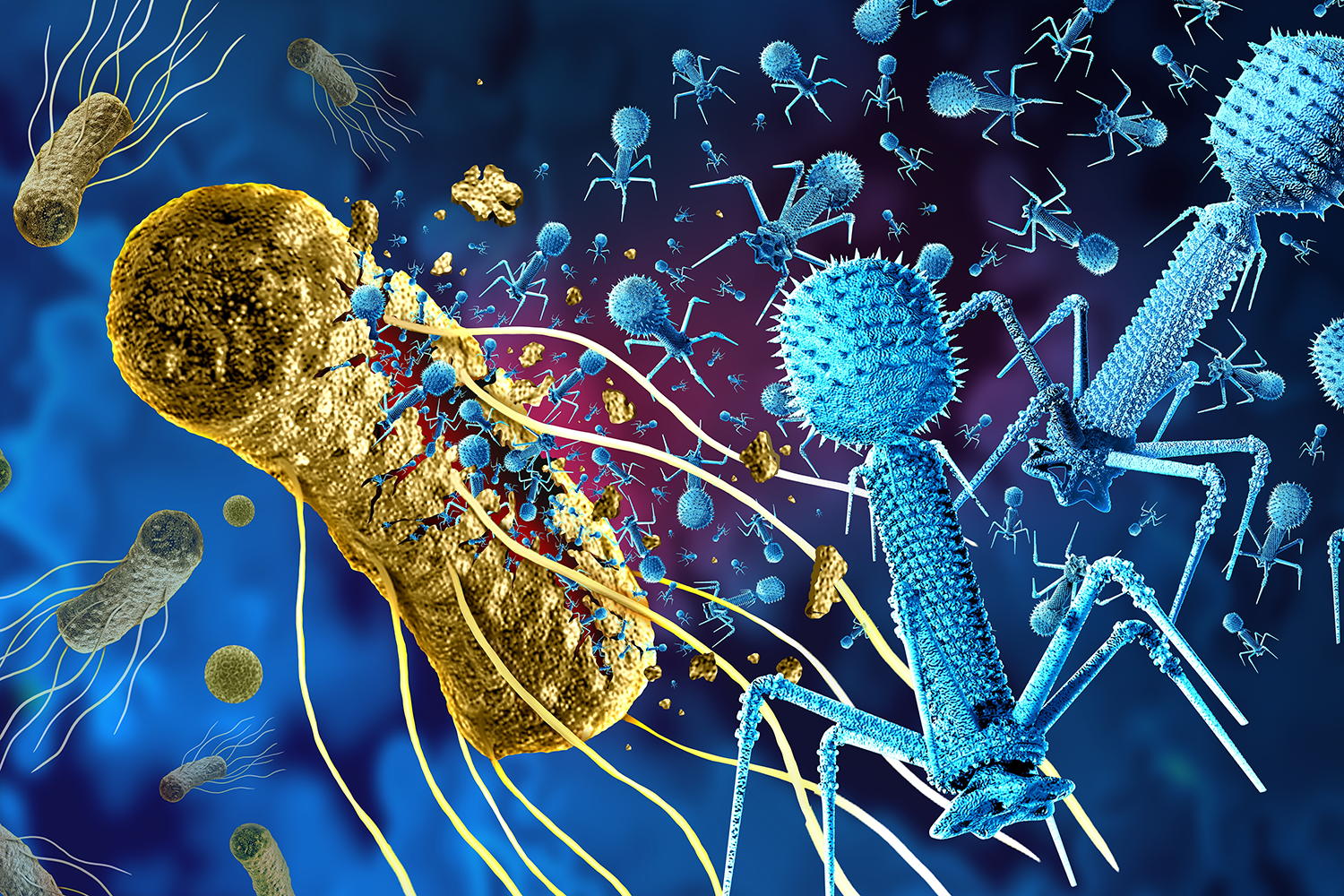
Researchers at Stanford University and the Arc Institute have done something that sits squarely between medical miracle and worst-case scenario: they used a generative AI model trained on DNA sequences to design entirely novel bacteriophages — viruses that kill bacteria — from scratch.
Sixteen of the designs worked. Some performed better than the natural template they were based on. And when combined into a “cocktail” treatment, they overcame bacterial resistance that even naturally collected phages couldn’t break through.
The paper landed in Science on August 6th. The implications didn’t.
How It Works
The system is called Evo 1 and Evo 2 — genome language models built on the same principle as ChatGPT, except instead of learning words and sentences, they learned the grammar of DNA. About 15,000 genomes from the Microviridae family provided the training material. The target was ΦX174, a well-studied phage that infects E. coli with a compact 5,400-base-pair genome and just 11 genes.
The researchers generated roughly 300 candidate designs. Samuel King, the paper’s first author, filtered them through an evaluation pipeline, and 285 were chemically synthesized and tested against live E. coli. Sixteen proved functional — capable of infecting and destroying the bacteria. A few outperformed the original ΦX174.
Here’s the part that should raise eyebrows: when E. coli developed resistance to ΦX174 alone, the 16-member AI-designed cocktail still worked. Natural phage mixes gathered from the environment failed against the same resistant strain.
The AI didn’t just recreate nature. It found solutions nature hadn’t.
Who Wins
If you’re a patient dying from a multidrug-resistant infection — the kind that kills roughly 1.3 million people annually worldwide — this is genuinely exciting news. Antibiotics are running out. Phage therapy has always been promising but unpredictable; you needed to find the right phage in the wild, and bacteria adapted faster than you could collect more.
An AI that can design effective phages on demand, including cocktails that bypass resistance, changes the math entirely. It turns phage therapy from a specialized, hard-to-access treatment into something potentially scalable.
Pharmaceutical companies with phage-therapy pipelines will move faster. Defense contractors will note the dual-use potential immediately.
Who Loses
Everyone who depends on the current biosecurity regime staying relevant.
The same system that designed therapeutic phages can, in principle, be pointed at any pathogen. The authors describe their work with a single sentence that carries far more weight than they may intend: “We can only hope it isn’t misused for biological weapons.”
That’s not a policy recommendation. It’s a prayer.
What makes this especially unsettling is how little it costs to replicate. The Evo models are derived from the same architectural class as GPT. A genome language model doesn’t require exabytes of compute — it requires a dataset of viral sequences (readily available in public databases like GenBank) and enough engineering talent to fine-tune a transformer on DNA. No wet lab. No biosafety level containment. Just code.
The sandbox problem is real: once the weights exist, they cannot be uncreated. Restricting distribution won’t stop replication.
The Oversight Gap
This is where the story gets uncomfortable for Western scientific institutions. Japanese media covered this with relatively measured tone — the Gizmodo Japan piece notes the concern but frames it primarily as a medical breakthrough. American coverage has been similarly subdued, focusing on the therapeutic angle while largely sidestepping the broader governance question.
But the gap is widening fast. We now have a demonstrated pathway from text-based AI design to functional viral particles — not a hypothetical, not a simulation, but 16 confirmed working designs tested against live bacteria. The same generative architecture that writes code, generates images, and composes music can now generate viable viral genomes.
Current oversight frameworks were built for a world where designing a novel pathogen required access to expensive lab equipment, specialized training, and physical materials. None of those barriers apply to a language model that outputs DNA sequences. Regulatory bodies like the CDC and NIH have review guidelines for gain-of-function research, but those guidelines assume a wet-lab context. They don’t address the scenario where the dangerous work happens entirely in silicon.
There is no equivalent to the Nuclear Non-Proliferation Treaty for AI-generated biology. No international inspection regime for genome language models. No export controls on model weights that output viral sequences.
What Happens Next
The most likely trajectory is that this becomes routine. Other groups will build larger genome language models, train them on more diverse pathogen families, and generate increasingly complex designs. Some will aim at clinically relevant targets — Pseudomonas aeruginosa, Mycobacterium tuberculosis, the organisms behind the deaths抗生素是跑不赢的。
But the same trajectory also means the barrier to building something dangerous drops toward zero. You don’t need a lab. You need a GPU and a prompt.
The scientific community should treat this moment with the gravity it deserves — not by halting progress, but by confronting the governance void directly. Funding for AI biosecurity research should scale with funding for AI biology research. Pre-publication review of generative biology papers should consider dual-use implications as a standard criterion, not an afterthought. And international norms need to catch up before the technology outruns them completely.
The 16 phages that killed E. coli are a triumph of computational biology. But they’re also a preview of what comes next — and the preview is far less controlled than the press release suggests.