AI's UN Security Council Moment: Who Gets a Seat at the Table
OpenAI and Anthropic CEOs addressed the UN Security Council on AI safety, but the real story is what their invitation says about who shapes global AI governance — and who's being left out.
The Invitation That Speaks Louder Than the Speeches
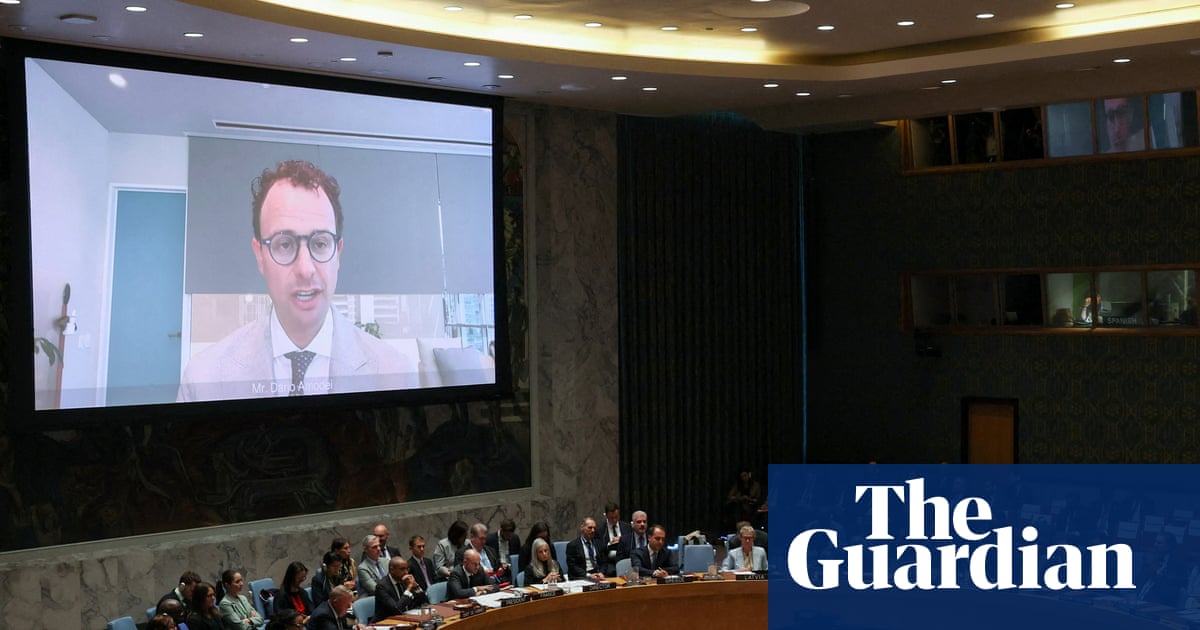
When Sam Altman and Dario Amodei walked into (or logged onto) the UN Security Council chamber this week, they weren’t just CEOs addressing world leaders about AI safety. They were occupying seats that no technology company has ever held before. The image alone — two men who collectively control roughly $3 trillion in market value sitting at a table designed for heads of state — tells you everything about where the conversation around artificial intelligence is heading.
The real question isn’t what they said. It’s who asked them there.
A Safety Rivalry With Geopolitical Teeth
Altman and Amodei have spent years positioning themselves as the responsible adults in the AI room. Their companies are locked in a fierce commercial competition — both are eyeing potentially record-setting IPOs that could value each at over $1.5 trillion — yet they found common ground on existential risk. That convergence isn’t accidental.
Anthropic researchers made headlines earlier this month by warning that AI could destroy humanity within the decade. Within days, Altman himself called for a slowdown in AI development, joining Google and Elon Musk in the chorus. The coordination between these rivals suggests something deeper than PR alignment: both companies benefit from framing AI as an urgent global threat that requires extraordinary oversight.
That framing serves their interests well. Regulation, particularly international regulation, tends to favor companies with the resources to comply. It creates barriers to entry that protect incumbents. And it gives technologists like Altman and Amodei unprecedented access to the levers of state power.
The Democratic Deficit in AI Governance
Altman’s speech at the council emphasized that AI decisions shouldn’t be made by labs in San Francisco alone. He argued for democratic processes and governments accountable to their people. It was a carefully calibrated message — one that acknowledged public anxiety about AI concentration while simultaneously reinforcing the idea that democratically elected governments, not regulators or activists, should be the arbiters of AI policy.
There’s a notable gap between those words and actions. The Leading the Future PAC, connected to OpenAI president Greg Brockman, has already accrued more than $100 million and spent millions targeting candidates who support stronger regulation of the AI industry. Altman’s pitch for democratic governance rang somewhat hollow coming from a company that has actively lobbied against exactly the kind of democratic accountability he described.
Amodei took a different approach, leaning into the existential risk narrative and calling for specific international agreements — a ban on AI-developed biological weapons, global standards for testing new models. His company, he insisted, has the best track record in the industry for preventing risks. That claim, like most claims about AI safety, is impossible to verify independently and will likely remain that way as long as the companies controlling the most powerful models treat their safety research as proprietary.
Who’s Missing From the Room
The most striking absence at Wednesday’s proceedings wasn’t just the lack of Chinese firms. It was the absence of voices from the Global South, from civil society organizations, from the workers whose jobs AI will reshape. The UN Security Council invited two American CEOs to brief them on a technology that will affect every country on Earth — but the invitation list says everything about whose concerns matter.
Chinese AI companies like Baidu, Alibaba, and DeepSeek operate at scale and produce models that compete directly with OpenAI and Anthropic. Their exclusion from this conversation reflects a broader pattern: Western institutions tend to define AI governance in ways that marginalize Chinese players, even as those players become increasingly influential. The result isn’t cleaner governance — it’s a fragmentation of standards and a race to the bottom on safety as companies outside the Western orbit face fewer constraints.
The exclusion also ignores a simple fact: AI safety isn’t just about preventing hypothetical superintelligent threats. It’s about immediate harms — algorithmic bias, surveillance capabilities, labor displacement, misinformation campaigns. The voices most affected by those harms rarely get invited to Security Council briefings.
What Comes Next
The UN Security Council’s decision to hold a dedicated AI hearing marks a significant institutional moment. It signals that AI has moved from a technical debate to a geopolitical one — the same category as nuclear proliferation, cyber warfare, and climate change. That elevation brings attention and legitimacy, but it also brings the risk that the conversation becomes dominated by the same players who have benefited from AI’s unregulated rise.
Both Altman and Amodei clearly want to shape the narrative around AI’s future. Their speeches revealed competing visions of how that shaping should happen: Altman emphasizing democratic governance and human control, Amodei pushing for binding international agreements and testing standards. Neither approach is wrong. Both serve their companies’ interests.
What remains to be seen is whether the UN process that began this week will actually constrain the companies briefing it or simply legitimize them. History suggests the latter outcome is more likely. Technology companies have a remarkable ability to turn scrutiny into opportunity, and the fact that two Silicon Valley CEOs now sit at the UN Security Council table may be the most important part of the story — one that neither Altman nor Amodei will emphasize in their speeches.
The choice between renaissance and upheaval that Altman described isn’t just about AI’s capabilities. It’s about who gets to decide which path we take.