Trump's Alaska LNG Bet Turns South Korea Into America's Gas Customer
A $54 billion South Korean investment in an Alaska natural gas pipeline reshapes Indo-Pacific energy flows — and gives Trump a campaign centerpiece heading into the midterms.
The Pipeline That Changes Everything
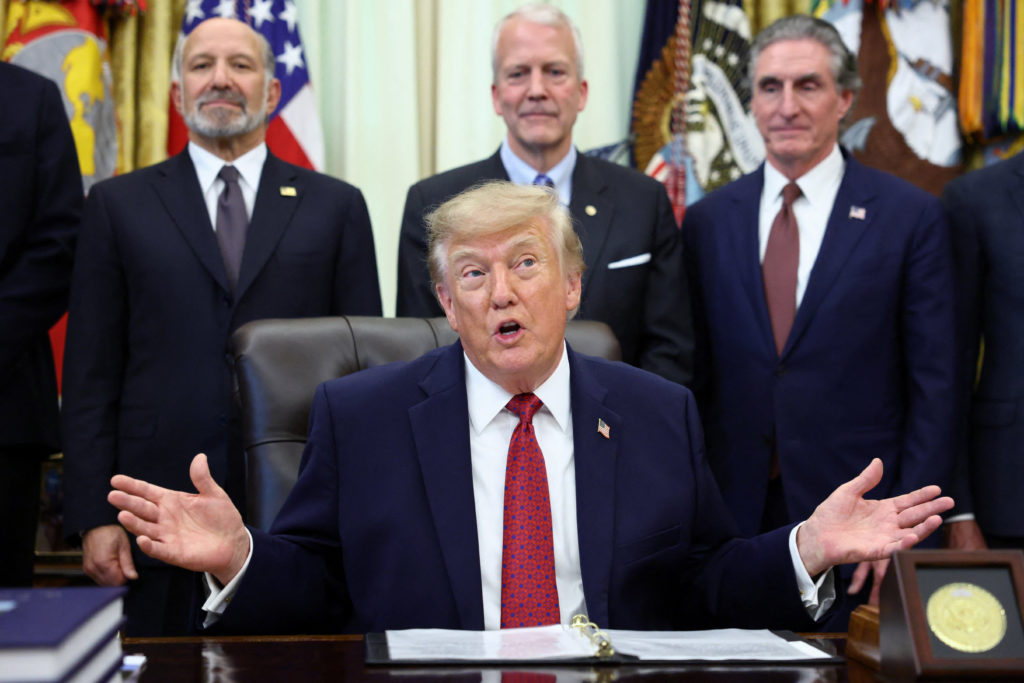
Donald Trump stood in the Oval Office with Senator Dan Sullivan on Wednesday and announced a deal that sounds almost too clean to be real: South Korea investing roughly $54 billion in a natural gas pipeline running 807 miles across Alaska to ship liquefied natural gas across the Pacific. It was the second such announcement in three days, following a $15 billion steel plant in Iowa. The pattern is deliberate. The message is also deliberate — and not entirely about energy.
What is genuinely noteworthy beneath the political staging is how this deal reorients something fundamental: for the first time, a major Asian ally is bankrolling American LNG exports from the Arctic edge of the continent, and it is being paid for partly with money extracted through Trump’s tariff leverage. The 2025 trade agreement with South Korea promised $350 billion in U.S. investments in exchange for reduced tariffs on Korean cars and auto parts. Trump says 15 percent was the final rate — but the investment money itself came from a premium Seoul paid to get there. In effect, Korean automakers are subsidizing Alaskan gas infrastructure.
Who Wins
South Korea wins the most obvious share, at least on paper. The country has spent decades scrambling to secure LNG supply chains, hedging between Australia, Qatar, the United States, and increasingly Russia’s Far East projects. The Russia exposure has become a liability since Moscow’s full-scale invasion of Ukraine. This deal offers a clean alternative: a stable democratic partner, a pipeline-fed supply that sidesteps maritime chokepoints in the South China Sea and the Strait of Malacca, and a direct line from resource to customer. For a country that imports roughly 97 percent of its energy, that equation has strategic weight.
Alaska wins a different way. The North Slope has held vast reserves of natural gas for decades, but without a pipeline to bring it to market, it has been stranded — literally. Flaring, venting, idle resources. A pipeline changes that. It also answers Sullivan’s persistent argument that bringing gas south creates a reliable fuel supply for Alaskans themselves, not just export customers.
Trump wins the scoreboard. The announcement lands inside a compressed political window. Midterm elections are five weeks away. Democrats are targeting Senate seats in Alaska and Iowa — two states Trump has won comfortably in presidential races but where Senate races have tightened. Sullivan faces Democrat Mary Peltola, a former congresswoman. In Iowa, Republican Rep. Ashley Hinson is locked in a close contest. Both events, both states, both carefully staged. Trump acknowledged during a separate event that Republicans could face an uphill climb, then immediately pivoted to saying he had not done a good enough job explaining his record. The pipeline announcement is, in that context, an explanation.
Who Loses
The more interesting loss belongs to the conventional logic of LNG markets. For years, the story was that the United States would become the world’s dominant LNG exporter, shipping Texas and Gulf Coast gas to Europe and Asia. Alaska’s gas, despite being closer to Asian customers than any Gulf Coast terminal, could not overcome the economics of distance and the absence of a pipeline. That bottleneck is now allegedly gone. If the South Korean investment materializes — and that is a large if — Alaska becomes a new node in Asian LNG trade, one that competes directly with existing Gulf Coast shipments and with Australian and Qatari supply.
European buyers, who have come to rely on American LNG since Russia curtailed its pipeline exports, face a less obvious but real risk. Alaskan gas headed for Asia is gas that does not come to Rotterdam. It is not a zero-sum displacement — global LNG is fungible — but it narrows the margin for U.S. export capacity that Europe has grown dependent on.
There is also a quieter loser: the concept of tariff-free trade that the 2025 deal nominally promised. Korean carmakers gain a 15 percent tariff rate, but the investment premium they paid to secure it means the effective cost is higher than a straightforward free-trade agreement would produce. The deal is not protectionism undone; it is protectionism monetized.
What Happens Next
The timeline is the first obstacle. Three years to build the pipeline. Two more before exports begin. That is five years from announcement to the first cargo, assuming financing arrives fully — and the White House offered no details on how much of the $54 billion has been committed versus promised. South Korea’s government has not formally approved the project. None of this is final.
But if it proceeds, the structural implications are significant. The U.S. would gain its first major LNG export pathway from the Arctic, a project that would have been considered economically impossible under previous administrative frameworks. South Korea would anchor a bilateral energy relationship that deepens its strategic alignment with Washington beyond the military sphere. And the model of tariff-backed investment deals — extracting commitments from allies as the price of market access — would move from trade negotiation to energy infrastructure, potentially setting a template for future arrangements.
The political calculus is already visible. Trump’s approval on the economy sits near historic lows, with roughly one-third of Americans approving of his handling and seven in ten describing conditions as poor. Fuel costs are rising, partly tied to the unresolved conflict with Iran. The Alaska announcement is not a response to those pressures; it is a distraction from them. It offers a tangible victory — a pipeline, a number, a foreign leader in the Oval Office — at a moment when the broader economic picture provides few.
The question is whether a pipeline announcement translates into votes. The steel plant in Iowa did not guarantee Hinson’s seat. The Alaska deal will not guarantee Sullivan’s. But both are designed to shift the ground slightly, and in a Senate race where margins are thin, shifting ground matters.
What is certain is that the world now has a second American LNG export corridor aimed at Asia, funded by a Korean alliance, priced through a tariff deal, and timed for an election. That is a lot bundled into one announcement. Whether it holds together beyond the campaign trail remains the story to watch.