Korea Just Opened the Door on Tokenized Stocks — and Asia Is Watching
South Korea's upcoming tokenized-securities framework turns a regulatory first into a regional signal. From February 2027, stocks, bonds and funds can live on blockchain — and the rules are designed to make traditional custody obsolete.
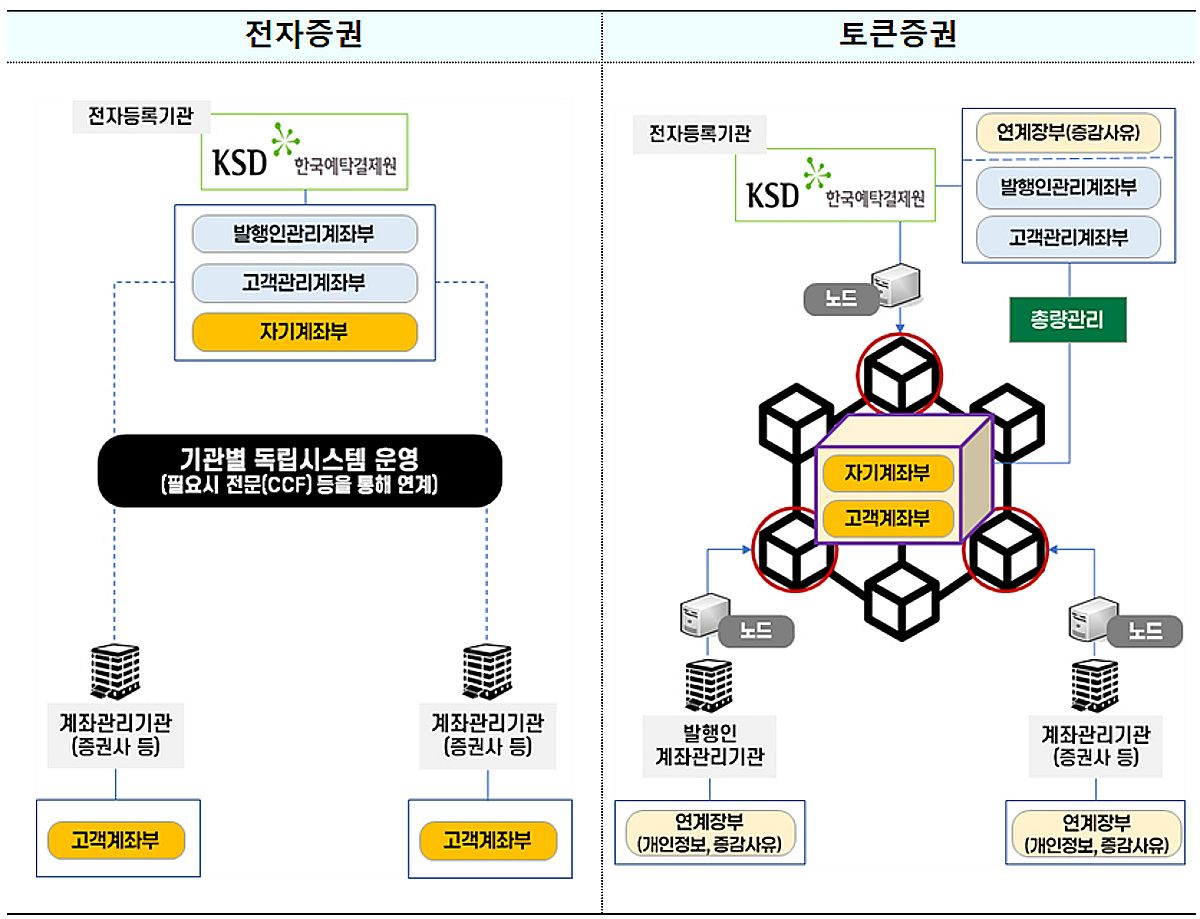
A regulatory first with Asian DNA
South Korea is about to do something no other major Asian market has formally attempted: bring traditional securities — stocks, bonds, funds — onto regulated blockchains, with full capital-market-law oversight and without replicating the loose-custody problems that have plagued crypto-exchange collapses.
The Financial Supervisory Service (FSS) announced on Oct. 1 that it will begin a public comment period for the subordinate legislation implementing tokenized-securities rules. The window runs from Oct. 2 through Nov. 11. If the draft survives the FSS vote, the Legislative Review Council and State Council, the framework takes effect on Feb. 4, 2027.
What makes this genuinely novel — and worth watching from Tokyo and Singapore — is that Korea is not carving out a sandbox or a parallel regime. The securities are real securities. They trade on distributed ledgers, but they are governed by the Capital Market Act, the Electronic Securities Act, and the new Financial Investment Services and Investment Advice Act. The FSS explicitly framed the distinction: tokenized securities are “not virtual assets” — they are securities whose issuance, trading, clearing, settlement and rights-confirmation processes are digitized via blockchain infrastructure.
How the plumbing actually works
The draft regulation defines the architecture in ways that matter.
Distributed-ledger participants must include at least two account-management institutions in addition to the existing electronic registration authority. That dual-depository requirement is a direct response to the single-point-of-failure risk that contributed to several high-profile exchange failures globally. If one institution goes down, the other still holds the record.
Issuers themselves can register as account-management institutions — but only if they meet strict standing requirements: minimum paid-in capital of ₩4 billion (roughly $2.8 million), one dedicated account-management professional, one internal-control specialist, and two IT infrastructure specialists. The bar is high enough to exclude speculative startups while remaining achievable for well-capitalized financial firms and large corporates.
The regulation also bans paying distributed-ledger usage fees directly to the ledger operator — a measure designed to prevent the kind of fee-shading that creates misaligned incentives between infrastructure providers and securities issuers.
For over-the-counter debt securities, the FSS created a new approval category for trading venues. Currently, retail demand for bond trading is modest; the new category anticipates that tokenization will change that dynamic.
The investor cap that tells you everything
Perhaps the most revealing detail in the draft is the investor-protection ceiling: individual investors are capped at ₩100 million in annual net purchases per exchange (total buys minus total sells). That figure is far lower than the unrestricted amounts typical of traditional brokerage accounts, and it signals that the regulator is treating tokenized securities as both an innovation channel and a controlled experiment.
The FSS received industry feedback asking for higher caps and lower capital requirements for issuer-account managers. The agency says it will “broadly absorb” comments during the public period. Whether it actually adjusts those thresholds before Feb. 2027 will be the first real test of how serious this rollout is.
Why Singapore and Tokyo should care
Singapore has already authorized tokenized money-market funds and is piloting cross-border tokenization between the Monetary Authority of Singapore and the Monetary Authority of Hong Kong. But Singapore’s approach has been incremental — asset-class-by-asset-class, with no unified legislative framework comparable to what Korea is now building.
Japan’s Financial Services Agency has authorized tokenized government bonds and corporate bonds on private blockchains through licensed operators, but the regulatory architecture remains more fragmented and operator-specific than Korea’s proposed blanket framework.
China is moving in a different direction entirely — digital yuan and state-controlled token pilots that prioritize surveillance and capital-control enforcement over open-market participation.
Korea’s framework sits somewhere between the Singapore incrementalism and the China state-control model. It is ambitious enough to matter, and open enough to attract foreign capital. That positioning is exactly what institutional desks in both Tokyo and Singapore will be benchmarking against.
Who wins, who loses
Winners: issuers who can reduce settlement timelines from T+2 to near real-time; primary dealers who can access broader retail and institutional capital through lower friction; and custody providers who build multi-party distributed-ledger infrastructure rather than single-party book-entry systems.
Losers: traditional depository models that rely on opaque, siloed settlement layers; and intermediaries whose value was primarily reconciliation rather than actual custodial or clearing services.
The most significant structural shift is the removal of the single-depository bottleneck. Two or more account-management institutions, each with verified capital and staffing requirements, sharing a distributed ledger under capital-market-law oversight — that is a meaningful step away from the legacy custody model that has defined securities settlement for decades.
What happens next
The public comment period closes Nov. 11. The FSS has said it will incorporate industry feedback, but the details of any adjustments — particularly on the ₩100 million investor cap and the ₩4 billion capital requirement — will determine whether this framework is genuinely transformative or merely aspirational.
If the FSS tightens the rules further, expect other Asian markets to pause and observe. If it relaxes them modestly, expect Singapore and Tokyo to accelerate their own frameworks to avoid falling behind.
The global financial press is still treating tokenized securities as a crypto-adjacent story. Korea is proving it is actually a capital-markets story — one that is already being written in Seoul, and one that will shape where the next wave of institutional capital flows across Asia.