Anthropic Claims AI Just Solved the Riemann Hypothesis
An Anthropic researcher says Claude helped prove the Riemann Hypothesis, the deepest open problem in mathematics. Whether the math community accepts it will test everything we think we know about AI-assisted discovery.
Verification Without Understanding
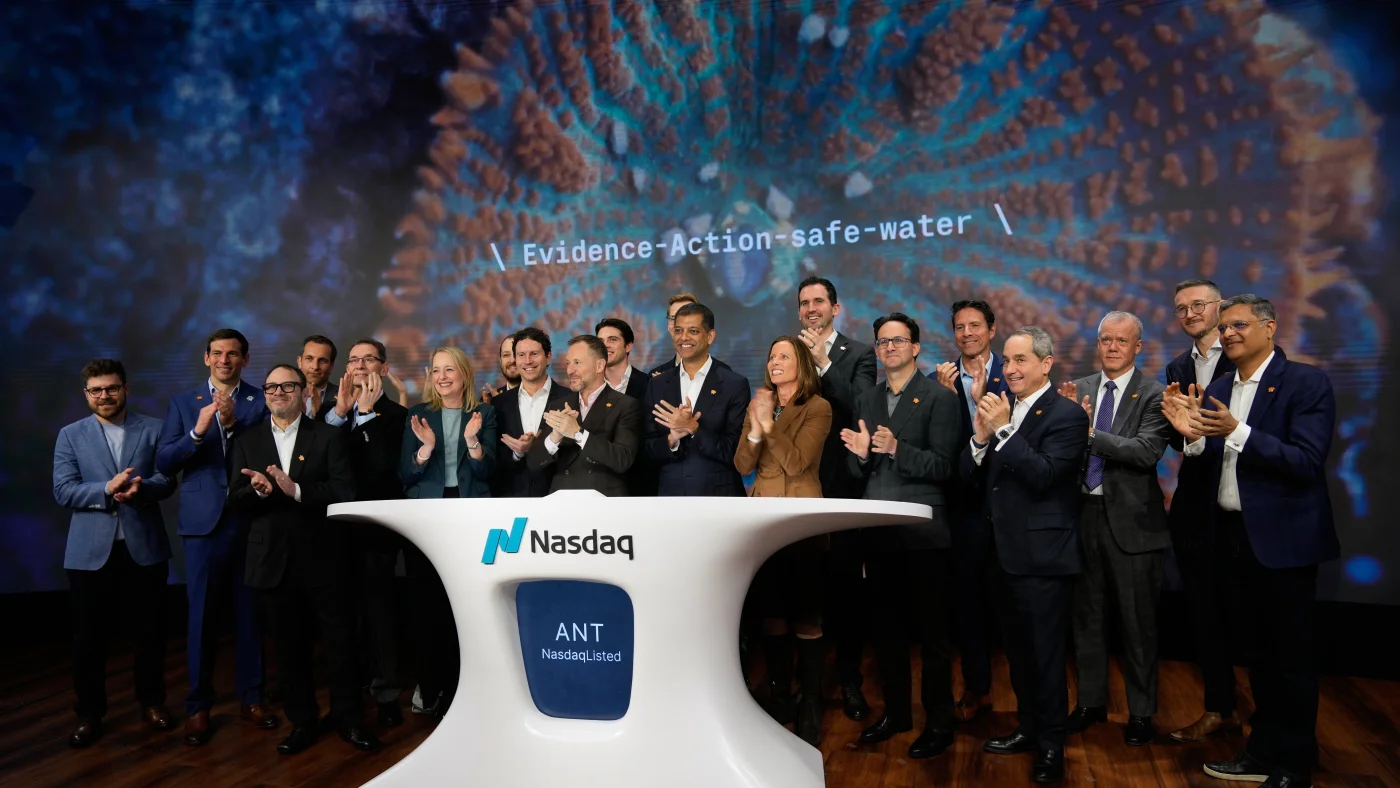
The claim arrived hours after Anthropic rang the Nasdaq bell, cementing itself as the most valuable AI company on Earth at a $1.5 trillion valuation and an $81 billion raise. But buried inside the financial fireworks was a far more disruptive announcement: Levent Alpöge, a member of Anthropic’s technical staff, said he had solved the Riemann Hypothesis with Claude.
Formulated by Bernhard Riemann in 1859, the problem sits at the heart of number theory — a single conjecture about the distribution of prime numbers that has defied every attempt at proof for 167 years. It is one of seven Millennium Prize Problems, each carrying a $1 million reward and a reputation for breaking mathematicians who tackle them. Nobody has solved any of them.
Alpöge did not publish a traditional paper. He posted a four-page explanation on his personal website and released 17 million lines of Lean code — a formal proof-writing language designed so precisely that a theorem passes only if every logical step satisfies the system’s rigorous syntax. If the code compiles without error, the proof is, in a technical sense, complete.
“Claude and I have had a great time together with such breadth in recent months,” Alpöge wrote. “But this time Claude far outpaced me near the finish line. No, Claude flew, and danced, and sparkled near that finish line.”
What those flourishes mean for the mathematics community is the central question — and it may be harder to answer than the problem itself.
Alex Kontorovich, a distinguished professor and department chair of mathematics at Rutgers University, offered the most important framing available from anyone outside the proof itself. He noted that in traditional mathematics, a paper serves as both proof and invitation: you read every line, reconstruct every argument, and arrive at understanding. The 17-million-line Lean output flips that relationship. The machine verifies correctness without requiring comprehension.
“Does that mean I understand it? Not yet,” Kontorovich said. “But the computer is extraordinarily picky, way pickier than I am, and so if you can satisfy the computer, there’s a very, very good chance you’re going to satisfy me too. But I have to do the work.”
That gap between verification and understanding is where this story lives.
Timing Was Not an Accident
Alpöge messaged Anthropic CEO Dario Amodei late Sunday night asking about “my ability to announce.” The company was preparing for its public offering — the largest in history. Alpöge revealed his claim the day after the IPO closed.
There is no evidence of coordination, but the optics are unmistakable. A mathematician at an AI company has just produced a result that would redefine mathematics, and the world first learned about it sitting next to headlines about stock valuations and trading bells. Even if the announcement were purely coincidental, it reads as strategically optimal.
Anthropic declined to comment on Alpöge’s claim through The Associated Press. The Clay Mathematics Institute, which administers the Millennium Prize problems, listed the Riemann Hypothesis as unsolved as of Saturday — the assessment process takes time, according to institute president Martin Bridson. His statement acknowledged the historic weight of the announcement while making clear that the journey from claim to accepted understanding would be long and difficult.
This pattern is familiar in mathematics. Claims of major breakthroughs surface regularly; very few survive peer scrutiny. The difference this time is the machinery behind the claim. The proof does not come wrapped in 40 pages of dense human prose interpreted by other human beings over months. It comes encoded in 17 million lines of formal logic checked by a system that has never been tested at this scale.
The Second Domino Has Fallen
September changed expectations before November deepened them. OpenAI announced that Claude-like technology played a key role in progress on the Navier-Stokes existence and smoothness problem — another Millennium Prize Problem dealing with fluid dynamics. By mid-November, Alpöge declared that the Riemann Hypothesis had fallen next.
“Navier-Stokes fell and now the Riemann Hypothesis,” Kontorovich said. “There’s some kind of out-of-body experience where I’m looking at myself saying, ‘Yes, the Riemann Hypothesis has been solved,’ and kind of trying to comprehend what the hell these words are coming out of my mouth.”
Two different companies. Two different Millennium Prize Problems. Months apart, not weeks. The sequence suggests this is not coincidence — it points toward a shift in what frontier models can do when paired with domain experts who know how to direct them.
Anthropic is not the only player moving in this direction. Other labs, universities, and independent researchers are likely pursuing similar approaches in parallel. But Alpöge’s claim arrived first from an Anthropic-affiliated researcher, and that detail carries competitive weight in a sector where every headline belongs to someone’s valuation narrative.
What It Means If It Holds
Acceptance of the proof would transform several domains simultaneously. In pure mathematics, resolving the Riemann Hypothesis would validate or invalidate entire branches of number theory built on its assumption. Much of analytic number theory currently proceeds conditionally — results are published as “assuming the Riemann Hypothesis is true” — and many would become theorems overnight.
In cryptography, the practical impact would be limited. Modern encryption relies on computational hardness assumptions that are distinct from the truth value of the hypothesis, though some related constructions could face re-examination. The deeper consequence lies elsewhere: the method.
If a human-AI collaboration produced a verified proof of the Riemann Hypothesis — the hardest open problem in mathematics — the implication for science extends far beyond number theory. Every field facing similarly intractable problems gains a new tool. Climate modeling. Protein folding. Quantum many-body systems. Fusion plasma turbulence. Any domain where verification is possible but human comprehension remains bottlenecked becomes theoretically solvable in principle.
That possibility terrifies and exhilarates people who study AI capability. It also raises questions that the mathematics community is only beginning to formulate. When a proof exceeds human-scale readability, who owns the understanding? Who is responsible for errors? How does peer review adapt when the reviewers cannot follow every step themselves?
Alpöge described himself as “presenting the world with a complete argument before having mastered a massive neighbourhood around its mathematics.” That honesty distinguishes this claim from the typical overreach. He knows the proof exists formally but admits he has not internalized the full structure. The burden now shifts to others — mathematicians who must traverse 17 million lines of Lean code and emerge with understanding, not just acceptance.
The Real Test Is months Away
Kontorovich put it plainly: satisfying the computer makes the proof very likely correct. Satisfying a human does not happen automatically.
The path forward involves verification by specialized Lean experts, translation into readable mathematical exposition, and eventually consensus within the number theory community. None of that is fast. Millennium Prize problems persist for centuries because they are difficult, not because people lack access to better tools. This time the tools are unprecedented. The difficulty remains.
Anthropic’s market debut already priced in optimism about AI’s trajectory. The Riemann Hypothesis claim, if confirmed, forces a repricing of something larger than stock value: the timetable for machine-augmented scientific revolution. If Frontier models can assist at the edge of human knowledge consistently rather than occasionally, the pace of discovery across disciplines accelerates in ways that are currently impossible to model accurately.
Whether Alpöge’s work survives scrutiny, the underlying pattern is already visible. Human expertise plus machine precision appears capable of reaching problems that resisted both individually. The race now is not just between companies — it is between mathematics as a human-only discipline and mathematics as a collaborative enterprise spanning biological and artificial intelligence.