Korea's Emergency Stabilization Move Signals Deeper AI Bubble Fears
South Korea's rapid deployment of stock-stabilization measures reveals how tightly coupled Asian equity markets have become with American tech valuations—and why Washington may soon face pressure to rethink semiconductor export policy.
Seoul’s Emergency Signal
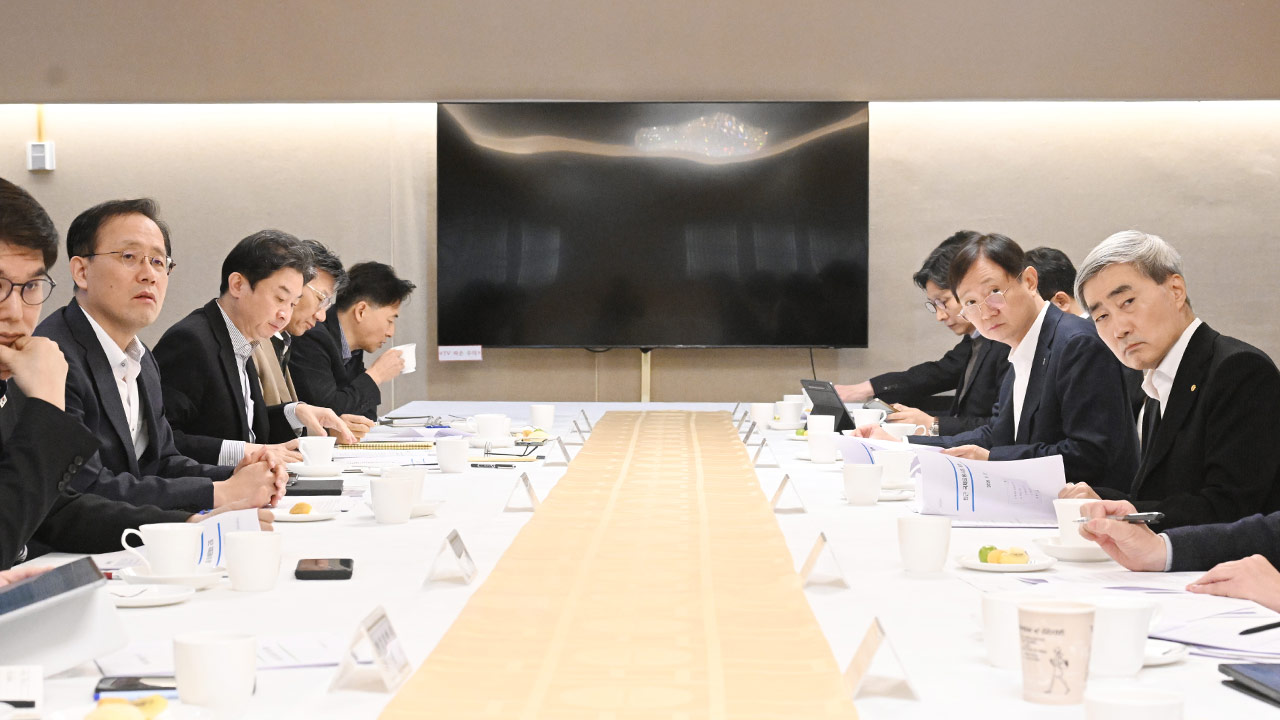
On November 22, 2026, Deputy Prime Minister and Finance Minister Lee Hyung-il called an emergency meeting with the heads of the Bank of Korea, the Financial Services Commission, and the Financial Supervisory Service. Within hours, South Korea announced two concrete measures: activation of the Stock Market Stabilization Fund on standby and a temporary lifting of daily company share-buyback limits from November 24 for a three-month window. The government also committed to intensified surveillance of illegal short selling, credit trading, and compensatory trades.
Nothing about this came as surprise to anyone who watches Korean markets closely. But the timing — forced by panic originating on Wall Street rather than any domestic data miss — tells you something important about where the transmission belts now run.
South Korea’s F4 — Samsung Electronics, SK Hynix, LG Energy Solution, and Hyundai Motor — are no longer just the country’s corporate pillars. They are the region’s most liquid proxy for global AI capex. When US indices sell off on valuation anxiety around AI spending, KODEX and TIGER AI-focused ETFs in Korea react first, often before the New York close finishes. That feedback loop is new, and it is accelerating.
Who Actually Moves First
Let us be specific about the mechanics. Korean domestic investors hold roughly 55 percent of the KOSPI free float. Foreign institutional ownership sits near 38 percent, dominated by Japanese pension funds, European asset managers, and US index trackers. When Wall Street drops, US index rebalancing triggers immediate flow reversals through Korea-based CDS counterparties. Local retail then chases or flees on margin calls tied to credit trading positions — precisely the area the finance ministry flagged for tighter oversight.
That is why the stabilize-fund deployment matters less than the order of operations. Historically, Korea has waited until the KOSPI fell past a meaningful technical support level before pulling the trigger. This time, officials announced readiness preemptively, while the Dow was still finding its footing. That shift from reactive to anticipatory is the signal worth tracking.
The Taiwan Question Nobody Is Raising Loudly Enough
One reader comment on the MBC report asked bluntly whether Korea should be taking policy advice from Taiwan’s economic team instead of relying on decades-old crisis templates. It sounds like frustration. It is also pointing at a structural gap.
Taiwan’s Exchange Corporation has deployed stabilization liquidity since 2019 during repeated flash crashes, coordinating directly with the Central Securities Clearing system. South Korea’s stabilization fund exists on paper and gets activated only after damage occurs. The comparison is not flattering — and it explains why cross-border capital fleeing Korean tech stocks tends to park first in Taiwan Semiconductor Manufacturing Company positions rather than staying put in Seoul.
If Washington notices that pattern, it changes the leverage calculus around export controls. Korea depends on US permission to maintain advanced-node fab expansion; Taiwan holds the irreplaceable capacity node. In a genuine crisis cascade, Korea becomes the secondary front, not the primary one.
What This Means for Washington’s Chip Controls
Here is the non-obvious implication: if Korean equities continue correlling with US AI-name drawdowns, the Biden-era CHIPS framework and subsequent export-restriction orders face a political problem they were not designed to solve.
Every time Seoul raises rates or deploys stabilization funds to cushion a tech-led selloff, it widens the policy trilemma the United States implicitly relies on. America wants friendly nations dependent on its security architecture and friendly enough to follow export rules, but not so financially exposed that a Washington policy decision triggers a G7-crisis headline. South Korea is currently occupying the most dangerous part of that triangle.
Corporate insiders familiar with both sides of the relationship have raised the point quietly: the current restriction regime assumes Korean listed-company stability survives US policy whipsaws. The November 22 emergency meeting proves that assumption no longer holds. If the rally resumes and Korean AI-capex names surge again, expect another round of stabilization talk within months.
The Three-Month Window That Matters
The buyback-limit relaxation, effective November 24, is the most operational detail in the announcement. Listed companies can now submit larger daily repurchase orders for three months. That means Samsung and SK Hynix can formally offset selling pressure from index rebalances without waiting for ad-hoc coordination with regulators. It also means foreign holders of stabilized shares face a different resale landscape: buybacks reduce free-float supply, which raises bid-ask spreads in down days and narrows them in up days.
Markets price that dynamic almost immediately. You will see it in the VIX-KOSSPI correlation spike this week, followed by convergence once the buyback window confirms actual execution volume.
Who Wins, Who Loses
The clear winners are already positioned: large-cap holders who did not need to sell, and overseas institutional desks with intraday liquidity lines into Korean CDS accounts. The losers are retail traders caught on the wrong side of overnight US moves — exactly the demographic that drives compensatory-trade surges and creates the disorder the finance ministry said it would monitor more strictly.
The real loser over the medium term may be the credibility of Korea’s crisis-management narrative. Announcing readiness to intervene is cheaper than delivering results when intervention coincides with a global risk-off event. If the KOSPI tests lower supports again before the stabilization fund actually commits capital, markets will price that gap in next time.
What Comes Next
Watch two things in the next thirty days.
First, whether the Buyback Relief Act generates measurable reduction in daily turnover volatility for the top twenty KOSPI constituents. If volume normalizes, the fund remains a deterrent; if turnover stays erratic, it confirms the fund is purely rhetorical under stress.
Second, and more importantly for readers outside Korea, watch how US semiconductor-export policy responders talk about alliance-market stability in private channels over the coming quarter. There will be no press release. But sources familiar with Commerce Department interagency discussions indicate that Korean equity-correlation risks are now appearing in internal briefings alongside traditional supply-chain constraints — a shift that has not happened before.
South Korea’s emergency stabilization posture is not a self-contained national story. It is a canary in the cage for a wider reordering of how technology-policy and market-stability policy intersect across the Pacific. The KOSPI may recover next week. The structural dependence it revealed will not.