Why Anthropic's Tokyo Surge Signals a US-Japan AI Cold War
Anthropic's Japanese operation has exploded 10x in a year, with Claude usage nearly double the world average. What's driving the shift—and why Japan could become a critical battleground in AI competition and safety.
The Numbers That Matter
Three people opened Anthropic’s Tokyo office in October 2024. A year later, there are more than fifty. Enterprise deployments have multiplied tenfold. And Japan’s per-capita usage of Claude sits at 1.9 times the global average — nearly double what the rest of the world is consuming.
Those numbers are not mundane. They mark the moment when the second-most-powerful American open-weight model company — the one founded partly to solve the alignment problem that plagues every frontier lab — decided that Japan was worth building a real team for.
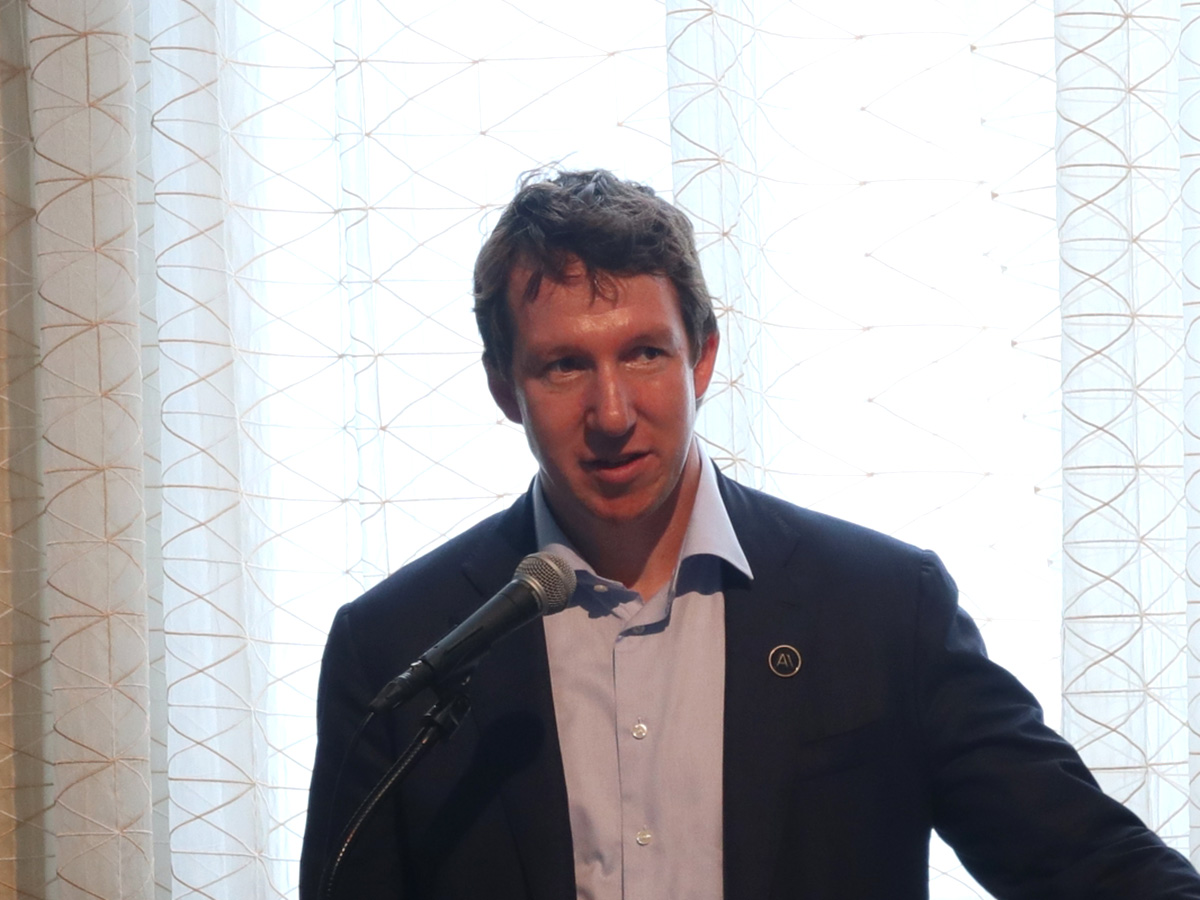
The press conference itself, held by the Tokyo office’s first anniversary, read like a strategic brief disguised as a corporate update. Jack Clark, the co-founder who runs Anthropic’s Public Policy and Public Benefit division, outlined a roadmap that goes well beyond selling Claude seats to Japanese enterprises. He talked about cybersecurity threats, AI-driven recursive self-improvement, and the need for transparency in safety research. He called this period “a major inflection point” for the company — and by extension, for the global AI landscape.
The Silicon Angle
Japan is not the obvious market for an AI assistant company. It is, however, the country that has spent forty years building the hardware supply chain — sensors, actuators, precision components, factory automation — that any serious agent-based AI system will eventually need to touch the physical world.
Anthropic’s move into robotics framing is telling. Its new Model Hardware Standard (MHS), now in preview, is described as a framework for connecting AI to hardware control systems. That is not a consumer software pitch. That is a bet that the next wave of useful AI will move through Japanese factories, not just through Japanese offices.
The partnerships confirm the strategy. NEC, Hitachi, and Fujitsu — the three dominant systems integrators in Japan — are now strategic partners. That means Claude is not just being sold to Japanese enterprises; it is being embedded into the consulting pipelines that advise those enterprises on how to use AI. Hitachi is also cooperating on critical infrastructure defense, which directly addresses the kind of AI-facilitated cyberattacks Clark flagged during the briefing.
The Safety Frame
What makes Clark’s remarks noteworthy is not just the content but the context. He is not a typical product executive giving a keynote. He is one of Anthropic’s original founders, hired specifically to think about existential risk, and his public statements increasingly carry the weight of company doctrine.
His car metaphor for AI development pace is deliberately chosen. The idea is simple: you do not accelerate until you can see what is ahead. Applied to Japan, it means Anthropic is investing now in safety infrastructure — the Japan AI Safety Institute partnership, the Glasswing framework, the public sharing of threat research — precisely because it expects the competitive pressure to intensify.
The Myths reference is particularly stark. Clark stated that when models like Mythos appear, “the problem is already visible” — meaning AI-powered attack tools are no longer theoretical. The current attacks on large enterprises, he suggested, are likely not yet using frontier models directly but are assisted by them. That is a credible middle ground between dismissal and panic, and it signals that Anthropic is preparing its defensive capabilities for a world where AI lowers the barrier to sophisticated cyber operations.
This matters globally. Japan’s data centers and sovereign AI ambitions are creating a parallel infrastructure stack that could either complement or compete with American cloud dominance. NEC, Fujitsu, and Hitachi already have their own domestic models. Clark was careful to say these are not monolithic — different data, different requirements, different trust boundaries — but their existence means Anthropic cannot assume American cloud will simply roll over Japanese enterprise demand.
Who Wins, Who Loses
The winners are clear. Japanese enterprises get early access to one of the most capable frontier models families with a safety-first brand that is increasingly valued by regulators. Japanese robotics and manufacturing firms gain a partner that is explicitly planning for hardware integration. The Japanese government gets a US company willing to share threat research publicly rather than hoarding it.
The losers are less visible but structurally important. American cloud providers that assumed Japan would default to US infrastructure now face a competitor with local hiring, local partnerships, and a safety posture that appeals to Japanese bureaucratic culture. Chinese AI companies lose a potential market segment — Japan’s enterprise sector is unlikely to adopt a model whose creators are openly warning about the geopolitical risks Clark alludes to. Open-weight model competitors who have been moving faster on capability but slower on safety lose credibility as enterprises factor governance into procurement decisions.
What Comes Next
Anthropic has announced plans to expand into manufacturing use cases in its second year. The company is also building an ambassador program that drew thousands of applications in two days — suggesting genuine community interest rather than top-down marketing. The Claude Fable model, positioned above Opus, was released in June, indicating that the best capabilities are arriving in Japan roughly in step with other major markets.
The real question is whether the safety infrastructure — the threat research sharing, the policy frameworks, the MHS robotics standard — can scale fast enough to stay ahead of the attackers Clark described. That is not just an Anthropic problem. It is a question for every country hosting a major AI lab, and Japan’s combination of manufacturing depth, regulatory caution, and technological sophistication makes it one of the most important test cases.
The numbers from the first year — 3 to 50 employees, 10x enterprise growth, 1.9x usage index — are a strong start. The safety work will determine whether it is sustainable.