Before APEC Opens, the Real Summit Takes Shape
China's APEC summit in Shenzhen is quietly becoming a stage for trilateral US-China-Russia talks and a potential Trump-Kim meeting — reshaping Asia's power architecture before any trade agenda gets underway.
The Quiet Rearrangement
The official APEC agenda for Shenzhen is predictable: open markets, AI cooperation, and a joint communique that will be carefully negotiated until every word is defensible. But the real summit is happening in corridors and side rooms, where the three largest powers in the Asia-Pacific are testing whether they can talk to each other directly — without Japan at the table.
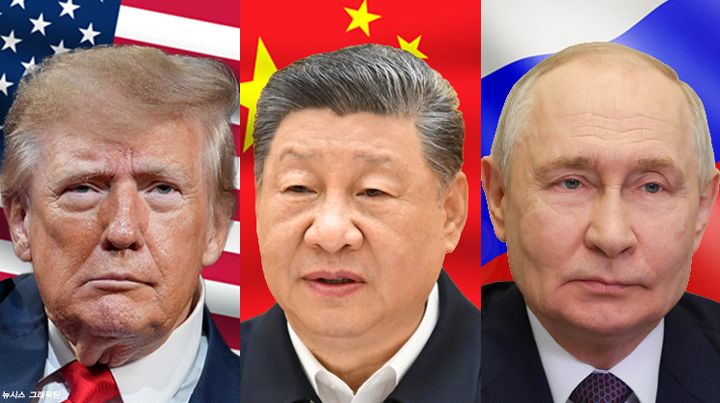
China will host the November 18–19 gathering for only the third time, after Shanghai in 2001 and Beijing in 2014. The theme — building an Asia-Pacific community, promoting common prosperity — sounds like diplomacy-as-usual. The subtext is far more consequential: a trilateral meeting between Donald Trump, Xi Jinping and Vladimir Putin could quietly restructure how Asia’s security architecture operates, independent of traditional alliance frameworks.
The Trilateral Test
Moscow has floated the idea that Xi may push for a three-way encounter, and Trump has publicly confirmed he has discussed nuclear arms control with both Beijing and Moscow. If the meeting materializes, the talking points will be dense: the war in Ukraine, the conflict in Iran, and the Korean Peninsula — all problems the US has historically managed through bilateral alliances with Tokyo and Seoul, not through direct channels with Moscow and Beijing.
The implication is significant. A functional US-China-Russia dialogue at this level would signal that Washington is willing to supplement, and possibly bypass, its alliance network when it comes to great-power crisis management. That is both an opportunity and a threat. It offers a off-ramp from some of the region’s most dangerous flashpoints. It also tells allies like Japan and South Korea that their security is increasingly contingent on direct conversations between capitals that have spent years treating each other as adversaries.
For China, the calculus is different. Hosting APEC provides a legitimate platform for Xi to demonstrate that Beijing can still function as a connector between major powers — a role that gained particular visibility after Russia’s isolation following its invasion of Ukraine. For Putin, attendance would represent a diplomatic victory: the first major gathering where he sits across from both the American and Chinese presidents as an equal, not a pariah.
The Trump-Kim Variable
Perhaps more surprising is the possibility that Trump will meet Kim Jong-un during the same Asia trip. Trump has been openly warm toward Pyongyang, telling reporters on November 12 that a meeting “could happen” and describing his relationship with Kim as good. He has repeatedly urged the North Korean leader to come to the table.
The timing matters. Trump’s approach to North Korea has always been transactional — he has traded summits and rhetoric for concessions that, in practice, have been limited. A face-to-face meeting in Shenzhen would give him a high-profile diplomatic win without requiring significant US concessions. For Kim, it would offer international legitimacy at a moment when North Korea’s economy remains constrained and its dependence on Beijing is growing.
The deeper question is what happens afterward. Trump-Kim summits in the past produced photos and press releases but little structural change. If this meeting yields nothing more than another photo opportunity, it will reinforce the pattern: dramatic encounters, minimal follow-through, and a region left to manage the gaps.
The Allied Anxiety
Japan’s position is the clearest indicator of what is at stake. Prime Minister Sanae Takaichi entered office last year with remarks about potential Japanese military involvement in a Taiwan contingency, sparking immediate friction with Beijing. Trump himself intervened in September, urging Takaichi and Xi to repair their relationship. China has shown no sign of backing down.
If the US is now exploring trilateral dialogue with China and Russia — both of whom have deepened ties with each other and with North Korea — Tokyo faces a strategic dilemma. Its security architecture has been built on the assumption that the US would manage great-power competition in the region through a network of bilateral alliances. That architecture is not disappearing, but it is being supplemented by a parallel track that does not include Japan.
South Korea faces a similar tension, though with a different configuration. President Lee Jae-myung sees the Shenzhen summit as the defining diplomatic event of the second half of 2026. A US-ROK meeting would likely cover the transfer of wartime operational control — a long-debated issue that remains one of the most sensitive items on the alliance agenda. A China-RKC meeting would reinforce the normalization trend that began with Lee’s meeting with Xi in Busan last November and in Beijing this January.
The delicate task for Seoul is that it cannot afford to be the power that is absent from the conversation. It also cannot afford to be perceived as choosing between Washington and Beijing when both are simultaneously the most important and the most unpredictable partners.
What the Declaration Won’t Say
The official output — the Shenzhen Declaration — will emphasize openness, innovation and cooperation. It may include language on AI governance and free trade that all members can sign without contradiction. These are matters where the US and China have overlapping interests, however thin.
But the declaration will not address the trilateral talks. It will not mention the possibility of a Trump-Kim meeting. It will not acknowledge the structural shift underway. That is the nature of multilateral forums in an era of great-power competition: the most important conversations are the ones that never make it onto the agenda.
Who Wins, Who Loses
China wins visibility and legitimacy. It demonstrates that it can host, convene and connect. Russia wins the appearance of reintegration into Asian diplomatic life. The US wins a set of photo opportunities and potentially opens backchannels that could reduce the risk of miscalculation.
Japan and South Korea win conditional reassurance — they are still consulted, still involved, still part of the alliance system. But they lose the ability to claim that the alliance framework is the primary structure through which their security is managed. That narrative is being rewritten in rooms that do not have their seats at the table.
The smaller APEC economies — Vietnam, Thailand, Peru, Chile — win the continued relevance of the forum as a platform for trade dialogue. They lose, again, the guarantee that their interests will figure prominently in the conversations that actually determine the region’s trajectory.
What Comes Next
If the trilateral meeting occurs and produces even modest coordination on Ukraine or Iran, it will mark the beginning of a new phase in Asian security architecture — one where the US no longer treats its alliances as the sole mechanism for managing great-power relations. If it does not occur, the signal will be equally clear: the structural barriers between Washington, Beijing and Moscow remain too high for even a single shared photograph to overcome.
The Trump-Kim meeting, if it happens, will follow the familiar arc: anticipation, announcement, encounter, announcement of further talks, and eventual fade. The question is whether the region will keep treating these encounters as meaningful or start treating them as performance.
APEC in Shenzhen will produce its declarations, its CEO summits, and its carefully worded joint statements. The real story will be what was discussed in the margins — and what those margins reveal about the shape of Asia-Pacific order in the years ahead.