Apple's 2nm iPhone 18 Pro redefines mobile performance and photography
Apple's iPhone 18 Pro marries a 2nm A20 Pro chip with a variable-aperture main camera, signaling a dual push toward raw silicon advantage and optical control in an era dominated by computational photography.
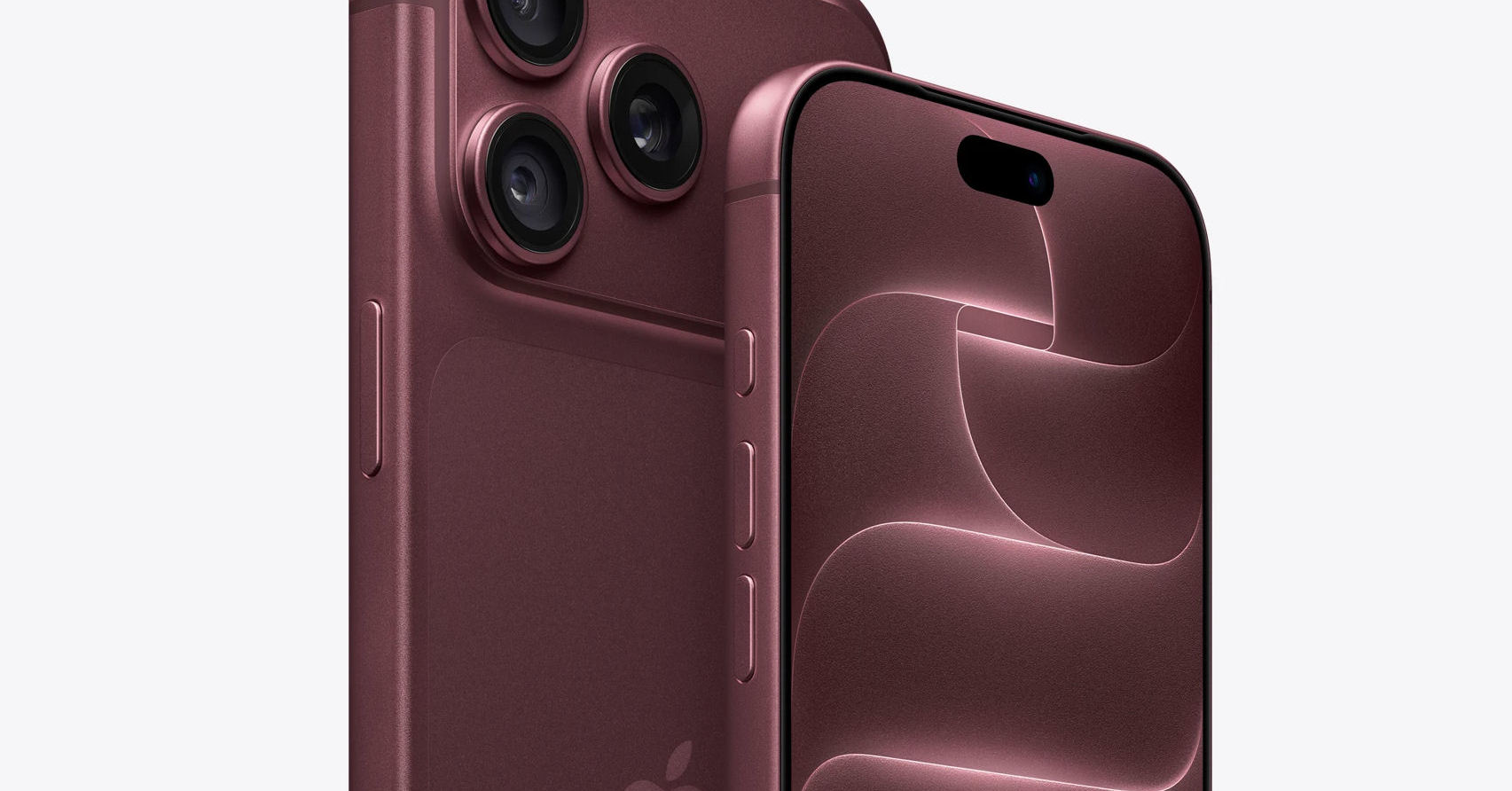
Apple bets on silicon and optics in one move
Apple’s iPhone 18 Pro and iPhone 18 Pro Max are not just iterative upgrades. Two new features—a 2nm A20 Pro chip and a variable‑aperture main camera—point to a deliberate strategy: reclaim control over the two domains where smartphones have drifted into homogeneity. One is the silicon arms race. The other is the photography debate that has been won by computational software, not lens design.
The phone launches in Japan on September 18, with pre‑orders starting that Friday at 9 p.m. Local pricing begins at ¥219,800 for the 256 GB iPhone 18 Pro and ¥239,800 for the Pro Max. A new 2 TB model tops out at ¥429,800. In the United States, the 256 GB models start at $1,199 and $1,299. Four colors—Black, Silver, Glacier, and Burgundy—round out the lineup.
The 2nm leap isn’t just a process node
Apple describes the A20 Pro as built on a 2 nm process. That alone is a headline, but the architecture choices matter more. The chip pairs a 6‑core CPU with a 7‑core GPU, and Apple claims GPU performance can be up to 40 percent higher than the A19 Pro. More striking is the neural engine: two 16‑core units, totaling 32 cores, doubling AI processing capacity over the previous generation.
But the real innovation is in how Apple packs and cools the chip. Instead of traditional stacking, Apple places the memory beside the silicon die and connects the chip directly to a vapor chamber. The new vapor chamber has three times the surface area of the iPhone 17 Pro’s chamber, and sustained performance improves by up to 40 percent compared to its predecessor.
This is a textbook move to tackle the bottleneck that has plagued high‑performance mobile chips: thermal throttling. By shrinking the distance between memory and compute and maximizing heat dissipation, Apple is prioritizing sustained performance over peak burst numbers. In practical terms, that means longer gaming sessions, faster AI model inference, and more consistent camera processing without the thermal slowdown that currently limits Android flagships.
Competitors like Qualcomm and MediaTek are also pursuing 2 nm for their next‑generation Snapdragon and Dimensity chips, but Apple’s lead in vertical integration gives it an edge in co‑optimizing silicon, software, and cooling. The A20 Pro isn’t just a faster chip; it’s a chip designed to stay fast.
The variable aperture is a return to optical roots
The iPhone 18 Pro’s main camera brings something that professional photographers have had for decades: a variable aperture. The 48‑megapixel Fusion sensor uses six laser‑cut polymer blades to adjust the aperture from f/1.48 to f/4 automatically, and users can select one of four manual settings through a new “Pro Control” interface alongside shutter‑speed adjustments.
The reasoning is straightforward. In low light, opening the aperture wider (f/1.48) lets in about 50 percent more light. For group shots or landscapes, stopping down to f/4 increases depth of field, keeping more of the scene in focus. This isn’t computational photography replacing optical control; it’s a hybrid approach that gives photographers a tool that smartphone cameras have largely abandoned in favor of algorithmic bokeh simulation.
The ultra‑wide and telephoto lenses also jump to 48 megapixels. The telephoto uses a tetraprism design for a 100 mm equivalent (4× optical zoom), supporting optical‑quality zoom up to 8×. The front camera is an 18‑megapixel centered‑frame sensor.
Why now? Because the mobile photography market is saturated with computational tricks that often produce inconsistent results. Apple’s move signals a fatigue with purely software‑based solutions and a recognition that optical quality still matters to serious users. Samsung and Google have experimented with variable apertures before, but Apple’s implementation—integrated into a pro‑grade camera app with manual controls—gives it more credibility among enthusiasts.
Provenance features target the AI‑image chaos
Perhaps the most forward‑looking addition is the “Apple Reference Image” system. Each photo taken with the main camera is signed at the sensor level, pixel by pixel. Using Private Cloud Compute, Apple generates a tamper‑proof reference image that records the original capture. The phone also supports the SynthID standard, which embeds invisible watermarks to identify AI‑generated or edited images.
This is a quiet but significant stance. As AI image generation becomes ubiquitous, the line between photographic truth and synthetic content is blurring. Journalists, documentarians, and even casual users face growing uncertainty about whether an image is authentic. Apple isn’t just adding features; it’s trying to set a standard for image provenance in the smartphone era. Whether other manufacturers adopt similar systems remains to be seen, but Apple’s move could pressure the industry toward verification tools.
Connectivity and ecosystem shifts
Beyond the chip and camera, Apple has updated the iPhone 18 Pro’s connectivity stack. The new Apple‑designed C2 modem replaces the C1X, and in some regions it can boost upload speeds by up to 50 percent. An N1 wireless chip supports Wi‑Fi 7 and Bluetooth 6. Physical SIM slots are gone again; the phone is eSIM‑only.
Battery life improves to 36 hours of video playback on the iPhone 18 Pro and 45 hours on the Pro Max. Charging reaches 50 percent in about 15 minutes with a 60 W+ adapter, and 30 minutes via MagSafe or Qi2 wireless charging. The Dynamic Island shrinks and can now display up to three Live Activities simultaneously.
Siri AI arrives first in English (beta), with Japanese and four other languages following in October. iOS 27 introduces “iPhone Handoff,” allowing a single phone number to be used on two iPhones. Currently supported by T‑Mobile in the United States and Deutsche Telekom in Germany, but not by Japanese carriers at launch.
Who wins, who loses?
Apple wins by differentiating in a market where competitors are converging on similar computational‑photography pipelines and chip‑process roadmaps. The variable aperture and provenance features give the iPhone 18 Pro a distinct identity, especially among professional and semi‑professional users. The 2 nm chip and advanced cooling address the performance‑sustainability gap that has hampered rivals.
Competitors will likely respond. Samsung and Google may introduce variable‑aperture cameras in future flagships, and chip makers will accelerate their own 2 nm transitions. But Apple’s vertical integration and timing give it a window of advantage.
Consumers win with more control over photography and better sustained performance, but the premium price remains steep. The 2 TB model, for instance, adds a significant cost for power users. Carriers outside the initial iPhone Handoff partnerships may delay supporting the feature, limiting its immediate usefulness.
What happens next?
The iPhone 18 Pro signals that Apple sees the next battleground as both silicon and optics, not just software. The variable aperture could become a standard for pro‑oriented smartphones within a few years, pushing the industry back toward optical fundamentals while still leveraging computational enhancements. The 2 nm node will likely trickledown to non‑Pro models within 18–24 months.
Image‑provenance tools may evolve into an industry standard, especially as deepfake and AI‑generated content raise stakes for journalism and legal evidence. Apple’s partnership with the SynthID initiative suggests it wants to shape that ecosystem rather than follow it.
In Japan, where the iPhone 18 Pro goes on sale September 18, the device will compete against the latest Samsung Galaxy S25 and Google Pixel 10 lines. Those phones still rely on computational photography and older process nodes, giving Apple a clear hardware edge—at least for now.
The real test will be whether the A20 Pro’s sustained performance and the variable aperture’s versatility can convert spec advantages into user loyalty. Early reviews suggest the camera’s optical flexibility feels tangible, and the chip’s thermal design promises fewer compromises during heavy use. If Apple can deliver on both fronts, the iPhone 18 Pro won’t just be another annual refresh; it will mark a reset in how smartphones balance raw power with creative control.