US Loses 81 Aircraft in Iran War — Now Knocking on Allied Doors
The US lost 81 military aircraft in eight months of operations against Iran, including 45 MQ-9 drones. Washington is now turning to allies for spare parts and MRO capacity, reshaping global defense supply chains.
The Number That Changes Everything
Eighty-one.
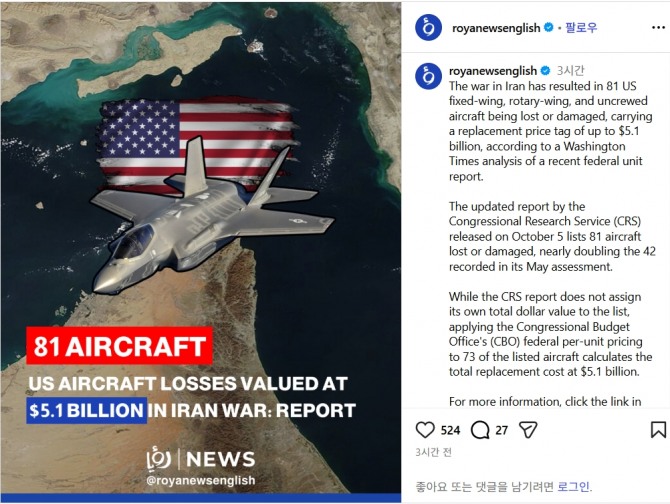
That is how many US military aircraft were damaged or destroyed in eight months of combat operations against Iran — the Epic Fury campaign that began in February 2026. The figure, formally tallied by the Congressional Research Service in a revised October 5 report, doubles a May estimate of 42 aircraft and represents a staggering attrition rate for a force that has long assumed air superiority over the Middle East.
But the headline number tells only part of the story. This is not a simple tally of lost airframes. The CRS compilation includes aircraft shot down in the air, destroyed on the ground by missile strikes, self-demolished to prevent capture, and — critically — planes that sustained damage but returned to service after emergency repairs. The distinction matters. Washington is no longer debating whether it lost aircraft; it is scrambling to keep the remaining fleet flying while trying to restock a supply chain that was already stretched thin before the war began.
The Reaper Problem
The single largest category of loss is the MQ-9 Reaper drone. According to an August 13 statement by a US official cited by the CRS, at least 45 of these aircraft were lost during the conflict — up from a maximum of 30 reported by the Department of Defense inspector general as of June 30.
The Reapers fell victim to a relentless low-altitude attrition campaign. Iranian forces, aware that the MQ-9 operates primarily below 15,000 feet, concentrated surface-to-air fire in the corridors where the drones transited between forward bases in Kuwait and Saudi Arabia and their targets deeper inside Iran. The result was a systematic erosion of what had been considered an irreplaceable intelligence and strike asset.
Here is the complicating factor: the US Air Force had already decided not to buy more Reapers. Chief of Staff Kenneth W. Schultz cited the platform’s vulnerability and the need to pivot to next-generation drones when he withdrew the MQ-9 from the fiscal 2027 budget request. The service operated just 135 MQ-9As as of May, down from 351 in fiscal year 2022 — a drop of more than half in five years.
The irony is sharp. In a war that exposed the Reaper’s strategic value, the service is now watching its fleet shrink further while simultaneously losing airframes to enemy fire. There is no domestic production line waiting to fill the gap. The only option is to repair, retrofit, or — if the budget comes through — resurrect a procurement program that Congress just killed.
What Was Lost Beyond the Drones
The list reads like a catalog of the American Air Force’s most sensitive platforms.
Four MC-130J Commando II special operations transport aircraft were lost in April during a pilot rescue mission for downed F-15E Strike Eagle crews. Two failed to take off due to mechanical issues. The other two were deliberately destroyed on the ground to prevent them from falling into Iranian hands. Four AH-6 Little Bird helicopters suffered the same fate.
Twelve F-15E Strike Eagles appeared on the damage list. Three were shot down in March over Kuwait in a case of friendly fire. Eight returned with minor damage after a September missile attack on a Jordanian base. The rest sustained varying degrees of war damage across the campaign.
The E-3 Sentry early-warning aircraft — a platform so critical that the Air Force operated only 16 before the war — suffered its first irreplaceable loss on March 27. A single missile strike hit the tail section of Sentry 81-0005, parked at Prince Sultan Air Base in Saudi Arabia. Photos published by The War Zone showed the rear fuselage completely burned out. Aerospace Fortress analysis concluded that repair was effectively impossible. The plane was gone.
Five KC-135 Stratotankers were damaged at Saudi bases. One crashed in western Iraq on March 12, killing six crew members; another made an emergency landing at an Israeli airport. The Inspector General had already flagged in a June report that the KC-135 fleet had operated below its own readiness targets for each fiscal year from 2019 through 2025.
And the F-35 — the crown jewel of the Fifth Generation program — appears in the Korean reporting as part of the overall loss count, though the CRS did not publish a specific breakdown by aircraft type. Whether any F-35s were lost to direct enemy action or sustained damage requiring major overhaul remains classified.
The Cost in Dollars and Readiness
The financial toll is climbing faster than the aircraft count. The Congressional Budget Office estimated on September 23 that US Department of Defense operational expenditures had reached approximately $38 billion as of August 1 — up $9 billion from the $29 billion recorded by Acting Inspector General Jules Hurst on May 12.
Replacement costs alone could reach $3.3 billion for destroyed THAAD radar systems and other equipment, according to the CBO’s emergency funding analysis. The total war cost, including ongoing operations, logistics, and munitions replenishment, now exceeds 50 trillion won (approximately $38 billion) and is accelerating.
But money is not the bottleneck. The real constraint is time — and the limited capacity of US domestic maintenance depots to absorb the surge in repair demand while also keeping planes flying over the Middle East.
The Alliance Pivot
This is where the story shifts from tactical loss to strategic realignment. With US home-base maintenance facilities overwhelmed by the volume of aircraft returning from combat, the Pentagon is increasingly turning to allied nations for spare parts, component manufacturing, and maintenance, repair, and overhaul — MRO — services.
South Korea is now at the center of this pivot. Korea Aerospace Industries, the country’s premier aerospace manufacturer, has long served as a key supplier of large aircraft structural components to Boeing and other US defense contractors. According to KAI’s half-year 2026 filing with the Financial Supervisory Service, the aircraft parts division accounted for 28.4% of total revenue — approximately 453.1 billion won out of 1.594 trillion won in total sales.
The implication is significant. If the US needs to accelerate aircraft repairs and potentially restart production lines for platforms like the MQ-9, Korean manufacturers could become indispensable — not just as suppliers of finished parts, but as partners in a restructured global MRO network that spreads maintenance workload across allied industrial bases.
The White House has requested an emergency $87.6 billion security assistance package, but the legislation remains pending in Congress. If Congress approves funding for accelerated procurement of replacement aircraft, the supply chain will tighten and production schedules will accelerate. If the fighting de-escalates and maintenance demand returns to peacetime levels, the pressure on allied suppliers will ease.
What Comes Next
The 81-aircraft tally is a wake-up call that extends well beyond the Middle East. It reveals a force that has been fighting a high-intensity air campaign against a near-peer adversary without adequate industrial reserves, without domestic production capacity to replace losses, and without a clear strategy for sustaining attrition over time.
The MQ-9’s crisis is the most visible symptom, but the underlying condition is systemic. The US lost three-quarters of its Reaper fleet in five years of peacetime drawdown before the war even began. The E-3 fleet was already small enough to be fragile. The KC-135 readiness gap was known and unaddressed. The F-35’s survival in this conflict — however it played out — will be studied relentlessly by every potential adversary.
What makes this moment consequential for allies like South Korea is not just the immediate demand for spare parts and MRO capacity. It is the broader realization that the US defense industrial base cannot sustain prolonged high-intensity combat without drawing on allied manufacturing. The post-Cold War assumption that America could fight and win major wars alone — sustained by its own industrial engine — is over.
The question now is whether Washington will treat this as a temporary emergency or as the beginning of a permanent restructuring of how allied defense industries integrate. The answer will shape the next decade of Indo-Pacific security architecture far more than any single aircraft loss.
For KAI and other Korean aerospace manufacturers, the opportunity is real but time-limited. Congressional budget approval will determine whether demand translates into long-term contracts or a one-time surge order. The pace of fighting in the Middle East will decide which happens first.
Either way, 81 aircraft is a number that will be remembered — not just as a record of loss, but as the moment the US finally acknowledged that airpower in a contested environment requires an industrial base no single nation can sustain alone.