Apple's 2nm M6 Changes the Silicon Race — Before the West Wakes Up
Apple's M6 and M5 Ultra announcements from Japan-source reporting reveal a chip strategy that reshapes the competitive landscape. The 2nm leap and quad-die architecture signal where Apple is pushing while competitors scramble.
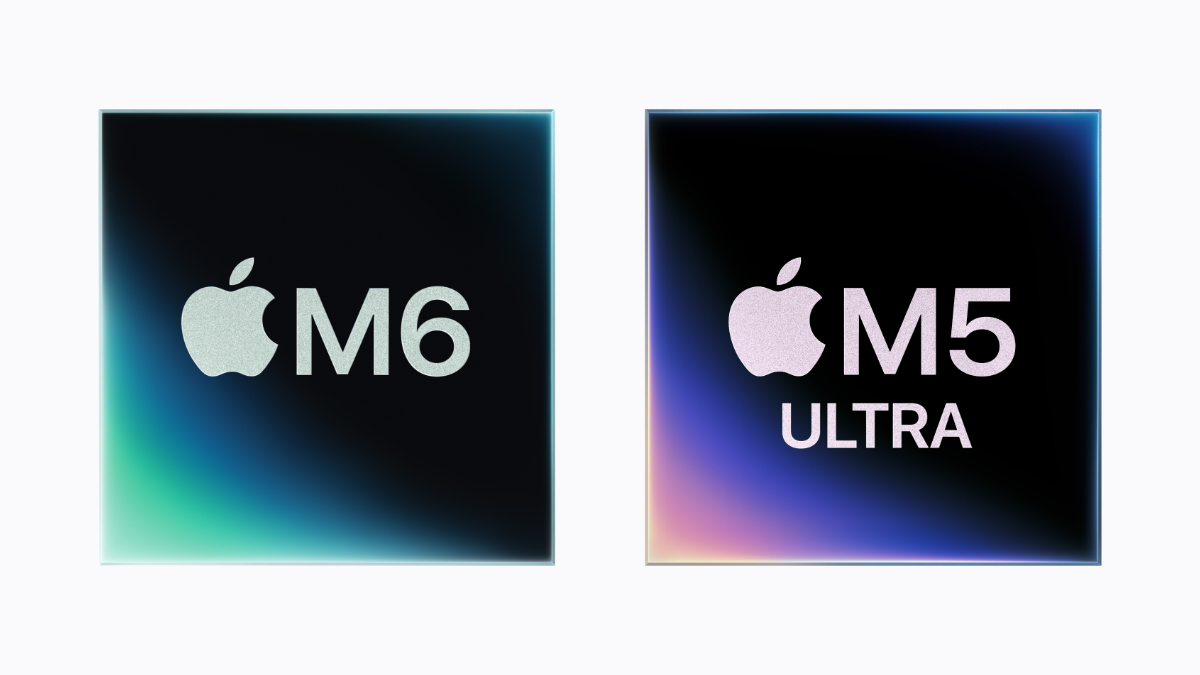
The 2nm Signal
Apple’s M6 announcement carries a detail that most Western coverage has been too busy parsing specs to notice: this is the first true 2nm-class consumer processor in the market, and it lands inside a Mac mini — not a workstation, not a server. That placement tells you something about Apple’s timing and confidence. Apple isn’t reserving its most advanced silicon for professional machines or waiting for a flagship product to serve as a technology demonstrator. It is placing a frontier process node into its most accessible desktop form factor, signaling that it considers 2nm a generational leap rather than a speculative risk.
The chip is built on TSMC’s 2nm process, packing more transistors into a smaller die than the M-series line has ever carried. Peak Neural Engine performance doubles over M5 thanks to a dual 16-core configuration. CPU single-thread performance tops the field across the industry. GPU compute for AI workloads climbs nearly 30%. Memory bandwidth edges up 10% to 170GB/s on 32GB configurations.
Apple is not experimenting with 2nm anymore. It is shipping it.
Who Actually Missed This
The source — PC Watch, a Japan-based tech publication — published the M6 and M5 Ultra details on August 25. By the time Western outlets ran comprehensive breakdowns, the architecture story had already shifted from speculation to specification review. But Japan-specific coverage of Apple silicon roadmaps is uncommon. When it appears, it often carries precision about manufacturing nodes and packaging approaches that the English-language press has not yet caught up with.
The M5 Ultra is the more architecturally interesting part of this announcement. It is not a single large die. It is two M5 Max chips — four individual dies — joined through UltraFusion, Apple’s interconnect technology that has powered Ultra-series chips since M1 Ultra. The bandwidth between those dies exceeds 4.4TB/s, which matters enormously for workloads that span GPU and CPU across multiple physical dies.
This quad-die approach is a deliberate engineering choice. Apple could have designed a monolithic 36-core or 80-core chip. It chose to scale existing dies. That means faster time to market, controlled yield risk, and a proven packaging model that scales linearly rather than requiring an entirely new tapeout. The decision also has implications for thermal distribution and power delivery that a single monolithic die would struggle to match at this core count.
The Performance Claims, Placed
The M5 Ultra offers 36 CPU cores — 12 super cores, 24 high-performance cores — with single-thread speed 1.25x and multi-thread speed 1.3x over M3 Ultra. GPU peaks at 80 cores with up to 4.5x AI compute improvement over M3 Ultra and a 40% graphics uplift. Unified memory reaches 512GB at 1.2TB/s, a 50% bandwidth increase over M3 Ultra.
These numbers are directional. The 4.5x AI gain over M3 Ultra is the headline figure, and it matters because it bridges the gap between consumer workstation and data-center class accelerators — at least for on-device inference. A machine that can hold half a terabyte of unified memory with that bandwidth effectively eliminates the CPU-to-GPU data transfer bottleneck that has constrained laptop-class and desktop-class AI acceleration for years. The implication is that workloads previously requiring a discrete GPU and a separate memory pool can now run entirely within the unified architecture, with latency measured in nanoseconds rather than microseconds.
What This Means for the Competitive Map
AMD is still rolling out Zen 6 on TSMC’s 3nm node. Intel’s Lunar Lake and Arrow Lake sit firmly in the 3nm-to-4nm range. Neither competitor has shipped a consumer processor on a 2nm-class node. Apple’s M6 effectively owns the frontier for now, and the Mac mini at that performance-per-watt level raises the floor for what anyone else has to match.
Samsung’s GAA 2nm process — the alternative to TSMC’s approach — has faced repeated delays and yield challenges. If Apple locked in 2nm volume with TSMC, Samsung’s customers do not have a comparable offering this generation. That dynamic creates a second-order effect: Samsung’s foundry business faces intensifying pressure to either accelerate its own 2nm roadmap or cede further market share to TSMC, which now has a demonstrated lead in volume production.
The M5 Ultra’s 512GB unified memory configuration deserves attention beyond its bandwidth claims. Running a multi-hundred-billion-parameter LLM on a single machine is no longer a research lab problem. It is a product decision. The Studio-class form factor with 512GB RAM positions the Mac against workstation GPUs that cost significantly more and draw substantially more power. This opens a segment Apple has not meaningfully contested before — the high-memory desktop workstation — and it does so without requiring users to purchase add-on expansion cards or invest in liquid cooling solutions.
The Naming Ambiguity
Apple’s naming here — M6 alongside M5 Ultra — suggests two distinct design cycles running in parallel rather than a simple sequential upgrade path. The M6 is likely a refined M5 derivative targeting the mainstream (Mac mini). The M5 Ultra is an Ultra-tier product that retains its generational anchor while adopting the highest-memory and highest-die-count architecture available. This is Apple playing both a refresh cycle and a flagship push simultaneously, a pattern that indicates aggressive pipeline development rather than incremental revision.
Why Japanese Source Coverage Matters Now
The PC Watch reporting arrives from a market where Apple’s Mac ecosystem presence is meaningful but secondary to mobile. Japanese tech media does not cover Apple silicon for the sake of Apple coverage. They cover it because semiconductor leadership is a story that resonates in a country whose own chip industry — Sony, Rapidus, Toshiba — is aggressively pursuing advanced process nodes.
When a Japanese outlet runs detailed architecture notes on Apple’s 2nm die strategy, it signals that the conversation about who leads in process technology has expanded beyond the usual US-centric framing. The M6 is not just Apple’s chip. It is a benchmark for every other company trying to ship something at 2nm.
Second-Order Effects to Watch
The competitive response will not come from a single direction. Apple’s move onto 2nm raises the expectation bar for entire product categories. MacBook Air customers will begin questioning why a baseline machine does not offer the same process advantages. iPad Pro users may see similar pressure build. Meanwhile, the 512GB unified memory configuration on the M5 Ultra forces Microsoft, Google, and other software platforms to reconsider how they design for on-device AI — shifting from models that assume cloud offloading to architectures that treat large local inference as the default case.
The supply-chain implications are equally significant. TSMC’s 2nm capacity is finite and in demand across Apple, Qualcomm, AMD, and NVIDIA. Apple’s ability to secure volume at this node — especially for a chip family this large — signals strong foundry relationships that competitors will find difficult to replicate. Any disruption to TSMC’s 2nm yield curve would have ripple effects far beyond Apple’s product lineup.
What Happens Next
Expect the Mac mini refresh with M6 to ship soon, establishing the performance baseline. The Mac Studio with M5 Ultra will target professional creators and AI researchers who need the 512GB unified memory configuration. Between them, Apple covers both the enthusiast desktop and the entry workstation in a single generation.
Competitors will respond. AMD and Intel will push their 3nm parts harder. But the next meaningful node — 2nm — belongs to Apple right now, and that ownership window will not stay open for long. The question is whether Apple uses this lead to widen the gap or merely maintain position. Given the pace of this generation’s moves, the former seems far more likely.