Apple's C2 Modem Signal to Qualcomm and Carriers
Apple's C2 in-house modem just added mmWave support for the U.S. — and left the Pro Max behind. The implications reach far beyond cellular specs, into supply chains, carrier relations, and the geopolitics of chip sourcing.
The Split That Speaks Volumes
Apple announced the iPhone 18 Pro and the iPhone Duo today, but the headline story isn’t the foldable screen or the new burgundy finish. It’s what sits inside the iPhone 18 Pro’s motherboard — and conspicuously doesn’t sit inside the Pro Max’s.
The iPhone 18 Pro ships with Apple’s C2 custom modem. The iPhone 18 Pro Max does not. Both are nearly identical phones. The pricing difference is $100. Whatever reasoning drove this split isn’t public, and that silence is itself a data point.
mmWave Changes Everything
Before today, the assumption among analysts was that Apple’s C2 would skip mmWave in the U.S., leaving Qualcomm to handle the high-band spectrum while Apple’s own chip managed sub-6GHz. That would have been a familiar pattern: Apple designing modems in-house but still dependent on Qualcomm for the American market, where carriers like Verizon and AT&T lean heavily on mmWave for their 5G marketing.
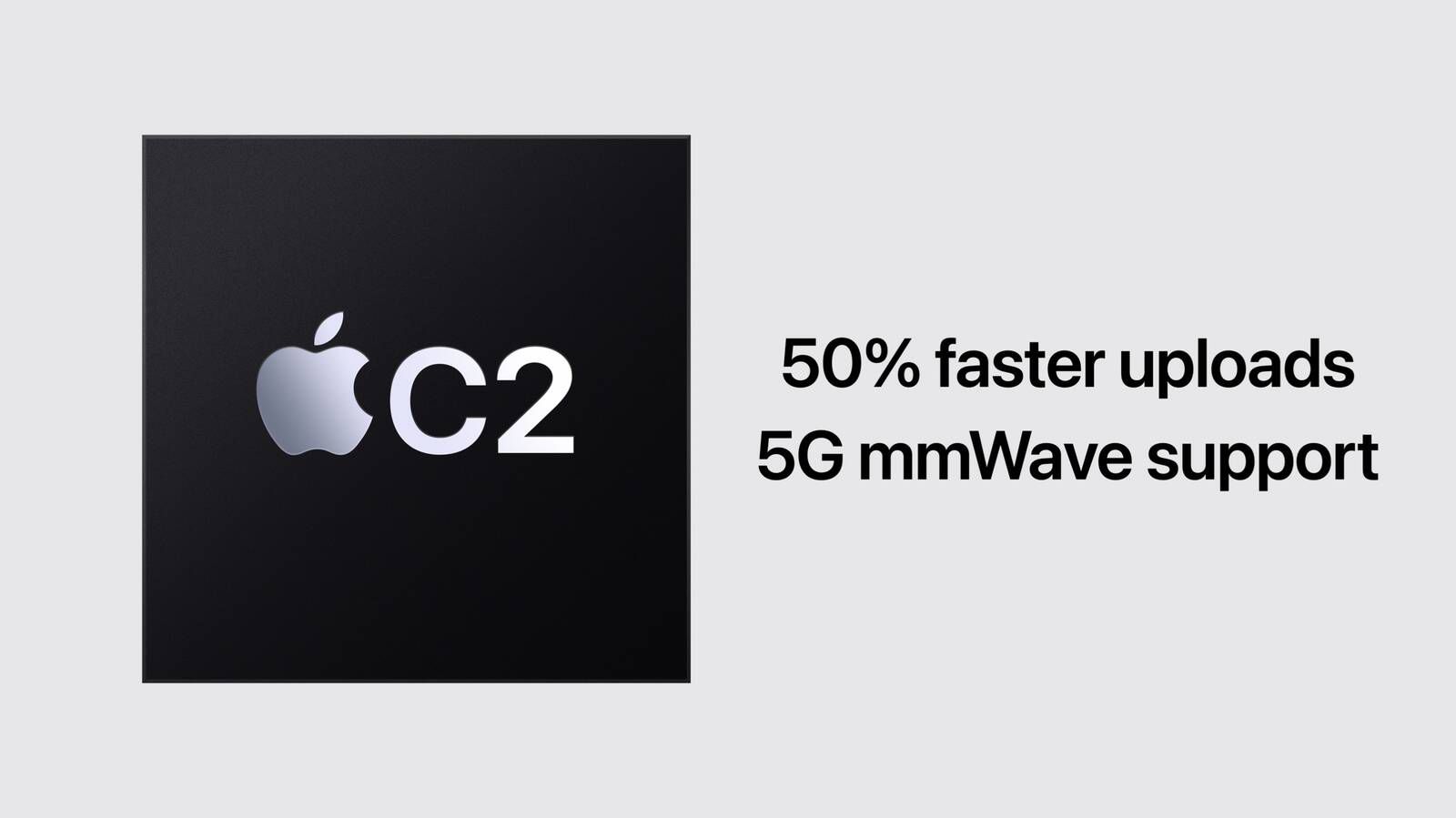
Apple just debunked that theory. The C2 supports mmWave bands n258, n260, and n261 in the U.S., while UK spec sheets list sub-6GHz only. That’s a meaningful upgrade from the C1X, which required Qualcomm’s Snapdragon X-series to bridge the mmWave gap for U.S. buyers. Apple now claims the C2 delivers faster uploads and 15 percent less energy consumption compared to C1X, with AI-powered improvements to cellular quality and reliability baked in.
For U.S. customers, this means a genuinely self-sufficient 5G experience on the iPhone 18 Pro. For everyone else, the C2 handles sub-6GHz alone — the same arrangement as last year’s Pro models.
The Pro Max Puzzle
Why the Pro Max gets Qualcomm while the Pro gets C2 remains unclear. Both devices target the same segment. Both share the N1 wireless networking chip for Wi-Fi 7 and Bluetooth 6. The only explanation offered by the available information is a distinction without a publicly stated reason.
Possible interpretations exist, none confirmed. The Pro Max’s larger battery and display could absorb a slightly more power-hungry Qualcomm solution. Apple may be staging a phased rollout of C2, testing it at lower volume before committing to both SKUs. Or there may be a supply-side constraint on C2 wafers that makes allocating them to both models impractical this generation.
What matters is the signal: Apple is comfortable running a mixed-modem lineup. That signals confidence in Qualcomm as a fallback and confidence in C2 as the primary path forward. Neither signal is trivial.
What This Means for Qualcomm
Qualcomm has been Apple’s modem supplier since 2019, when the company ended its long dispute with Intel and pivoted away from in-house modem development. The relationship has been profitable but asymmetric. Apple designs the phone, sets the specs, and controls the customer relationship. Qualcomm provides a component and takes the margin hit when Apple demands concessions.
C1 and C1X proved Apple could build functional in-house modems. C2 is the real test. If Apple ships C2 in one Pro model this year and both next year — as seems likely given the pace of in-house silicon adoption elsewhere in the iPhone lineup — Qualcomm’s share of Apple’s modem Bill of Materials shrinks meaningfully.
This isn’t hypothetical. Apple Silicon has already replaced Intel CPUs in Macs, the M-series chips displaced Intel’s desktop roadmap entirely, and the Apple Watch uses T-series modems designed by Apple. The iPhone is the last major platform where Qualcomm still holds the dominant position. Today’s announcement accelerates that erosion.
Carrier Implications Are Real
U.S. carriers sell phones bundled with service plans. mmWave availability is a key differentiator in their marketing, especially in stadiums, airports, and dense urban cores where sub-6GHz alone feels indistinguishable from 4G LTE. When Apple told carriers last year that the C2 would skip mmWave, it was a concession to carrier power. Carriers had a voice in the spec sheet.
Now Apple is telling them the opposite. The C2 supports mmWave natively. Whether carriers will accept a phone they can’t customize at the modem level is an open question. Historically, carrier-locked devices include firmware modifications that Qualcomm modems are easier to adjust than custom silicon. That’s a friction point Apple may have underweighted.
The Pro Max’s retention of Qualcomm modems is likely a compromise — a way to keep carrier partners happy in markets where they want direct access to modem tuning. But the existence of that compromise only highlights how far C2 has come.
The Geopolitical Layer
Modem chips are semiconductor components. Semiconductor fabrication is concentrated. Taiwan dominates advanced nodes. China’s export controls on advanced chipmaking equipment have complicated the global supply chain for years. Apple has been diversifying its fab partnerships for exactly this reason.
The C2’s design doesn’t change Apple’s fab dependencies, but it does change the risk profile. A custom modem designed in-house reduces reliance on a single supplier’s roadmap. If Qualcomm faces its own supply constraints — whether from U.S.-China tech restrictions, fab capacity allocation, or competitive pressure from MediaTek and Samsung — Apple’s in-house C2 acts as a circuit breaker. The Pro Max’s Qualcomm modem is the hedge; the Pro’s C2 is the play.
That dual track matters more than the spec sheet says. It shows Apple treating modem supply as a strategic risk, not a procurement problem.
The iPhone Duo Is a Different Story
The foldable iPhone Duo starts at $1,999 and ships October 23. It features the N1 wireless networking chip, which handles Wi-Fi 7 and Bluetooth 6, but Apple hasn’t disclosed which modem powers it. That omission is notable. A foldable device with two screens draws significantly more power than a slab phone. The modem choice directly affects battery life, thermal design, and ultimately the user experience Apple is selling.
If the Duo ships with C2, it extends Apple’s in-house modem ambitions into a category where power efficiency is even more critical than in the Pro line. If it uses Qualcomm, it suggests Apple sees the Duo as a different product tier requiring a different supply chain strategy. Either outcome is worth watching closely.
What Happens Next
Apple’s modem strategy is no longer experimental. It’s operational, and it’s spreading. The C2 in the iPhone 18 Pro proves mmWave competence. The Pro Max’s Qualcomm fallback proves the company isn’t betting the entire lineup on a single silicon path. The iPhone Duo’s undisclosed modem choice proves there’s still room for variation within a single product cycle.
Qualcomm’s response to this shift will determine whether the company remains a component supplier to Apple or becomes something else — a partner with shared roadmap influence, or a declining revenue line item in Apple’s annual component spending. The carriers are watching too. So are regulators, who have long viewed Qualcomm’s dominance as a competition concern.
The C2 modem isn’t just a chip upgrade. It’s a statement about where Apple wants its supply chain to stand in five years. The fact that it’s already in production — and already splitting decisions between two models in the same lineup — suggests the answer is closer than most people realized.