Apple's Foldable iPhone Pencil Moves a Step Closer to Reality
Apple is prototyping a stylus designed specifically for its upcoming foldable iPhone, Bloomberg reports. The move would carve out a productivity niche Android foldable makers haven't fully filled — and signal that Apple's entering the foldable market with more than just a phone.
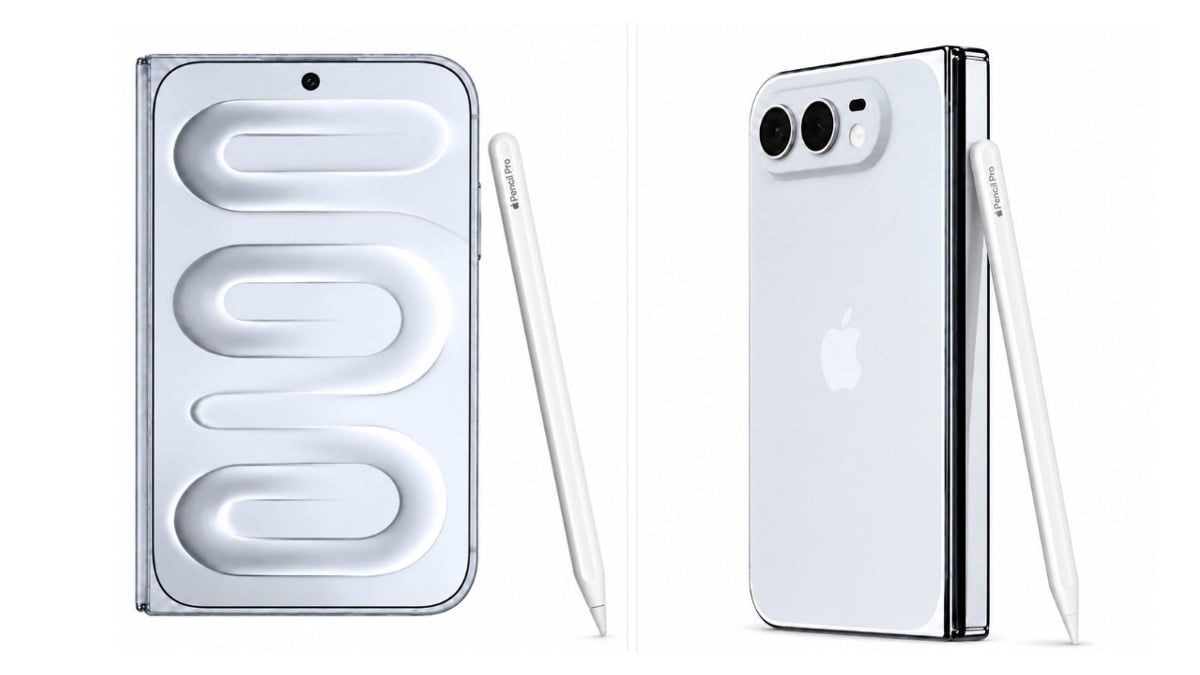
Apple Is Building a Stylus for a Phone That Doesn’t Exist Yet
Bloomberg’s Mark Gurman reported that Apple is developing an Apple Pencil specifically for its upcoming foldable iPhone. The stylus is still in the prototype stage, which means it won’t ship alongside the first foldable iPhone — and that first device reportedly arrives as soon as next month.
But the fact that Apple is investing engineering resources into a companion accessory for a product that may not even be on store shelves yet tells you something important: this isn’t a speculative exercise. Apple is building an ecosystem play around a form factor that doesn’t exist in its lineup.
What makes this particularly significant is the timing. Apple has been rumored to be working on a foldable device for years, yet each iteration of those rumors has centred on the phone itself — screen size, hinge design, price point. The stylus conversation has been absent. Its emergence now signals that Apple’s internal roadmap has shifted from pure hardware validation to ecosystem expansion. The question is no longer whether the foldable iPhone will ship, but what software and accessory layers will make it indispensable once it does.
The Stylus Changes Everything
Here’s what most English-language coverage has missed so far: the addition of a stylus transforms the foldable iPhone from a curiosity into a genuine productivity device. Without it, the foldable iPhone competes directly with Samsung’s Galaxy Z Fold line on the same turf. With it, Apple creates a category difference.
The rumored main display for the foldable iPhone sits at approximately 7.8 inches when unfolded — dangerously close to the iPad mini’s 8.3-inch screen in both size and use case. That means the stylus would be aimed at the same audience: people who take notes, annotate documents, sketch ideas, and edit photos on the go. The foldable iPhone would effectively occupy the space between the iPhone and the iPad mini, a gap Apple has never had a product fill.
If the foldable iPhone also supports iPad-style multitasking — which is rumored — adding Apple Pencil support turns it into a genuine hybrid device. You get the phone functionality you need for calls and apps, then unfold it into something that functions more like a small tablet when you want to do work.
Consider the real-world workflow this enables. A professional receives a contract on their phone during a commute. They open the foldable to full screen, pull up the PDF, annotate clauses with the Pencil, save and send — all without switching devices. That workflow exists today for iPad users but requires carrying two separate products. Apple’s foldable ecosystem collapses that friction into one pocketable device.
Samsung Backed Away. Apple Is Moving In.
The timing of this report is notable because Samsung has recently done the opposite. The Galaxy Z Fold7 and Fold8 lines dropped S Pen support entirely. Samsung cited the difficulty of balancing stylus compatibility with thinness — foldable displays are softer than conventional smartphone screens, and they require additional internal structure to resist damage from a stylus tip.
Samsung essentially chose thinness over productivity. Apple appears to be choosing the reverse path, even if it means the initial foldable iPhone may not include the Pencil on day one.
That’s a strategic bet worth watching. Samsung’s decision to drop the S Pen was driven by legitimate engineering concerns, but it also reflected a reading of consumer demand that may have been premature. Power users and creatives have repeatedly asked for stylus support in foldable form factors, and Samsung’s removal of the feature was met with frustration from a segment that represents disproportionate revenue per user. Apple is entering that space with an accessory ecosystem already proven at scale — the Apple Pencil generated billions in ancillary revenue for the iPad line over nearly a decade.
If Apple can solve the display-durability and storage challenges — how do you attach a stylus to a device that folds, after all? — it gains a differentiation Samsung has walked away from. No other Android foldable maker currently offers a comparable stylus ecosystem at this scale.
The Prototype Details Matter
Gurman’s report says the prototype Apple Pencil for the foldable iPhone would be shorter than the current iPad version, and potentially thinner as well, to improve portability. It would use magnetic wireless charging rather than a lightning or USB-C port. That’s consistent with Apple’s direction for the current Apple Pencil Pro, which already uses USB-C and MagSafe-compatible charging.
The real engineering challenge isn’t the stylus itself — Apple already knows how to make those. It’s how to attach and secure it to a device that has no flat surface and folds in half. Options are limited: a magnetic attachment on the exterior, a dedicated slot in the hinge area, or a case accessory. Each comes with trade-offs in durability, weight, and whether the device still folds cleanly.
An exterior magnetic mount would be the simplest approach but would leave the Pencil exposed and vulnerable to loss. A hinge-integrated slot would protect the stylus but add complexity to the folding mechanism — a part of the device where Apple has historically been extremely cautious about introducing new failure points. A case-based solution pushes the problem onto a third-party ecosystem, which is Apple’s traditional playbook for accessories, but it also delays the polished experience that defines the brand.
Apple has historically been willing to iterate on accessory attachment methods. The original Magic Keyboard for the iPad had a famous launch-period struggle with weight and stability before the second generation improved both. Expect similar refinement cycles here. The first-generation foldable Pencil may not be the final word on form factor, but its existence proves the concept is viable.
Display Durability and the Foldable Problem
There’s a deeper engineering question that both Samsung and Apple must confront, and it’s the one Samsung ultimately chose to sidestep: foldable displays are fundamentally different from rigid ones. The OLED panels used in foldable phones sit above a flexible substrate, and repeated bending creates stress points that conventional glass cannot withstand. A stylus tip — even a soft-tipped one — introduces localized pressure that can accelerate wear on these surfaces.
Samsung’s S Pen relied on a silicone tip designed to minimise contact pressure, and even that wasn’t enough to justify keeping the feature through successive generations of increasingly thin foldables. Apple faces the same physics. If the foldable iPhone’s display is anything like current Generation Z models, it will be equally vulnerable to stylus-induced degradation over time.
How Apple addresses this will determine whether the Pencil ecosystem survives past the novelty phase. Potential solutions include coating the display with a sapphire-infused layer, developing a Pencil tip material softer than silicone, or designing the display stack with a sacrificial top layer that can be replaced — an approach more common in industrial design than consumer electronics. Whatever the method, solving this problem gives Apple a patent moat that competitors would struggle to replicate quickly.
What This Means for the Market
The implications extend beyond Apple. If the foldable iPhone succeeds as a productivity device with stylus support, it puts pressure on Samsung to reconsider its S Pen abandonment. Google’s Pixel Fold and OnePlus’s upcoming foldables have no stylus either. Huawei’s Mate X series supports a stylus in some markets but lacks the app ecosystem to make it compelling.
A successful Apple Pencil + foldable iPhone combo could force the entire premium foldable segment to reassess whether stylus support matters to consumers — something Samsung concluded it didn’t, but may have been premature. The enterprise and education segments, which have historically been the heaviest stylus adopters, represent revenue that no foldable maker has successfully courted at scale. Apple’s ecosystem reach into those segments through Mac and iPad is unmatched, and a foldable with stylus support would extend that reach into a form factor that competes directly with lightweight Windows laptops and Chromebooks.
There’s also a second-order effect on app development. iPadOS already supports the Apple Pencil with deep integration in Notes, Freeform, Procreate, and a growing library of third-party applications. Porting that interaction model to iOS on a foldable display would require developers to rethink gesture-based input for a larger canvas — an investment that pays off only if there’s a meaningful install base. Apple’s decision to prototype the Pencil suggests it believes that install base will arrive fast enough to justify developer effort.
Timeline Is Still Loose
Apple’s foldable iPhone is expected to launch next year, with a second generation rumored for 2027 and a third generation with larger displays potentially arriving in 2028. The Apple Pencil for it won’t accompany the first model, but its development signals that Apple plans to close the productivity gap over subsequent generations.
This staged rollout is consistent with Apple’s product cadence. The company rarely ships a fully realised ecosystem on day one for a new form factor. The iPad arrived without the Smart Cover; that came a year later. The Apple Pencil itself launched two years after the iPad Pro. Each accessory followed when the hardware base was large enough to warrant the investment and the engineering challenges had been sufficiently de-risked.
The foldable iPhone will likely follow the same pattern. First generation establishes the form factor. Second generation refines the hinge and display. Third generation — or a special variant — introduces the Pencil as a mature accessory rather than a rushed prototype.
The Real Story
For now, the Pencil remains a prototype. But prototypes don’t get approved at Apple unless someone with budget authority signed off on them. The foldable iPhone may not have a stylus on day one, but the stylus is clearly part of the long-term plan.
That’s the real story here: Apple isn’t just building a foldable phone. It’s building a foldable productivity tool — and the Pencil is how it intends to make the difference. Samsung bet that consumers wanted thinner foldables more than they wanted stylus support. Apple is making the opposite bet. If the data from the iPad Pro and iPad mini ecosystems is any indication, that bet may be the right one.