Apple's iPhone Duo launches in Japan — what it means for the foldable
Apple's first foldable hits Japanese stores, priced above 360,000 yen. The rush to buy reveals both the brand's pull and the steep challenges ahead for foldables everywhere.
The 360,000-yen test case
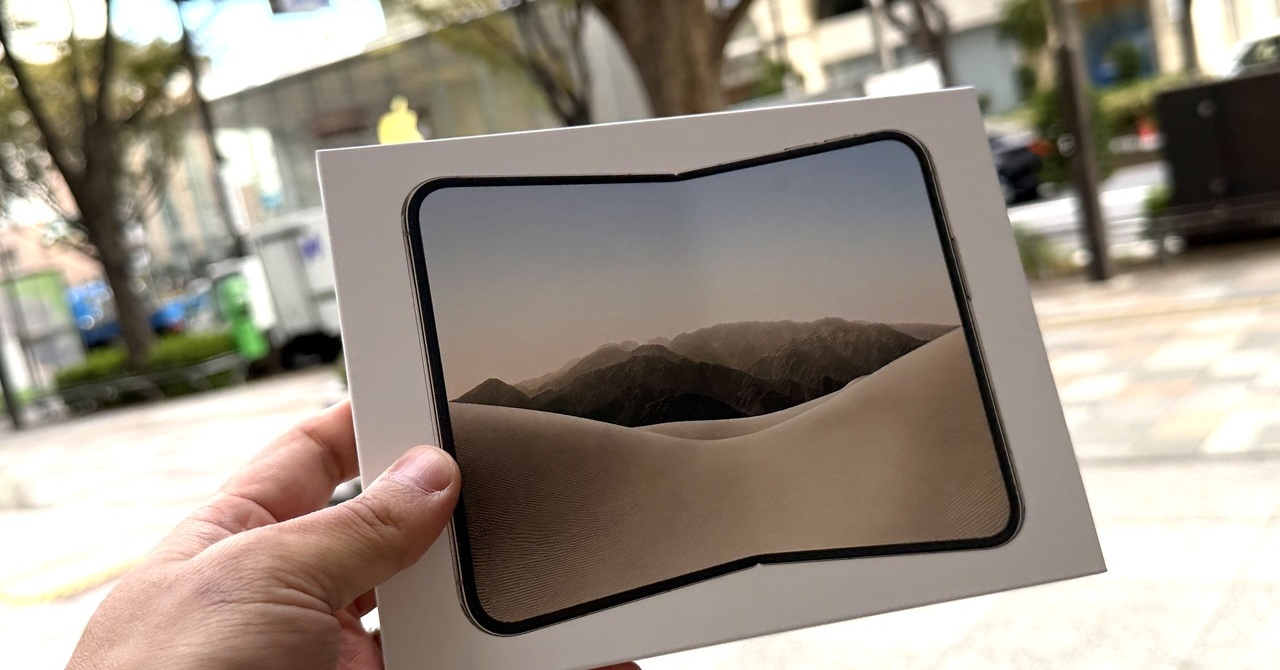
Apple’s first foldable — codenamed iPhone Duo — went on sale in Japan on October 23. The base 256GB model carries a price tag above 360,000 yen, roughly $2,300–2,400 depending on exchange rates. That places it firmly in the realm of aspirational technology, not utility. Pre-orders opened a week earlier on October 16 at 9 p.m. JST, and according to early reports from the author at ITmedia Mobile, delivery-slot inventory vanished in roughly one minute. Store pickup allocations ran out within minutes.
The author managed to secure a unit and picked it up at Apple Omotesando on launch morning around 8:30 a.m. What struck them was how ordinary the experience felt — no queue, no wait, five minutes from walk-in to walk-out. This is a sharp contrast to earlier iPhone launches, where even a perfectly timed arrival meant ten minutes of standing around.
Why Japan first, and why it matters
Japan has always been a unusual bellwether for mobile technology. It is one of the few large markets where carrier bundle culture, durability expectations, and a deeply entrenched preference for reliability over novelty converge. Foldable phones — Samsung Galaxy Z Fold series, Huawei Mate XT, Xiaomi MIX Fold — have been available in Japan for years. They sell, but they remain niche. Japanese consumers tend to judge phones by a different calculus: will this survive two years of drops, rain, and commute abuse? Will the resale value hold? Is the repair bill going to wreck me?
Apple entering this segment with a 360,000-yen device is not simply a product launch. It is a direct challenge to those calculations. Apple’s brand equity in Japan is arguably unmatched — the Apple Store experience, the ecosystem lock-in, the prestige signal. If the iPhone Duo can convince even a fraction of the market that foldables are durable enough and valuable enough to justify the price, the structural barrier that has kept foldables at single-digit market share in Japan collapses.
Who wins, and who loses
Apple wins on attention. The pre-order rush, the sold-out storefronts, the social media coverage — this is the marketing machine working as designed. But more importantly, Apple gets to define what a premium foldable looks like. Samsung set the template with the outward-folding book style. Google moved the needle with the inward-f Pixel Fold. Apple’s approach — still unconfirmed in detail from the source material — will likely carry its own signature, probably centered on the hinge, the crease visibility, and the dual-screen workflow.
Samsung loses share of mind, at least temporarily. The Galaxy Z Fold series has held the foldable crown in Japan for cycles. An Apple entrant at this price tier forces Samsung to justify its position on features rather than first-mover advantage. Samsung’s response will likely come in the form of tighter carrier deals and possibly a price cut on the current Fold generation.
Carriers win through bundle economics. In Japan, most premium phones are sold through carrier contracts that amortize cost over 24 months. A 360,000-yen device in a typical corporate subsidy structure becomes a modest monthly fee for many consumers — which explains part of the frenzy. The real question is whether carriers will push the Duo aggressively enough to shift their own device-margin strategies.
Consumers win on selection, lose on price. There are now three major players in the premium foldable space with Apple’s entry. Competition will eventually push features down the price ladder. But in the near term, the foldable premium persists. Anyone without a trade-in or carrier subsidy will feel the full weight of 360,000 yen.
The durability question that decides everything
The ITmedia review — titled in part as a set of nine questions and a verdict on whether the device is worth buying at above 360,000 yen — is the kind of scrutiny the category desperately needs. Japanese readers are already familiar with foldable failure modes: crease visibility after months of use, hinge resistance degradation, screen delamination, and the notorious repair costs that can approach half the device price.
Apple’s supply chain reputation for quality control is strong, but foldable hardware is fundamentally harder to seal, to test, and to guarantee than slab phones. If the Duo’s hinge and display survive Japanese daily-use conditions at a rate comparable to the iPhone 17 line, it changes the conversation globally. If early cracks — literal or figurative — appear, the brand damage could retroactively poison Apple’s entry into a segment it might otherwise have been able to legitimize.
What happens next
Expect a delay outside Japan. Apple rarely launches products simultaneously across all major markets, and foldables are no exception. The U.S. and European availability window is likely Q1 2027, possibly later. When it arrives, the Japanese data — actual failure rates, repair numbers, satisfaction metrics — will be the single most important dataset the rest of the world watches.
For the broader foldable market, Apple’s entry is a double-edged signal. On one hand, it validates the form factor as a premium segment Apple considers mature enough for its brand. On the other, it raises the bar on build quality, software integration, and ecosystem play in ways that Samsung, Google, and Chinese manufacturers will struggle to match at equal price points.
The real story here is not the rush to buy on launch day. It is whether Apple can make a 360,000-yen foldable feel as inevitable as the original iPhone did in 2007. Japan will know first. The rest of the world will be watching closely.