Apple's iPhone Duo: Why Japan Matters Most to Its Foldable Strategy
Apple's first foldable phone lands in Japan first with detailed pricing and specs, signaling that Tokyo isn't just a market — it's a testing ground for the product category Apple needs to make work.
Apple’s Foldable Playbook Starts in Tokyo
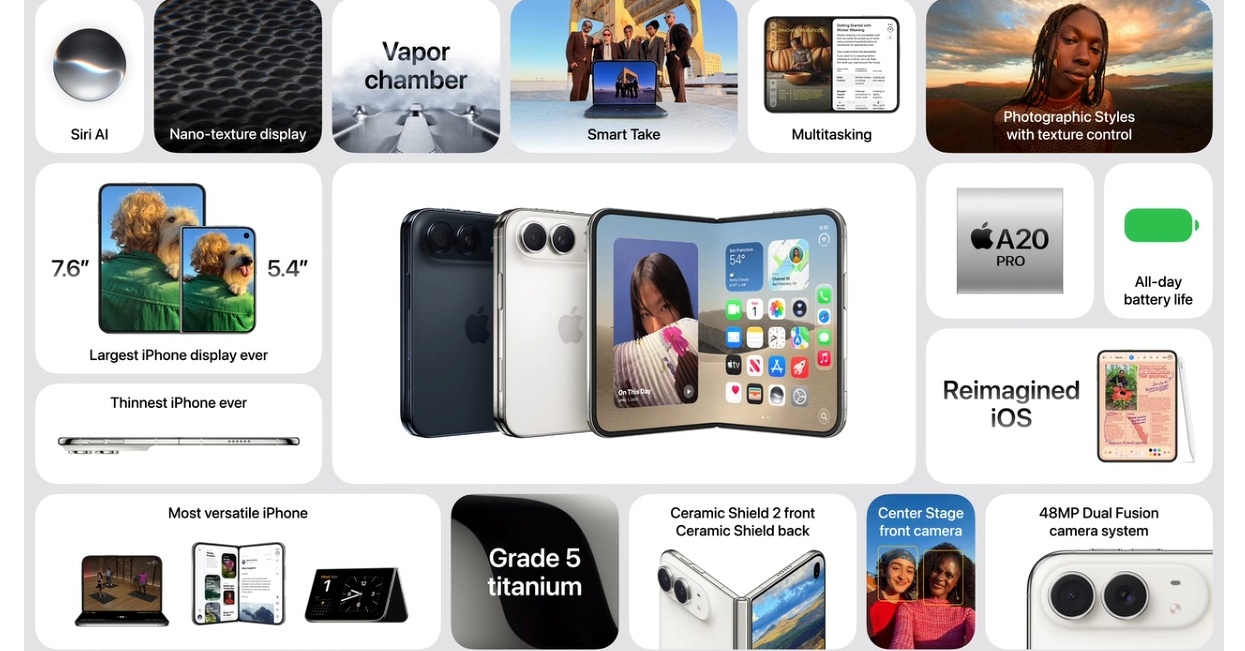
Apple announced its first foldable smartphone Wednesday, and the company did something unusual: it let Japan call the shots on the rollout details. The iPhone Duo — a 7.6-inch inner display that folds into a 5.4-inch form factor — is being priced, specced, and timed to market through the lens of Japanese consumer expectations. That’s not an accident.
John Ternus, Apple’s newly appointed CEO, personally introduced the device. His presence at the launch signals that this isn’t a casual产品线 extension. Apple is treating foldables as a new category that could define the next decade of its hardware business, and Japan is where it’s choosing to prove that claim first.
Why Japan Gets First Mover Treatment
Japanese consumers are among the most demanding in the world when it comes to build quality and longevity. They also tend to keep phones longer than their Western counterparts — the average upgrade cycle in Japan runs well past three years. For a foldable device, where hinge durability and screen longevity are still open questions across the industry, launching in a market that scrutinizes both ruthlessly is a strategic choice.
ITmedia’s coverage, unusually detailed for an Apple launch, laid out specifications that suggest Apple built the iPhone Duo specifically with Japanese tolerance for imperfection in mind. The hinge mechanism alone contains over 100 precision parts, including a carbon fiber support plate that actively counteracts the kind of screen sag that has plagued competing foldables. The outer display uses Ceramic Shield 2, which Apple claims triples scratch resistance compared to the previous generation. And the inner display features a custom adhesive layer that, in Apple’s description, moves like pages in a book — reducing stress on the flexing glass during each fold cycle.
The IP68 rating means dust and water resistance aren’t afterthoughts either. In Japan, where rain and humidity are real concerns and where consumers frequently use phones in crowded commutes, skipping those protections would have been fatal to early adoption.
The Hinge Is the Product
Here’s what the Japanese press corps picked up on immediately: Apple is betting that the hinge will differentiate the Duo from Samsung’s Galaxy Z Fold series and Huawei’s more recent entries. The carbon fiber plate inside the hinge isn’t just structural — it’s a deliberate move to prevent the screen depression that consumers complain about on rival devices. Apple is essentially saying, “We solved the thing everyone hates about foldables.”
The magnetic closure system, which ITmedia highlighted, adds another layer. When closed, magnets engage to eliminate any gap between the two halves of the display. That’s a detail Western reviewers haven’t yet emphasized, but it’s exactly the kind of tactile refinement Japanese consumers notice and reward.
Display and Design Compromises Are Real
Apple stopped short of claiming a zero-fold-line display. The company explicitly noted in its materials that the fold mark won’t disappear entirely over time. That honesty matters. Samsung and Huawei have both overstated their fold-line disappearances in past generations, and Apple is clearly learning from that misstep.
The Nano-texture finish on the 7.6-inch Super Retina XDR inner display is a differentiator that goes beyond aesthetics. It reduces reflections — a practical concern for a device that spends half its life open and exposed. Whether it also reduces touch sensitivity remains untested in real-world conditions.
Software: iOS 27 Changes the Game
The software story is arguably more important than the hardware. iOS 27 introduces Split View — the ability to run two apps side by side on the unfolded Duo’s larger screen. This is the first time Apple has allowed true multi-app productivity on an iPhone. It also repositions the lock screen controls, Dock, and key app elements to the sides of the display to maximize vertical space in the folded state.
Siri AI, integrated into this new layout, can hold a conversation on one half of the screen while the other half handles web searches or document editing. The implication is clear: Apple is building toward a workflow that treats the Duo less as a phone and more as a pocket-sized laptop replacement for certain tasks.
The Apple Pencil (USB-C) support, coming in an update later this year, further reinforces that positioning. A foldable phone with stylus input is effectively a convertible tablet — the kind of device Microsoft tried with Surface and failed to sell at scale. But Apple has distribution, ecosystem lock-in, and brand loyalty on its side. This time could be different.
Battery and Charging: Dual Cells, Practical Results
Apple chose a dual-battery design — one cell on each side of the hinge — rather than a single large cell that would need to flex. The results are measurable: up to 31 hours of video playback on the inner display, 44 hours on the outer. Fast charging via USB-C reaches 50% in approximately 20 minutes.
The engineering tradeoff is obvious: splitting the battery avoids the durability problem of a single cell being subjected to repeated bending. It also means the Duo is thicker than a traditional iPhone when folded, but Apple appears to have accepted that compromise in exchange for longevity.
Pricing: Japan as a Price Anchor
The Japanese pricing is revealing. The 256GB model starts at 36,480 yen — roughly $240 at current exchange rates. The 2TB top-end model costs 57,480 yen, about $380. These are premium prices, but they’re also significantly lower than what Apple has charged for its highest-end Pro Max models in equivalent storage configurations.
The 10-day gap between pre-orders (October 16) and general availability (October 23) suggests Apple is managing supply carefully. That’s consistent with the company’s pattern for new category launches — limit initial volume, ramp production as yields improve.
What This Means Beyond Japan
Western analysts have been slow to process what the Japanese coverage makes clear: Apple isn’t entering the foldable market to compete on price or features alone. It’s entering to define the category on its own terms — hinge engineering, display durability, software integration, and ecosystem services.
The iPhone Duo’s Japanese-first rollout is a signal that Apple sees Japan not just as a market to serve, but as a bellwether for the rest of the world. If the device holds up under Japanese usage patterns — long upgrade cycles, high scrutiny of build quality, intense daily commuting — it will survive everywhere else.
If it doesn’t, Apple will have learned a valuable lesson before committing to a global rollout. Either way, the company is playing this smartly.
The real question isn’t whether the iPhone Duo will sell. It’s whether Apple can make foldables desirable again — a category that has stalled globally due to durability concerns and unclear value propositions. Japan is where Apple is choosing to find out.