iPhone Duo Debate Reveals What Foldables Actually Cost Consumers in
Apple's first foldable has split its audience — some calling it a two-in-one revolution, others calling it a $2,000 compromise. The real story is what this debate reveals about where smartphones are heading.
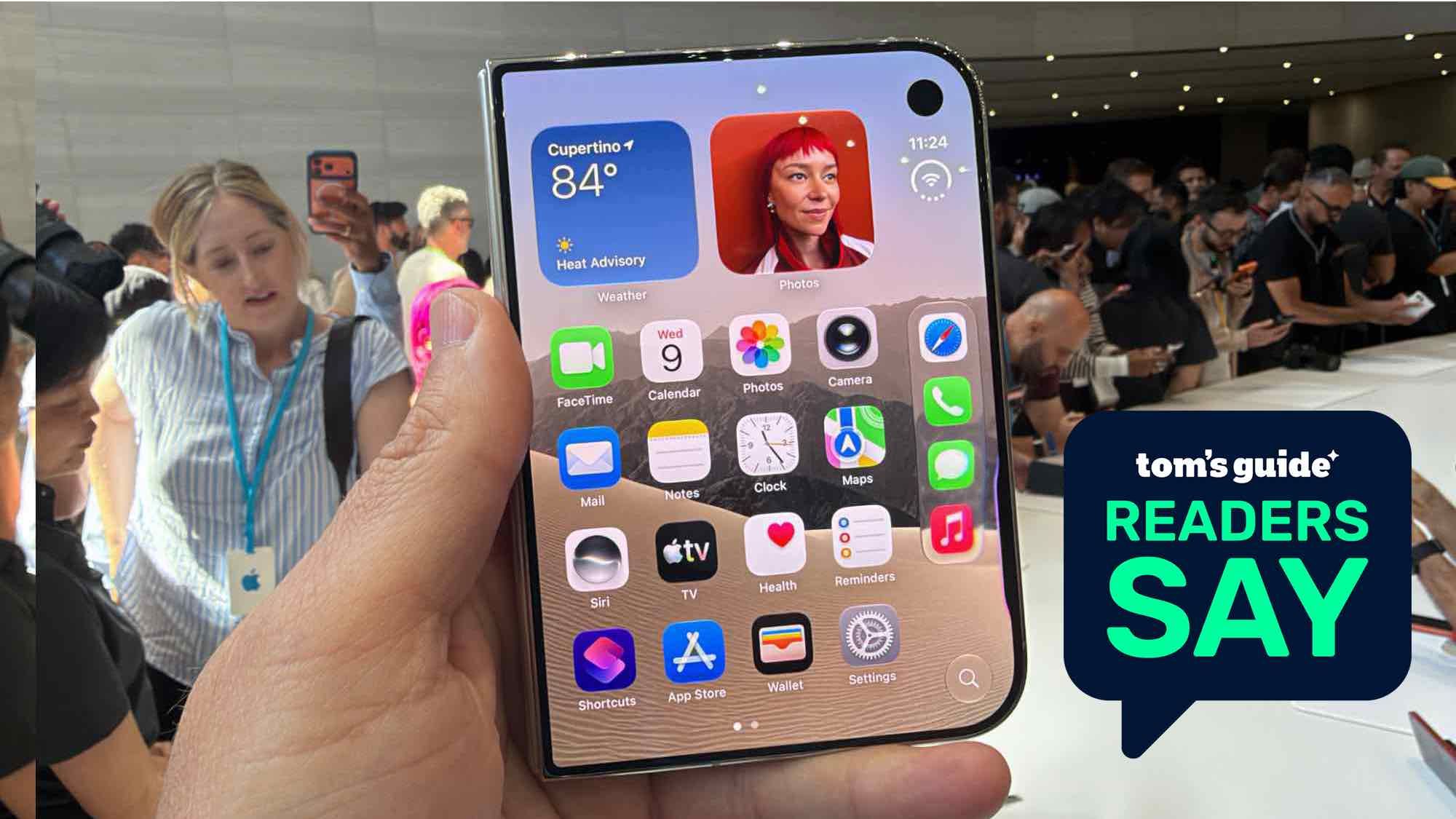
The $2,000 Question No One Is Asking Right
Apple’s iPhone Duo is out. It’s also, arguably, the most revealing product moment of the year — not for what it delivers, but for what it forces consumers to confront.
At $2,000, this is Apple’s first foldable. It’s also the first time many people have had to sit down and honestly calculate whether a bigger screen and dual-screen productivity are worth losing a telephoto lens, Face ID, and significant battery life. The answer, from the crowd, is not unified. That’s the point.
Tom’s Guide polled its readers and collected hundreds of comments after laying out the Duo’s trade-offs on video. The result: a split that tells you far more about where the smartphone market is going than any spec sheet ever could.
The Camera Trade-Off Is Bigger Than It Looks
The telephoto camera is gone. There is no dedicated zoom lens on the Duo. That means zoomed shots carry noticeably lower resolving power — one commenter calculated it at 25% of what the iPhone 17 Pro delivers and worse than an iPhone 14 at 66%. For anyone who zooms in, that gap is not subtle.
The price-to-camera equation sits uncomfortably. The iPhone 18 Pro Max, with its variable aperture and top-tier camera system, costs $800 less. That discrepancy is what triggered the most engagement, and not all of it favorable.
Some readers pushed back hard against the idea that a $2,000 phone should have top-shelf cameras at all. The argument ran like this: phones are smartphones first, cameras second. If you want serious photography, buy a Pro. Foldables are for productivity and media consumption, not for replacing a dedicated camera.
Others found that reasoning unconvincing. Their expectation was simple — and rooted in decades of Apple marketing: more money buys better cameras. When Apple removes a lens and charges a premium, the disconnect feels deliberate. As one viewer put it, “I’m not paying top dollar for a worse camera. That’s the biggest issue.”
The uncomfortable truth underneath both positions is that consumers have been conditioned to believe price equals camera quality. Apple taught them that. Now Apple is asking them to unlearn it — without offering a clear reason why the Duo’s camera shouldn’t match its price tag.
Face ID’s Exit Is Smaller Than You’d Expect
The Duo drops Face ID entirely. Not because Apple forgot about security — but because the hinge and foldable form factor leave no physical room for the sensor array. Touch ID replaces it, a biometric system that hasn’t appeared on iPhones since the iPhone X.
Is Touch ID a downgrade? For some, absolutely. A commenter with arthritis called Face ID loss a dealbreaker — pressing a physical sensor every day is exhausting when your fingers can’t cooperate. For others, it’s barely noticeable. Those who own an Apple Watch noted that their watch unlocks the phone automatically, making the absence of Face ID virtually invisible in daily use.
There’s also the counterargument: Face ID has its own failure modes. Bad hair days. Sunglasses. Waking up at 6 a.m. half-asleep. One viewer joked about all of it in a comment that captured a genuine blind spot in Apple’s facial recognition reliance.
Touch ID isn’t a downgrade for everyone. It’s a different kind of unlock — slower for some, more reliable for others. But Apple’s choice to drop Face ID signals something important: the company is willing to sacrifice a signature feature to make the foldable work. That willingness to cut deeply is new.
Battery Life Undermines the Productivity Pitch
Apple rates the Duo at 24 hours of normal use and 31 hours of video playback. The iPhone 18 Pro Max: 30 hours and 45 hours respectively. The gap widens when you factor in that the Duo is being sold partly as a multitasking and content-consumption device — the very activities that drain batteries fastest.
One reader dismissed the battery concern as a “superficial first-world problem,” arguing that nobody with a job and a need for sleep will ever push the Duo through 45 hours of video. That’s fair for a subset of users. But it misses the core tension: a phone marketed for heavy, on-the-go productivity should not lag behind a traditional slab in endurance. The Duo’s battery doesn’t just trail the Pro Max — it trails what the Duo is supposed to be good at.
The Two-in-One Promise Is Real, but Narrow
Despite the criticisms, a striking number of people are still buying in. In Tom’s Guide’s poll, 63% of respondents said they would purchase the iPhone Duo. That’s a strong number for a first-generation foldable at this price point.
The case for the Duo is coherent among a specific buyer: someone who wants to replace an iPad with their phone, who values screen real estate and multitasking over camera quality, who already owns an Apple Watch and doesn’t rely on Face ID, and who watches a lot of content on the go.
One commenter put it plainly: “I don’t want an iPad and an iPhone if we now have both in one.” That sentiment — two devices, one form factor — is the Duo’s actual value proposition. It’s not a camera phone. It’s not a battery champion. It’s a screen champion, and for a shrinking but vocal slice of the market, that’s enough.
What This Means for Apple’s Foldable Strategy
Apple’s decision to frame its entire year around the Duo signals how seriously the company takes this category. Bloomberg’s coverage, the product launch timing, the marketing push — all of it suggests Apple believes foldables are the next major smartphone inflection point.
But the consumer reaction reveals a risk. Apple’s traditional buyers expect every dollar to translate into incremental improvements: better cameras, longer battery, brighter displays. The Duo flips that expectation on its head. It asks buyers to accept trade-offs in exchange for a form factor they haven’t fully bought into yet.
First-generation products are supposed to be imperfect. The original iPhone lacked 3G, a camera, and an app store. People forgave those gaps because the core experience was revolutionary. The Duo doesn’t have that luxury. Its core experience — a phone that folds — is still unfamiliar to most buyers. Asking them to sacrifice camera quality on top of that uncertainty is a tough sell.
Who Wins, Who Loses
The winners are early adopters who already see their phone as a portable screen and their camera as a separate concern. They’ll get a device that genuinely collapses two experiences into one — and for them, that’s worth $2,000.
The losers are the people Apple’s camera-focused marketing built for: the photography enthusiasts, the Zoom-curious, the people who measure phone quality by their lens lineup. For them, the Duo feels like a step backward at a step-forward price.
And then there’s the broader market. Samsung and Google have been shipping foldables for years. Apple arrived late, and its first attempt asks consumers to pay more for less in categories that matter most to the average buyer. The Duo won’t lose sales because it’s bad — but it may lose minds because it forces a choice that most people don’t want to make.
The Real Takeaway
The iPhone Duo debate isn’t really about cameras or battery life. It’s about what people will tolerate from a phone that’s still figuring out what it wants to be. Foldables are moving from novelty to mainstream, and Apple’s arrival is accelerating that shift. But the $2,000 price tag comes with an implicit question: what are you actually giving up to get the fold?
The camera is the biggest sacrifice. Face ID is the second. Battery is the third. And for a lot of buyers, any one of those three is enough to walk away.
That’s not a failure of the Duo. It’s a honest accounting of what first-generation foldables cost — and a reminder that even Apple can’t engineer its way out of the physics of making a phone that folds.