Apple's iPhone Ultra Hinge Isn't Just Hardware — It's a Bet on the Foldable Market
Mark Gurman reports early iPhone Ultra testers are impressed by the hinge, form factor, and usability — signals that Apple may have finally cracked the hardest part of foldable design. But the camera compromise at $2,000 reveals what's still missing.
The hinge is the story
Mark Gurman’s latest Power On newsletter carried a detail that deserves more attention than it’s getting. Early internal testers of Apple’s so-called iPhone Ultra are praising its hinge — describing it as durable, smooth, and integral to why the device fits comfortably in a pocket despite its unfolded size.
That single observation is more revealing than any spec sheet. The hinge has been the Achilles’ heel of every foldable smartphone since Samsung opened the category in 2019. It’s the component that fails, creases the screen, collects dust, and makes users nervous every time they close the device. Samsung has迭代ated on it for years. Huawei, Xiaomi, and Oppo have all tried their own approaches. None have achieved the kind of quiet reliability that makes a hinge invisible to the user.
If Apple has solved that — and early tester feedback suggests it has — then the iPhone Ultra isn’t just another foldable with an Apple logo. It’s a device built around a component most competitors still haven’t mastered.
What the testers actually liked
According to Gurman, the praise broke down into three areas: the overall form factor and pocketability, the hinge durability, and the iPad-like layout of the 7.76-inch inner display. Testers also noted the device works well as a camera viewfinder when folded — a use case that turns the hinge itself into a functional advantage rather than just a mechanical compromise.
The 5.5-inch cover display means the phone is usable one-handed before you even open it. That’s a deliberate contrast to current foldables, which are either too wide in their folded state or force you to unfold just to check a notification. Apple is treating the folded form as primary and the unfolded screen as an upgrade, not the other way around.
This is a philosophical difference from Samsung’s Galaxy Z Fold line, where the folded state is basically a temporary transit position. Apple is designing for both states to feel intentional.
The camera tradeoff is the real tell
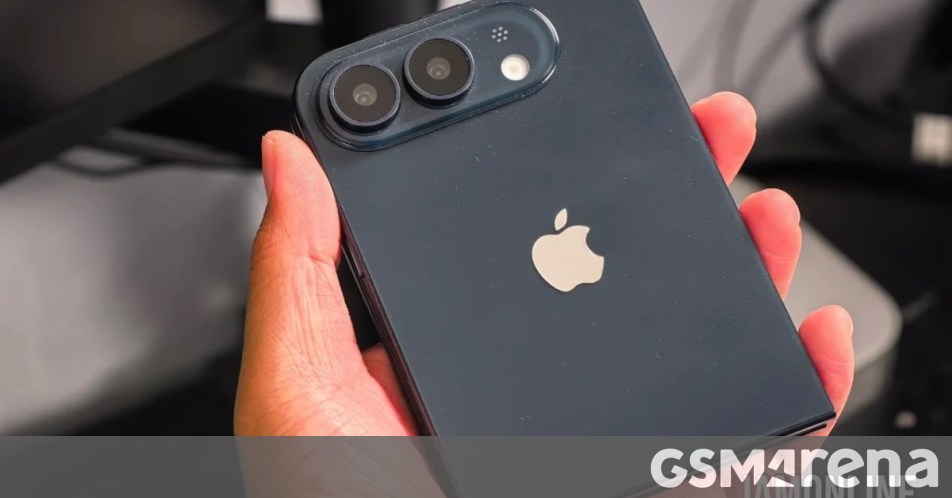
Here’s where the story gets complicated. The iPhone Ultra will launch with just a 48MP primary sensor and an ultrawide camera. No telephoto lens. At an expected $2,000 price point.
For an iPhone Ultra — a name that has historically signaled Apple’s most camera-forward device — that omission is striking. The current iPhone 16 Pro Max ships with a 5x tetraprism telephoto. The gap between what Ultra-branded iPhones have offered and what this foldable will deliver is not incremental; it’s a category subtraction.
This is almost certainly a supply chain decision. Foldable displays consume an enormous amount of the Bill of Materials. The hinge mechanism adds cost and thickness. Squeezing a telephoto module — especially one with periscope optics — into a device that must also fold in half is a serious engineering challenge. Apple appears to have drawn a line: the form factor and hinge take priority over camera hardware in this iteration.
That’s a defensible call. But it will disappoint a specific segment of Apple’s existing Ultra customer base, and those are the customers most likely to pay $2,000 upfront.
Who wins, who loses
The winners here are Apple’s supply chain partners who specialize in hinge manufacturing and thin-film display layers. Samsung Display and LG Display have been racing to refine foldable OLED panels for years. Apple entering at scale with a hinge-focused design philosophy will accelerate demand for the specific components this device requires — and punish suppliers who haven’t invested in the right capabilities.
The losers are the current foldable incumbents, particularly Samsung. If Apple ships a foldable that feels durable, pocketable, and naturally useful — not just novel — the value proposition of every existing foldable shifts. Samsung’s first-mover advantage was never about technology; it was about presence. Apple erases that with a single announcement.
Chinese manufacturers like Huawei and Xiaomi face a different threat. Their foldables already compete on form factor experimentation. Apple’s approach — restraint, hinge quality, and ecosystem integration — targets a customer segment that doesn’t care about how many ways a phone can fold. It cares about whether it works like an iPhone and whether it lasts.
What happens next
Apple is expected to unveil the iPhone Ultra next month. The device will reportedly feature Touch ID integrated into the power button — another sign that Apple is willing to diverge from Face ID as the sole biometric option when the form factor demands it. A foldable phone with a large inner screen needs a unlock method that doesn’t require looking at it directly.
The $2,000 price will set a ceiling that keeps this device niche. But niche doesn’t mean unimportant. Apple’s foldable strategy appears calibrated to prove the category can work at its highest tier before the technology trickles down. That’s the same playbook used for the Apple Watch and the AirPods — establish the premium, then let the market compress pricing over time.
What the tester feedback confirms is that Apple isn’t rushing a foldable to market. The hinge praise, the pocketability focus, the camera tradeoffs accepted rather than hidden — these are decisions made by a company that can afford to wait. Samsung couldn’t afford to wait in 2019. Apple didn’t need to.
The real question isn’t whether the iPhone Ultra will sell. It’s whether this device convinces the broader market that foldables have finally matured past their mechanical growing pains. The hinge is where that argument lives or dies.