Apple Watch Series 12's Readiness Score Signals a Regulatory Gambit
Apple's latest Watch introduces a readiness score powered by continuous biometric sensing and local AI processing. It looks like an incremental fitness upgrade, but the underlying architecture points to a much bigger play: repositioning the Watch as a preventive health device and courting FDA clearance beyond its current consumer-wellness lane.
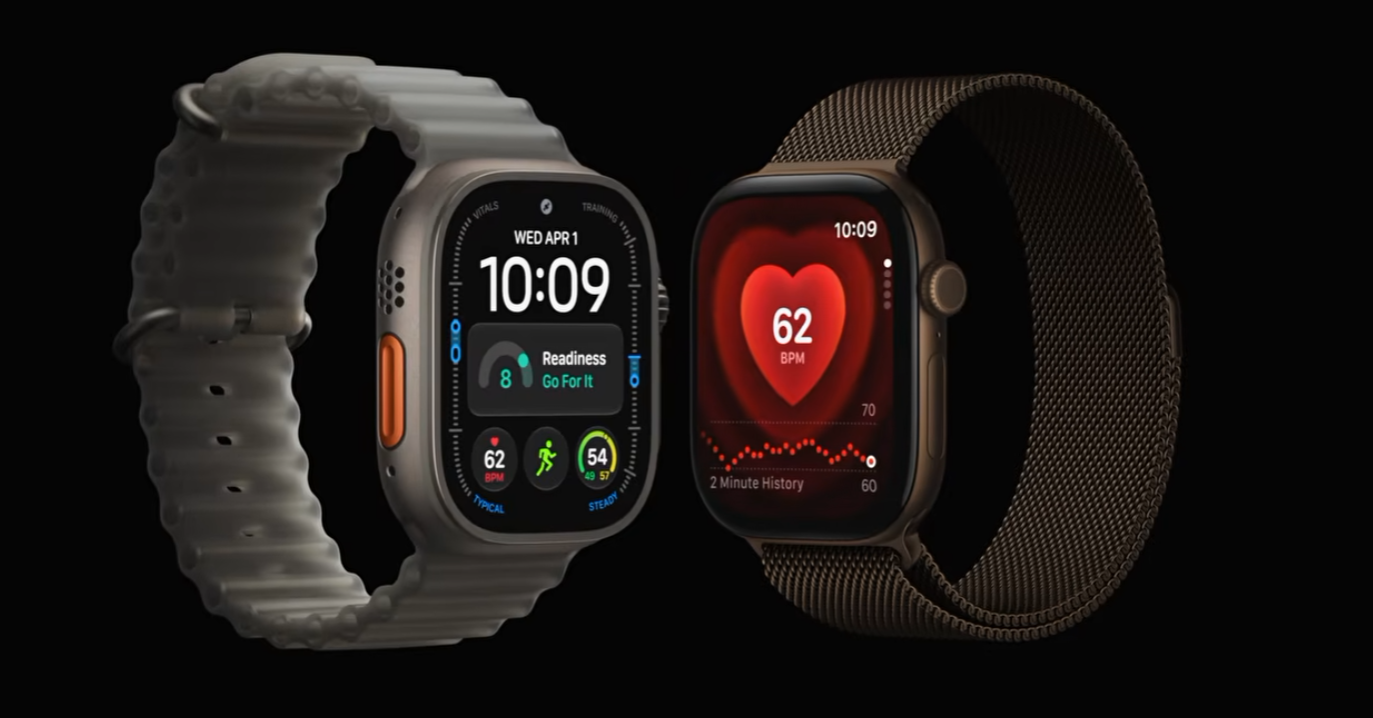
Apple is quietly building a prescription device inside your wrist
When Apple unveiled the Apple Watch Series 12 and Ultra 4 in Japan on September 10, the press focus landed squarely on the usual suspects: battery life, new colors, the return of ceramic. The prices—¥71,800 and ¥14,2800 respectively—are what you expect. But buried inside the spec sheet is a feature that, if Apple plays its hand correctly, could force a fundamental reclassification of the entire smartwatch category.
It is called the Readiness Score.
The Series 12 uses a new Health Sensing System combining optical and electrical heart-rate sensors to measure pulse every five seconds and increase the sampling frequency of heart-rate variability. From those readings, it computes a single number from zero to ten describing how prepared your body is for the day ahead. It then maps that number onto four qualitative bands—recovery, light, moderate, full exertion—and suggests corresponding activity. The Ultra 4 gets the same system, plus up to 84 hours of battery life in low-power mode.
On its face, this is familiar Apple Watch territory. The company has long offered sleep tracking, cycle predictions, and workout readout. What makes this moment distinct is not the metric itself but the infrastructure behind it: continuous five-second sampling, local inference on the S11 chip, and a design that treats the data stream as a longitudinal record rather than a set of snapshots.
The sensor stack is built for classification, not just notification
Apple has been approaching FDA clearance incrementally. The AFib announcement on the Series 6 in 2021 was a guarded step into medical-device territory. The ECG app followed a careful path of post-market surveillance and clinical studies. Each clearance came with narrow indications: atrial fibrillation detection in users aged 22 and older, irregular rhythm notifications. The regulatory filings were explicit about what the device could not do.
The Series 12 flips the script. Continuous sensing at five-second intervals is not the cadence of a consumer wellness tracker. It is the cadence of a medical-grade monitor. The electrical heart sensor—a technology Apple introduced on earlier Ultra models and now folding into the mainline Series—measures a single-lead ECG without requiring the user to touch the crown. That means the watch can detect arrhythmia episodes passively, in the background, across days and weeks. Combined with the HRV frequency increase, the system is collecting a richer signal than anything Apple has shipped before.
The Readiness Score is the user-facing packaging for that signal. But the real product is the data pipeline underneath. A score derived from minutes of isolated measurements is a feature. A score derived from hundreds of hours of continuous multimodal sensing is a different category entirely.
The S11 chip and the privacy architecture that enables a medical pivot
Apple has spent years building a privacy story around on-device processing. The S11 chip routes the Audio Intelligence workloads—siren detection, baby-cry alerts, the Live Rewind conversation transcription, the Siri Recap summary—into an independent secure enclave. Nothing leaves the wrist for processing. Apple frames this as a consumer-privacy feature. The regulatory consequence is far more consequential.
Medical-device regulators care about two things: signal integrity and data provenance. If Apple can demonstrate that its on-device algorithms produce clinically valid outputs without transmitting raw biometric data to external servers, it strengthens the case that the Watch meets the safety and efficacy thresholds for higher-class clearance. The secure enclave is not just a marketing talking point. It is a structural advantage that competitors relying on cloud-based inference cannot easily replicate.
That advantage matters because the next frontier for wearable health is not detection but prediction. AFib is a discrete event. Predicting a bout of sickness, a drop in blood pressure, or an oncoming cardiac episode requires models trained on continuous multi-day streams. Apple is building those streams right now. The ceramic body return, while aesthetically striking, is a quiet signal of the same instinct: Apple is reclaiming the premium slot in its own lineup and using it to anchor a product it wants clinicians to take seriously.
Who wins, who loses, and what happens next
If Apple secures clearance for the Readiness Score or any adjacent indication, the winners are clear. Apple gains a defensible moat: a regulatory-graded feature set that competitors cannot copy without replicating the sensor stack and the clearance process. Prescribers gain a tool that bridges the gap between consumer wearables and clinical monitors. Patients gain early warning.
The losers are the companies sitting on the fence about wearable regulation. Samsung, Garmin, and Fitbit all collect similar biometric streams. None have the combination of on-device silicon, an expanding medical-clearance portfolio, and a user base large enough to generate the longitudinal datasets that would satisfy a rigorous submission. They are stuck in the consumer tier. Apple is moving upward.
What happens next depends on timing. Apple is accepting orders now with a September 18 release. watchOS 27, which brings the Apple Intelligence–powered Siri features alongside the Health Sensing System, will ship with the new hardware. The Readiness Score is available out of the box. FDA submission timelines, however, operate on a different clock. Even an expedited review for a novel indication takes months. Expect Apple to file within the first year of the product cycle and to frame the Readiness Score as a gateway indication—a low-risk entry point that demonstrates the validity of the underlying sensing architecture.
The Ultra 4 is the easier case. Its battery life—50 hours standard, 84 in low power, 25 in full GPS with heart-rate monitoring—already positions it for endurance-sport and expedition use. Extending that into medical-clearance territory for athletic populations is straightforward. The Series 12 is the harder one. Apple must convince regulators that a fashion-conscious device in an aluminum, titanium, or ceramic case can deliver clinical-grade outputs consistently enough for daily-use clearance.
The ceramic detail nobody is talking about
The return of ceramic to the Series 12 lineup is not incidental. Apple last offered a ceramic watch in 2015, on the original Apple Watch Edition at a price that alienated most of its audience. This time, ceramic is positioned alongside aluminum and titanium as a core material option. The message is that Apple wants the Series 12 to function as both a daily driver and a statement piece—a device consumers wear proudly and clinicians will not hesitate to recommend. That dual positioning is essential if Apple intends to cross the regulatory threshold.
The Series 12 starts at ¥71,800. The Ultra 4 at ¥142,800. Both are priced for people who already own an Apple Watch and will upgrade for the new sensors. But the pricing also leaves room for Apple to introduce a separate, cleared-for-medical-use SKU later without cannibalizing the current lineup. That is the pattern Apple has followed with every major regulatory push: launch the consumer product, demonstrate the data, file the clearance, and—if approved—market the cleared indication alongside, not instead of, the original feature.
The real bet is that the Watch becomes a health system, not a health accessory
Every other smartwatch maker is racing toward longer battery life and more rugged builds. Apple is racing toward denser data. The Readiness Score is the outward sign of that bet. Under the hood, the Series 12 is accumulating the kind of continuous physiological record that could eventually support predictive alerts for conditions far beyond arrhythmia.
Whether Apple follows through depends on three things: whether the FDA accepts continuous-sensing data as a valid basis for clearance, whether Apple can publish clinical validation that survives peer review, and whether users trust the secure enclave enough to let the watch run unchecked for weeks at a time. None of those outcomes is guaranteed. But the architecture is now in place. The question is no longer whether Apple can collect better health data. It is whether anyone else can stop it from turning that data into a regulated medical claim.