Apple's M6 Chip Is a Bet on Local AI — and It Changes Everything
Apple's new M6 and M5 Ultra chips push on-device AI compute to a new level. The implications go far beyond Mac buyers — they challenge the entire cloud GPU model and reshape what Windows OEMs have to offer.
Apple Is Betting the House on On-Device AI
The numbers on Apple’s new M6 chip aren’t incremental. A 4x speedup for AI tasks. Two Neural Engines instead of one. 170GB/s of memory bandwidth.
This isn’t just a better Mac mini. It’s a statement about where computing is going.
Apple is positioning the M6 — and the M5 Ultra sitting above it in the Mac Studio — as the answer to a question the industry hasn’t fully acknowledged: when does running AI locally become viable enough to challenge the cloud GPU model that NVIDIA and AMD have built billion-dollar businesses around?
The answer, apparently, is now.
The M6 Changes the Math
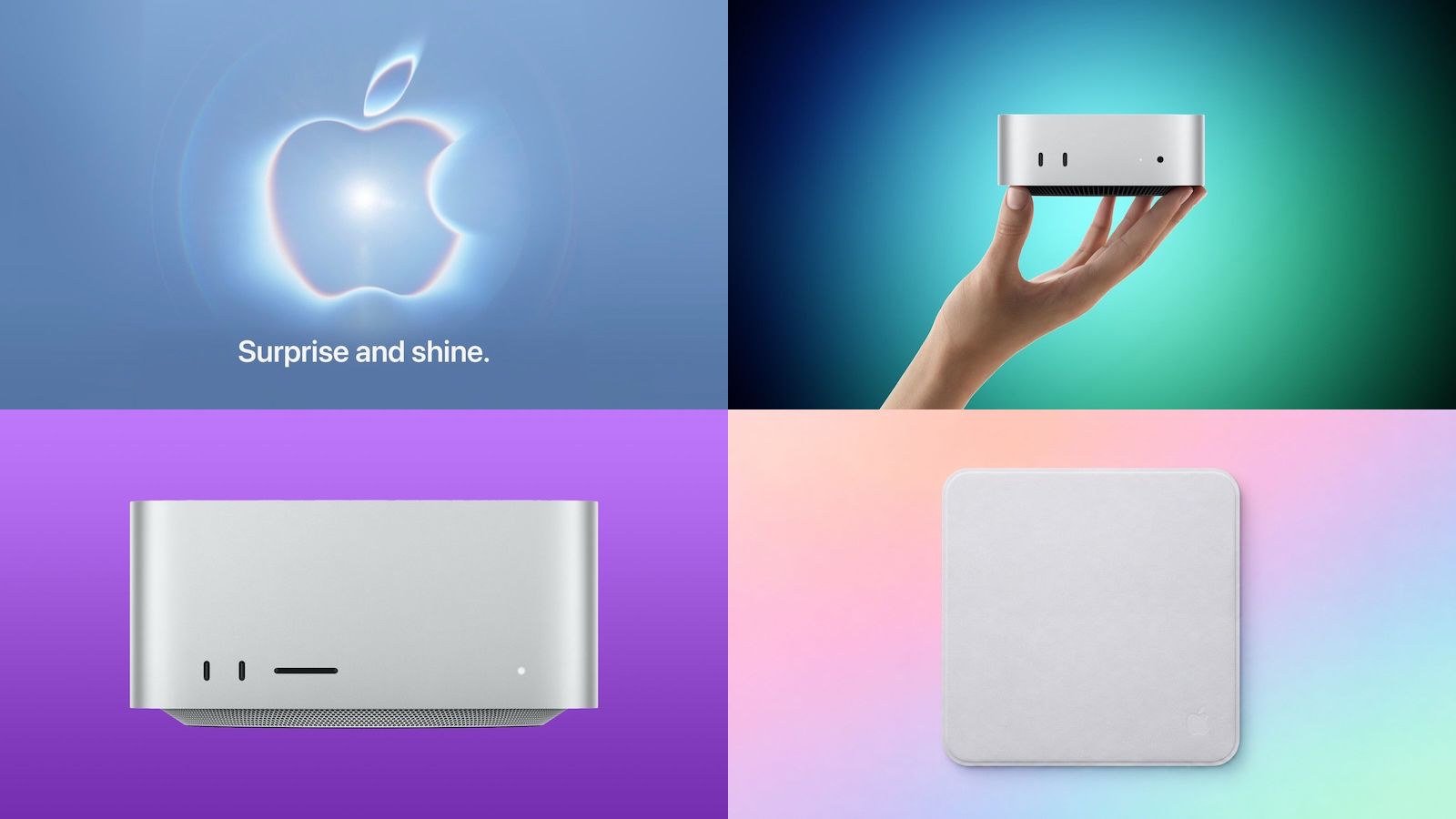
Apple announced the updated Mac mini this week, configurable with either the new M6 or the M5 Pro chip released earlier this year. The M6 carries a 12-core CPU, a 12-core GPU, and — crucially — the first dual 16-core Neural Engine configuration Apple has shipped.
Compared to the previous M4 generation with 32GB of unified memory, Apple says the M6 Mac mini delivers up to 40% faster CPU performance, up to 4x faster AI performance, up to 2x faster graphics, and up to 2x faster storage. Those aren’t marginal gains. A 4x improvement in AI throughput on a device that starts at $599 changes the cost equation for anyone running inference workloads locally.
The Mac Studio announcement is equally significant. Apple called the M5 Ultra its most powerful chip ever, with up to a 36-core CPU, 1.25x higher single-threaded performance, and 1.3x higher multithreaded performance over the M3 Ultra. It also introduces PCIe Gen 6 SSD architecture, Thunderbolt 5 at 120Gb/s, Wi-Fi 7, and Bluetooth 6 through Apple’s N1 chip. The Studio can drive up to eight displays with genlock support over USB-C.
For creative professionals and AI researchers who’ve been pricing out cloud GPU instances, these are meaningful numbers. A Mac Studio with the M5 Ultra running local inference is a different financial proposition than renting A100 or H100 time by the hour.
Who Loses When AI Goes Local
The cloud GPU vendors see this coming. NVIDIA’s data center business has been built on the premise that AI workloads are too large, too expensive, and too complex to run on consumer hardware. That’s been a defensible position — until it wasn’t.
Each generation of Apple Silicon has narrowed the gap. The M6 closes it further. When a $2,000 Mac Studio can handle inference workloads that previously required a cloud instance costing dozens of dollars per hour, the math shifts for individual developers, small teams, and even enterprises that want to keep data on-premises.
Windows OEMs face a harder sell. The Microsoft-NVIDIA partnership has long positioned Windows PCs as the consumer gateway to cloud AI. Apple is now offering that capability natively, on hardware that costs a fraction of a comparable NVIDIA-equipped machine and draws a tenth of the power.
This isn’t to say Apple will displace cloud GPUs entirely. Training large models still requires data center-scale infrastructure. But inference — the act of running those models after they’re trained — is where the local compute argument becomes strongest, and it’s also where volume lives.
The Second-Order Effects
Developers should pay attention. Apple’s move raises the floor for what Mac software can do without a network connection. Apps that previously required cloud-based AI features — photo enhancement, transcription, generative tools — can now run entirely on-device. That’s a privacy advantage and a reliability advantage. It’s also a competitive advantage for developers who optimize for Apple Silicon early.
Enterprise buyers face a similar reassessment. IT departments that budget for cloud AI credits may find that a fleet of M6 Mac minis handles a significant portion of their inference needs at lower cost and with better data governance. The Mac mini starting at $599 with M6 is especially relevant here — it undercuts anything in the Windows space that offers comparable AI performance.
The GPU ecosystem itself is watching. AMD and Intel have been trying to build consumer AI capabilities for years. NVIDIA’s dominance in this space is real, but it’s not unassailable. Apple’s integrated memory architecture — where CPU, GPU, and Neural Engine all share the same pool of memory — is fundamentally more efficient than the discrete memory model that cloud GPUs rely on. That efficiency is what makes the 4x AI performance claim credible.
The iPhone Foldable Complicates Things Too
The M6 isn’t the only story this week. Bloomberg’s Mark Gurman reported that the iPhone Ultra — Apple’s upcoming foldable — is impressing early testers, particularly around form factor and the new iPad-style app layouts that take advantage of the unfolded screen. But the camera setup lacks a telephoto lens, which could limit appeal at the expected premium price point.
That’s a separate concern from the AI story, but it’s worth noting: Apple is clearly thinking about how AI integrates across its entire device ecosystem. A foldable iPhone with on-device AI capabilities running simultaneously with a Mac Studio creates a workflow possibility that neither platform offers alone.
What Happens Next
Apple’s September 9 event — tagged “Surprise and Shine” — will announce the iPhone 18 Pro, iPhone 18 Pro Max, and the foldable iPhone Ultra. There won’t be a standard iPhone 18 this year; Apple is waiting until spring 2027 for the more affordable model.
But the real shift is happening now, with the Mac line. Apple isn’t just selling hardware. It’s making a strategic argument that the future of AI computing isn’t in the cloud — it’s in your hands, on your desk, running locally on silicon it designed itself.
The question for the rest of the industry isn’t whether Apple will ship more chips. It’s whether anyone else can compete on that same premise.
NVIDIA has the training side locked down. AMD and Intel are trying to build alternatives. But Apple’s integrated approach — memory, silicon, and software working together — is something no discrete GPU vendor can replicate without redesigning their entire architecture.
The M6 is Apple’s shot at defining the next decade of personal computing. And if the 4x AI performance claim holds up in real-world use, the company may have just changed the rules.