Apple's Secret AI Crisis Was Waiting for Cook to Leave
Tim Cook's departure after 15 years hands Apple to a hardware engineer facing two urgent debts: an AI gap against Google and Microsoft, and a China supply chain forced to relocate by the Trump White House.
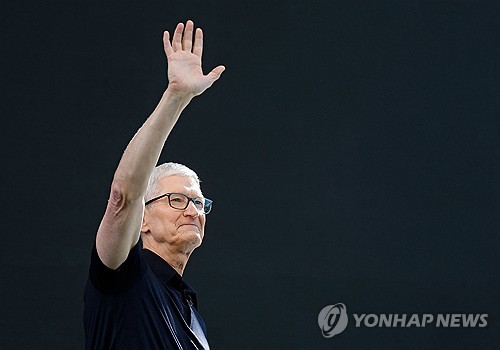
The Quiet Handoff Nobody Saw Coming
Tim Cook is stepping down. After 15 years at the helm, the man who turned Apple into the world’s first four-trillion-dollar company is handing the keys to J.K. Turner, a hardware engineer who has spent his entire Apple career in the shadows of product development rather than in the glare of keynote stages.
Cook announced the transition on X, calling it the end of his time as CEO but the continuation of his commitment to Apple. He took the board role of executive chairman, meaning he will stay involved in government relations and policy coordination — a crucial function given the Trump administration’s escalating pressure on Chinese supply chains.
The news broke through Yonhap News, the Korean wire service, before major Western outlets picked it up. That sequencing matters. It suggests the information may have leaked from Asian markets where Apple’s supply-chain dependencies are most exposed, not from Cupertino itself.
The Hardware Man With an AI Problem
Turner graduated from the University of Pennsylvania’s mechanical engineering program and joined Apple in 2001. He has run hardware engineering ever since. His first public appearance as CEO is scheduled for September 9, when Apple is expected to unveil its latest products.
That timing — just days after the transition — is notable. It means Turner will be introducing new hardware to a market that is increasingly measuring tech companies by their AI capabilities, not their device designs.
Apple’s AI gap is the elephant Turner inherits. Google has Gemini. Microsoft and OpenAI have ChatGPT integrated into every product in their portfolio. Amazon has Alexa evolving into something more capable. Meta has its own large language models running across Instagram and WhatsApp. Apple’s announced services, including the Apple Intelligence features rolled out over the past year, have been widely criticized as underwhelming compared to competitors.
Turner’s hardware background is both an asset and a liability. Apple has always been a design-first company. The iPhone succeeded because it was beautiful and functional, not because it had the most advanced chip or the smartest assistant. But the industry’s center of gravity has shifted. The question is no longer which phone feels best in the hand. It is which ecosystem can do the most useful work with artificial intelligence.
The China Problem, Solved? Not Even Close.
If the AI gap is Turner’s strategic headache, the China supply chain is his operational emergency.
The Trump administration has been explicit about wanting tech companies to reduce reliance on Chinese manufacturing. Apple, which assembles the vast majority of its iPhones in China, is the single most exposed company in this debate. The cost of moving production — even partially — to India, Vietnam, or elsewhere is enormous. Apple has been experimenting with limited Indian production for years, but scaling that to replace Chinese capacity is a multi-year project at best.
Cook, as executive chairman, will remain the face of Apple’s government relations. That is a deliberate choice. The incoming CEO should not be the one negotiating with Washington on trade policy while also trying to restructure a global supply chain. But it also means Cook is not truly gone. He is the buffer between Turner and the political storms that are guaranteed to come.
Why Korea Is Watching First
The fact that Yonhap News is breaking or deepening this story before Bloomberg or the Wall Street Journal is not incidental. South Korea’s electronics industry — Samsung, LG, Hyundai — sits in a direct competitive relationship with Apple, and Korean financial media has been tracking Apple’s leadership planning for months. Korean outlets understand that supply-chain transitions affect Korean suppliers as much as Chinese ones. Foxconn and Luxshare Precision dominate Apple’s assembly lines in China, but Korean component suppliers like Samsung SDI and LG Energy Solution feed those lines. A CEO transition at Apple ripples through Seoul’s markets almost as quickly as San Francisco’s.
Western desks tend to treat Apple leadership changes as internal corporate news. Korean desks treat them as supply-chain and trade-policy events with regional consequences. The difference in framing reveals something about what each market actually cares about.
Who Wins, Who Loses
Turner wins nothing automatically. He inherits a company with massive cash reserves, a loyal customer base, and a brand that still commands premium pricing. But he also inherits a product cycle where the iPhone’s annual upgrades offer diminishing returns and an AI strategy that is years behind the curve.
Cook wins the narrative. He leaves with Apple’s market capitalization up more than 13 times his starting point — from roughly $350 billion to $4.6 trillion — and with a reputation as the steady operator who delivered growth even if he never matched Jobs’s revolutionary vision. His move to executive chairman ensures he stays relevant.
Apple’s competitors win the most. Every quarter Turner spends figuring out succession logistics and supply-chain repositioning is a quarter his rivals spend closing the AI gap further. Google, Microsoft, and Amazon do not need a CEO transition to keep shipping AI capabilities. They need Apple to be distracted, and a leadership change is the most effective distraction available.
What Happens Next
September 9 will be Turner’s debut. Expect hardware announcements — likely a new iPhone lineup and possibly new wearables or display products. The AI conversation will be unavoidable, and Turner’s answers in that domain will set the tone for the next five years at Apple.
The supply-chain question will not resolve quietly. The Trump administration will continue pressuring Apple to diversify away from China, and Apple will continue complying slowly, citing complexity and cost. Turner will inherit this friction immediately.
Cook’s role as executive chairman means he will remain visible. He is not disappearing into retirement. He is shifting from operational leadership to strategic influence, which is precisely the position a founder-style leader occupies after stepping aside.
The real test for Apple is not whether Turner can build better hardware. It is whether he can force the company to prioritize AI with the same intensity it has always applied to industrial design. That requires a cultural shift, not a personnel change. And cultural shifts take longer than election cycles.
Turner has until his first major product event to signal what kind of CEO Apple is getting. The rest of the decade will follow from there.