Arkane's Ghosts Reboot the Immersive Sim After Redfall's Collapse
The designers behind Deus Ex and Dishonored are launching Black Pony Immersive after Arkane Austin's closure — and they're making a pointed stand against Games as a Service.
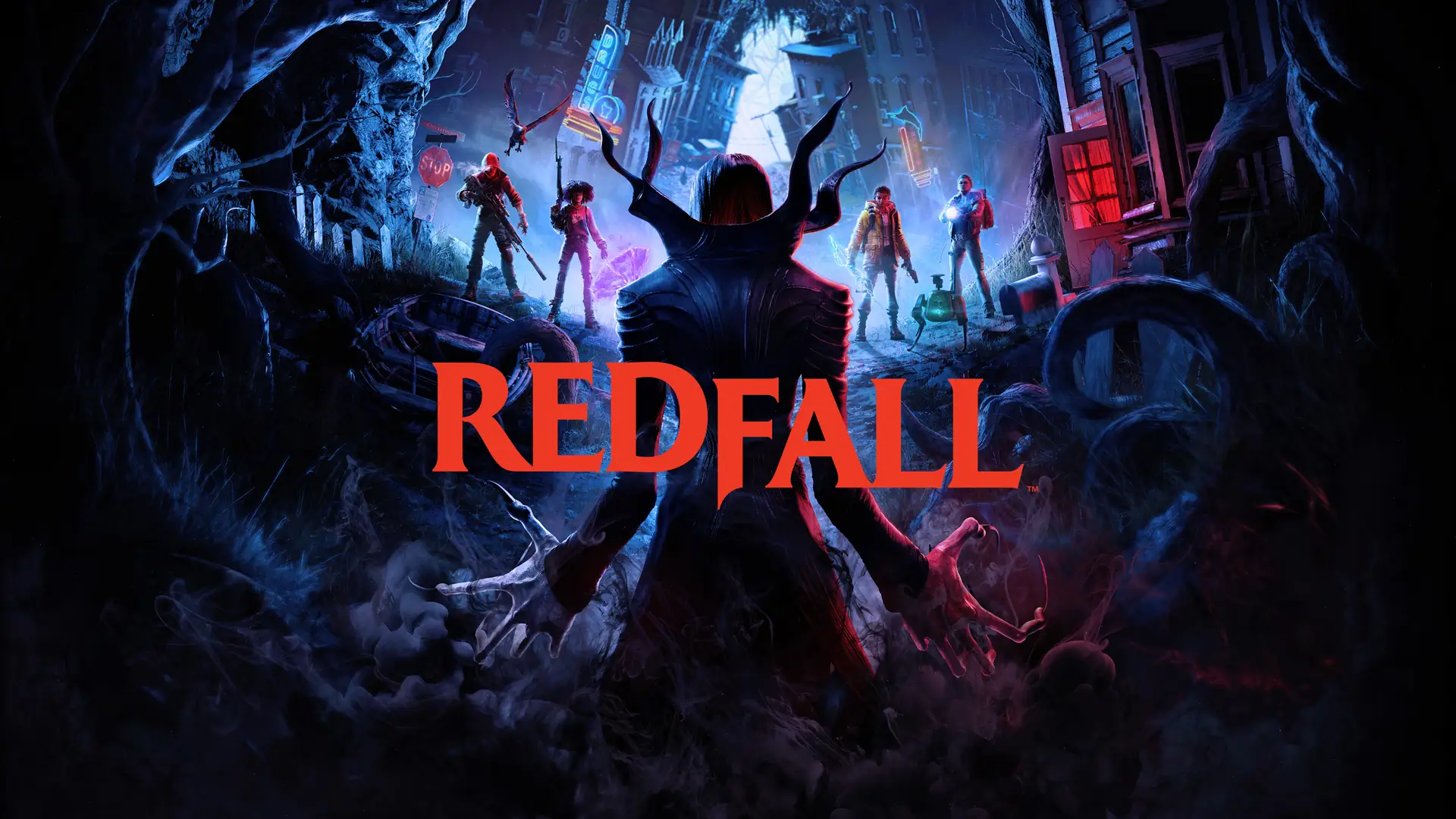
The Aftermath of a Studio Closure — and the Story It Tells About the Industry
Arkane Austin is gone. But its DNA is very much alive, and it has a new name: Black Pony Immersive.
The studio was shuttered in 2024 following the commercial and critical failure of Redfall, the co-op vampire shooter that arrived technically broken and never recovered. Now, its former creative leadership — Harvey Smith, Ben Horn, and Ricardo Bare — have publicly detailed what went wrong and announced a new studio built on the opposite principles.
This is not just a story about talent migration. It is a statement about where the immersive sim genre stands in 2026 and who gets to define its future.
The closure of Arkane Austin represents more than the loss of another developer to industry consolidation. It marks the end of an era for a studio that helped define what modern immersive sims could be. The team’s experience building Deus Ex: Human Revolution and Dishonored established a template for systemic, choice-driven gameplay that influenced countless successors. Their departure creates a vacuum in both talent and design philosophy that few others can fill.
What Redfall’s Collapse Really Was
The founders were unusually candid about Redfall’s failures, and their account reframes the conventional blame. Most coverage focused on the game’s buggy launch and weak core loop. Black Pony’s team puts the responsibility higher up.
According to Smith, Zenimax management pushed the single-player team to adopt live-service mechanics and broaden its online audience. A studio whose institutional knowledge was built on deep, branching narratives and systemic gameplay was told to become something else.
Then came the pandemic, which disrupted production timelines. Followed by layoffs that hollowed out the very expertise needed to execute the pivot. The result was a game launched in a state that failed both its intended audience and its new ambitions.
This is a familiar pattern across the industry: publishers demanding service-model features from teams that were never structured to deliver them, then blaming the teams when the product falters. Redfall is one of the most expensive recent examples, but it is far from the only one. The broader issue is structural — when corporate leadership prioritizes engagement metrics over design integrity, even talented studios struggle to produce coherent experiences.
Why This Matters Beyond the Genre
Immersive sims have always occupied a niche. They demand player agency, complex world systems, and a willingness to trust players with dense, nonlinear design. Studios willing to make them have grown rare. Arkane itself is effectively defunct after Austin’s closure and the Paris studio’s eventual shutdown. That leaves a vacuum in a genre that still has a devoted fanbase and no major new entries in development.
Black Pony Immersive is positioning itself to fill that gap. But more importantly, the founders are using this moment to make a public argument about development culture.
Their stated commitment is to full creative and budgetary control, rejection of live-service models, and a focus on high-quality single-player experiences. Whether that translates into a sustainable business model remains to be seen. But the signal matters: veteran designers are choosing independence over publisher pressure at a moment when many studios are still capitulating.
The immersive sim genre has seen periodic resurgences since its late-1990s golden age. Titles like System Shock, Deus Ex, and the original Dishonored proved that players craved games where their choices genuinely mattered and where worlds responded to their actions. But the genre’s economic model has always been precarious — these games are expensive to make and appeal to a relatively small audience. Black Pony’s founders understand this tension intimately, having navigated it during Dishonored’s development.
The Financial Context Most Reports Miss
The founders revealed something unexpected during development of Dishonored: the studio was nearly out of money. Budgets ran thin, and the team operated under genuine financial strain while still delivering one of the decade’s most acclaimed games.
That detail reframes their current stance. This is not a group of designers who succeeded easily and now want to do things their way. They built masterpieces under constraint. Their insistence on controlling budgets and creative direction now is rooted in firsthand experience of what happens when resources are absent and mandates are imposed from above.
Understanding the financial realities of game development adds crucial context to Black Pony’s mission. The team knows that passion projects rarely survive without careful budget management. Their commitment to creative control isn’t naive idealism — it’s the hard-won wisdom of people who’ve seen what happens when financial pressure compromises design vision.
Who Wins, Who Loses
Players who favor deep single-player experiences clearly benefit. The immersive sim space has been starving for new entries, and a studio with Smith’s track record entering it is a positive event for the genre.
Publishers who rely on service-model playbooks may take note — and likely dismiss it as idealism until Black Pony proves otherwise. The risk for the new studio is real: without a major publisher’s distribution muscle, funding and visibility will be harder to secure. Indie immersion sims have rarely crossed into the cultural conversation the way Dishonored or Deus Ex did.
Competitors in the action-RPG and narrative-driven space should watch closely. If Black Pony delivers a strong first title, it could reignite interest in systemic, choice-driven design at a time when many studios are chasing multiplayer retention metrics.
The industry ecosystem stands at a crossroads. Major publishers continue to bet heavily on live-service models, while smaller studios experiment with different approaches. Black Pony’s success or failure will influence which path attracts more talent and investment. For players fatigued by games-as-service, the stakes feel personal.
What Happens Next
No release date or funding details have been disclosed. The studio is in its earliest stage. What is clear is the intent: build games that prioritize player freedom, deep worlds, and complete single-player experiences without the live-service overlay that increasingly dominates the industry.
The immersive sim genre has survived on cult followings and periodic breakthrough hits. Black Pony Immersive may be aiming to deliver both — a studio led by the people who defined the modern form, finally operating on their own terms.
Whether this vision proves commercially viable remains uncertain. The gaming landscape has shifted dramatically since Deus Ex launched, with mobile gaming, battle royales, and subscription services capturing massive audiences. But there’s also growing appetite for alternatives — games like Lies of P, Atomic Heart, and the upcoming Predecessor suggest that players still crave depth and agency. Black Pony enters this market with unprecedented credibility and a clear design philosophy. Their first project will test whether that philosophy can translate into sustainable success in today’s industry climate.