ASML Parts Price Hike Signals Shift in Semiconductor Bargaining Power
ASML's blanket 10% increase in lithography spare part prices marks a turning point in equipment supplier leverage. Samsung and SK Hynix's acceptance signals a new era where fab expansion costs are rising faster than ever.
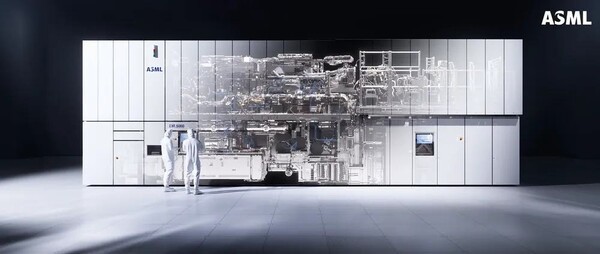
ASML just rewrote the rules of semiconductor equipment economics. The question is who can afford the new terms.
A month ago, ASML’s headquarters sent a proposal through its Korean subsidiary that sounded routine on the surface — a request to renegotiate spare part pricing with Samsung and SK Hynix. What landed on the buyers’ desks was something far less normal: a blanket 10 percent increase across all replacement parts for both EUV and DUV lithography systems, effective January next year.
This is not a targeted adjustment for a single scarce component. It is not a reaction to a specific supply disruption. It is a across-the-board repricing, and it signals that the balance of power in the semiconductor equipment market has shifted decisively away from the fab owners.
The precedent matters more than the percentage
ASML has historically adjusted part prices individually — when raw material costs spiked or when sourcing a particular component became difficult, it would raise that specific part. A uniform 10 percent hike is unprecedented in the company’s approach, according to industry sources. That the two most prominent Asian memory makers accepted the terms rather than pushing back hard tells you everything about where the leverage sits right now.
The timing is no accident. Both Samsung and SK Hynix are in the middle of their largest capital expenditure cycles in years, pouring billions into memory capacity expansion driven by AI data center demand. They cannot afford to delay tool installation or disrupt lithography throughput. In that environment, accepting a parts price increase is the cheaper option — even if it compresses margins.
What exactly is getting more expensive
A lithography scanner is arguably the most complex machine ever built for industrial use. Inside it sit optical assemblies — lenses, mirrors, and reflecting surfaces ground to atomic-scale precision — laser-generated plasma light sources, ultra-precise motion stages, and dozens of subsystems that must operate in concert at nanometer tolerances. Every one of these is a serviceable component with a finite lifespan.
The price increase covers both regularly purchased consumable parts and major assemblies replaced after failure or performance degradation. In plain terms: the cost of keeping ASML’s machines running is going up, and it is going up everywhere in the ecosystem that relies on them — not just in South Korea, but globally.
ASML already treats its installed base as a growing revenue engine. Service, parts, and upgrade sales reached 8.193 billion euros last year, roughly a quarter of total revenue of 32.667 billion euros. The company expects that segment to grow more than 30 percent this year. Spare part pricing is a direct lever in that growth story, and the 10 percent hike is a transparent move to accelerate it.
Equipment prices are next in line
Parts are only the beginning. ASML is also in discussions with major customers about raising the sticker price on new equipment orders. The pattern has already emerged in China, where The Information reported in July that ASML had notified several semiconductor companies of a 10 percent DUV tool price increase — some accepted, others did not. TSMC, ASML’s single largest customer, is reportedly resisting the hike.
That contrast is revealing. TSMC’s scale and strategic importance give it negotiating weight that Samsung and SK Hynix, despite their size, currently lack in this specific dynamic. The memory giants are competing fiercely for the same AI-driven demand surge, which fragments their collective leverage. A foundry serving hundreds of fabless designers from a position of irreplaceable capacity holds a fundamentally different bargaining posture.
The ripple effect is already underway
The ASML move is catalyzing price adjustments across the broader equipment stack. Applied Materials disclosed in August that both new and existing product prices had risen. Tokyo Electron confirmed in late July that it is adjusting prices on currently selling equipment to offset cost pressures. Advanced Energy reported similar increases for certain product lines in its plasma power supply business.
This is not a single-vendor anomaly. It is an industry-wide repricing event triggered by a structural imbalance: demand for semiconductor equipment and materials is outpacing supply, and the suppliers are finally leveraging that gap.
Why the imbalance exists
AI data center investment has created a dual surge in memory and foundry capacity expansion simultaneously. Memory makers need enormous volumes of DUV and EUV tools to build HBM and DRAM; foundries need the same tools for advanced logic nodes. Equipment suppliers cannot simply flip a switch and double production — the lead times for lithography tools run into years, and the supply chain for precision optical components, specialty gases, and engineered materials is narrow and deep.
Raw material costs and general inflation have raised the floor on what suppliers can charge while maintaining margins. The dynamic that defined the previous decade — fab owners using their purchasing power to pressure equipment makers into annual price reductions — has inverted. Now the suppliers set the terms.
China’s self-reliance calculus just got sharper
The pricing pressure in South Korea and Taiwan is being felt acutely in China, where the stakes are higher for a different reason. Chinese chipmakers operate under export controls that restrict their access to ASML’s most advanced EUV tools and limit certain DUV configurations. A 10 percent price increase on the tools they can still acquire is not just a margin hit — it is a strategic signal that self-reliance is no longer optional.
Beijing’s push for domestic lithography capability, centered on firms like Shanghai Micro Electronics Equipment, is accelerating precisely because the economics of buying from ASML are deteriorating. Every price increase, every restriction, every long lead time reinforces the case for investing tens of billions into an alternative supply chain — however imperfect it may be today.
What comes next
The immediate consequence is thinner operating margins for Samsung and SK Hynix as they absorb higher maintenance costs during their expansion phase. Longer term, the repricing sets a new baseline that will pressure other equipment and materials suppliers to pursue similar adjustments. Several industry sources have warned that material supply shortages could follow the equipment squeeze as wafer throughput increases consume consumables at a faster rate.
For ASML, the parts price hike is a clear message: the installed base is now the company’s most valuable asset, and it intends to monetize it aggressively. For the fabs, it is a reminder that in a seller’s market, even the simplest operating expense line item is subject to renegotiation — and the negotiator is no longer them.