ASUS's ROG-Xbox AR Bundle Is a Signal Handheld PC Gaming Hit a Tipping Point
ASUS just announced the ROG XBOX Ally X20 — a $2,499 portable gaming PC bundled with 240Hz AR glasses. The move signals that handheld PC gaming and mixed reality have converged into a single market moment, and Japan is leading it.
The Announcement That Shouldn’t Exist
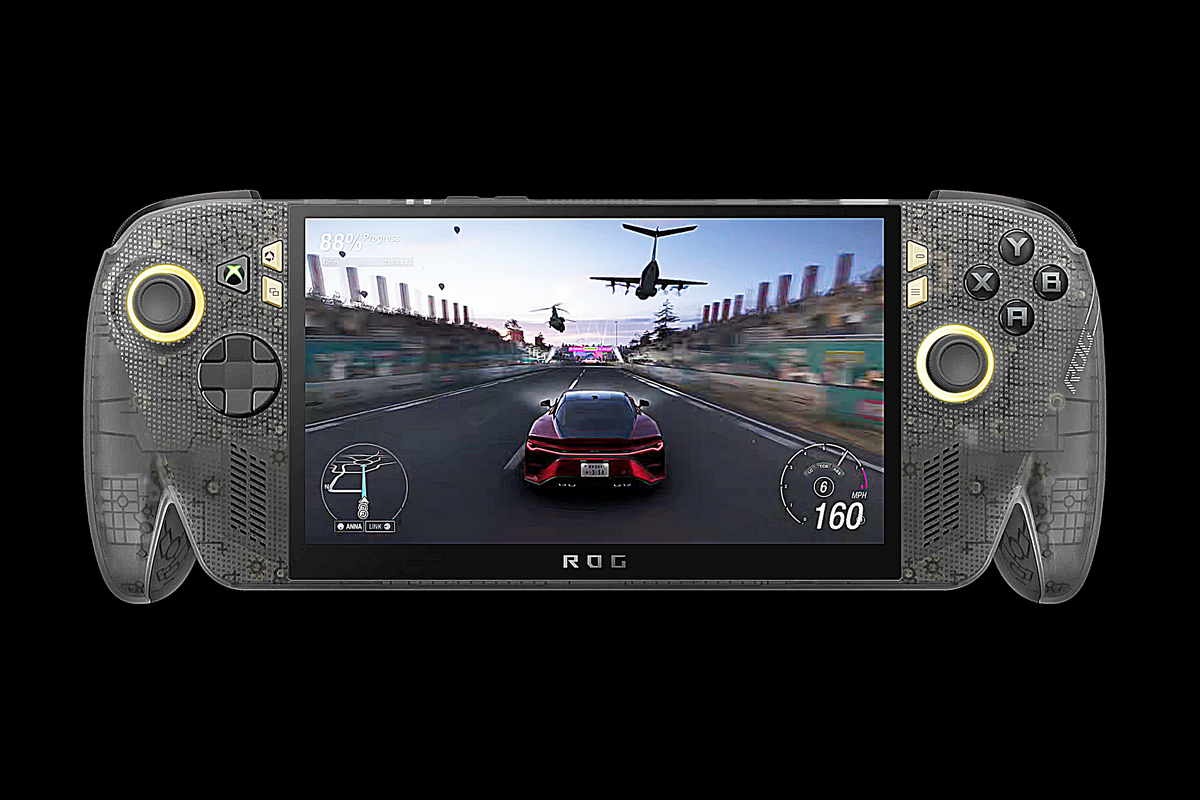
ASUS just revealed something that should not exist in 2026: a co-branded portable gaming PC from Republic of Gamers and Xbox, bundled with augmented reality glasses, priced at $2,499 for the premium version. The ROG XBOX Ally X20 ships October 15 in most markets, with Japan getting it mid-October.
This is not a gimmick. It is a hardware signal from Japan that crosses gaming, AR, and console markets simultaneously — something Western outlets will not cover for months, if ever.
Who Wins, Who Loses
Microsoft wins by licensing the Xbox brand to a third-party hardware maker without building its own portable PC. Microsoft already has the Series X and the cloud strategy. Adding a $2,499 handheld with AR glasses does not fit either lane. The license fee is clean revenue.
ASUS wins by anchoring its ROG brand to a 20th-anniversary moment with a product that justifies a $1,200 premium over the standard Ally. The translucent black chassis reveals gold internal components and a new cooling system visible through the shell. It is designed to be shown off.
AR glass makers lose if this bundle becomes the reference product. The ROG XREAL R1 Edition 20 glasses inside the premium bundle ship with 240Hz microOLED panels, 57-degree field of view, 0.01ms response time, and native 3DoF head tracking. Bose audio is built in. These specs compete directly with the Apple Vision Pro, Meta Quest 3S, and Sony’s Project Q reference designs — but at one-third the price and pre-installed on a gaming PC.
NVIDIA loses because the X20 uses AMD’s Ryzen AI Z2 Extreme with integrated Radeon graphics. There is no discrete GPU. The 24GB of LPDDR5X memory and 1TB PCIe 4.0 NVMe storage are fast, but the graphics pathway runs through AMD’s silicon. NVIDIA’s GeForce Now cloud alternative gets a free marketing push from this omission — but that is not the same as hardware sales.
The Numbers That Matter
The standalone version costs $1,299. The premium bundle costs $2,499. The $1,200 difference buys:
- ROG XREAL R1 Edition 20 AR glasses with 240Hz microOLED
- dbrand Killswitch protective case with kickstand
- Pelican protector case with ROG 20th-anniversary badge
- 68W charging adapter
- Custom skin featuring the motherboard circuit pattern
Those accessories retail for roughly $400 combined at full price. The AR glasses alone would list for $800 to $1,000 from other manufacturers. ASUS is effectively bundling $1,200 in perceived value for the premium tier.
The device itself weighs 756 grams. The chassis expands from 27.5mm to 51.3mm thick when the kickstand deploys. The display is a 7.4-inch Samsung OLED panel running at 1920×1080 and 120Hz. It is not 4K. It is not Mini-LED. It is a practical size for a handheld that also needs to be light enough to hold for three-hour gaming sessions.
The AR Glasses Are the Real Product
The XREAL R1 Edition 20 glasses connect via a single USB-C cable to the Ally X20. They project a virtual 171-inch screen at a 4-meter viewing distance. The 57-degree field of view covers 95 percent of natural human注视视野. Response time is 0.01ms. That is fast enough for competitive shooters.
The 3DoF head tracking follows your head movement natively. The Anchor Mode locks the virtual screen to a fixed location in your room so you can walk around while watching or playing. This is not passive media consumption. This is active spatial computing.
ASUS is not selling AR glasses. It is selling a gaming PC that happens to include AR glasses as a bundle incentive. The glasses raise the perceived value of the hardware and create a moat against competitors who sell just the handheld.
Why Xbox Co-Branding Matters
Xbox does not make handheld PCs. Microsoft Studios does not have a portable gaming division. The Xbox brand on this device is a licensing deal — similar to how Logitech sells Xbox-branded controllers or how Razer sells Xbox-certified peripherals.
But the co-branding signals something important: Microsoft is comfortable letting a third party attach its name to a premium portable gaming product. That is a shift from the封闭 ecosystem era. Microsoft wants the Xbox name associated with the best portable PC gaming hardware, even if it did not design the silicon.
The Ally X20 runs Windows 11 and supports the Xbox app, Game Pass, and cloud streaming. It is not a closed console. It is an open PC that carries the Xbox badge. That distinction matters for enthusiasts who do not want to lock into a single storefront.
What This Says About the Market
Handheld PC gaming reached a scale moment in 2024 with the Steam Deck and ASUS Ally. By 2026, the market has split into three tiers:
- Budget handhelds under $400 with integrated graphics
- Mainstream gaming PCs at $800 to $1,200
- Premium bundle devices above $2,000 with accessories
The X20 occupies the top tier. It is not competing with the Steam Deck 2 or the Lenovo Legion Go. It is competing with itself from two years ago. The premium bundle is ASUS’s way of capturing the segment of enthusiasts who want everything in one box — the PC, the AR glasses, the cases, the skins, the charger.
This is also a play against the Apple Vision Pro. The Vision Pro costs $3,500 and is not optimized for gaming. The X20 bundle costs $2,499 and is optimized for gaming with 240Hz displays and 0.01ms response. For a gamer, the choice is obvious. For a productivity buyer, the Vision Pro still wins.
The Japan Factor
ASUS announced the X20 in Japan first. The Japanese press, ASCII.jp, covered the details including the domestic pricing and the mid-October rollout. Japan is one of the few markets where gaming PC hardware launches receive immediate coverage alongside console news. The Western markets will see this product in October, but the conversation will start in Tokyo.
Japanese consumers have long accepted premium bundled hardware. The X20’s approach — a high-spec PC plus AR glasses plus protective cases plus custom skins — mirrors the premium bundle culture that has existed in Akihabara for decades. It is not a new idea. It is a familiar one, re packaged for a global audience.
What Happens Next
If the X20 sells well, expect competitors to respond with their own AR-glasses bundles. Valve may announce a Steam Deck variant with companion AR glasses. Lenovo may attach Meta Quest or Sony’s PS VR to its Legion handheld. The bundle strategy will become a standard market position, not a one-off announcement.
If the X20 fails to move units, the AR glasses inside the bundle will still establish the ROG XREAL R1 as a reference product for spatial computing developers. The glasses are the long-term bet, not the PC.
Either way, the convergence of handheld PC gaming and mixed reality has arrived. ASUS just made it tangible. The question is whether the market is ready to pay $2,499 for it.