Why a Baltic Drone Strike Could Redraw NATO's Deterrence
A Ukrainian drone strike on a Russian cargo ship inside the Gulf of Finland marks the sharpest escalation yet into NATO waters. What happens next will test Article 5 thresholds and reshape Nordic security doctrine.
The Baltic Is No Longer Neutral Ground
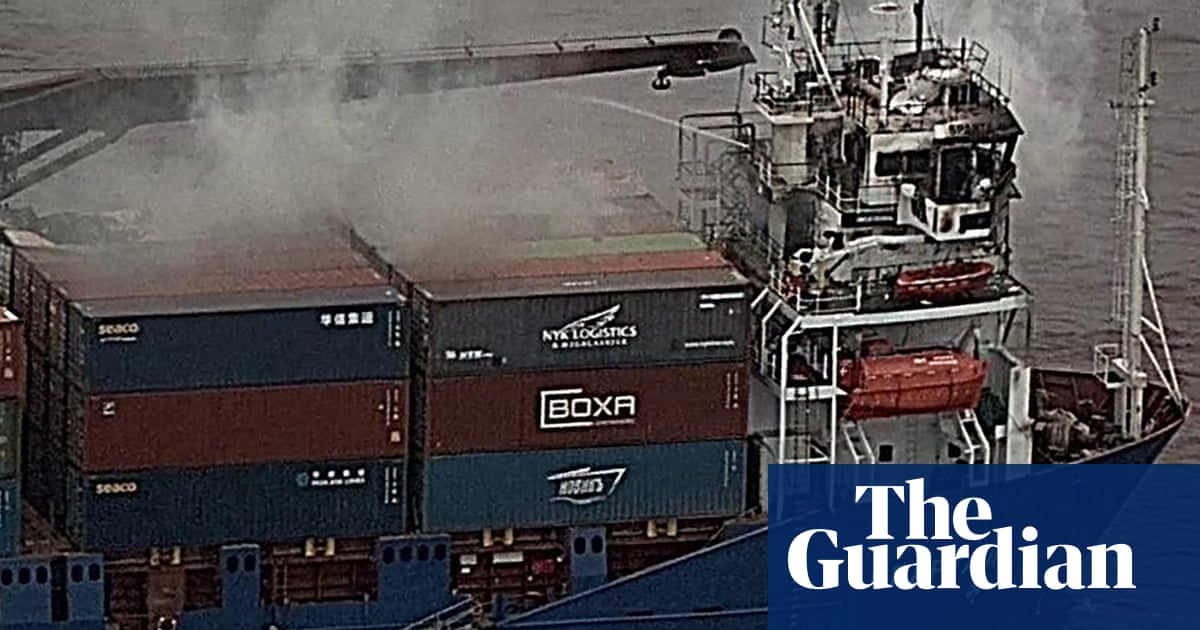
A Ukrainian drone struck a Russian cargo ship inside Finnish territorial waters on Saturday morning, setting it ablaze in the Gulf of Finland — the narrow maritime corridor between St Petersburg and the capital Helsinki. Within hours, a Russian helicopter was suspected of violating Finnish airspace, possibly conducting rescue or monitoring operations tied to the damaged vessel.
The Finnish prime minister, Petteri Orpo, did not mince words. “War is spilling over into our immediate vicinity,” he said on X. “Ukraine has the right to fight back against the aggressor.”
What happened here is smaller than a formal breach of Article 5 but far more consequential than most headlines suggest. For the first time since Finland’s 2023 NATO accession, direct combat actions involving Ukraine have unfolded inside allied territory. That is not symbolic. It is operational precedent.
The Ship Called Sparta II
The vessel struck was the Sparta II, identified by the Finnish Defence Forces. It had departed St Petersburg around 11 p.m. local time bound for Baltiysk, the port city in Russia’s Kaliningrad exclave. Opensanctions listed the ship as subject to both Ukrainian and US sanctions, citing suspicions it transported weapons from Syria to Russia.
MarineTraffic data placed the strike roughly mid-transit through the Gulf of Finland. The crew evacuated. Firefighting remained underway Saturday night. A temporary no-fly and no-sail zone was imposed over the eastern Gulf.
This is not the kind of route where cargo ships drift casually. The Gulf of Finland is Russia’s primary maritime artery to its second city and one of the most heavily monitored waterways in Northern Europe. Since 2023, Finnish and Swedish waters alike have fallen under NATO’s northern flank architecture. A strike inside them brings the alliance physically closer to the fighting than anyone anticipated before the war entered its fourth year.
How Quickly Escalation Moves Now
Saturday’s incidents came less than 24 hours after two Russian missiles and a drone crash-landed in Poland near a training site hosting thousands of European troops supporting Ukraine. NATO secretary general Mark Rutte responded immediately: “I can guarantee that NATO will defend every inch of Polish territory.”
Warsaw called it intentional provocation. A North Atlantic Council meeting was scheduled for Monday in Brussels.
The pattern is unmistakable. Moscow is testing what lines it can push without triggering a direct NATO response. Ukraine is striking targets Russia considers internal infrastructure, including the Kerch Bridge over the Strait of Crimea, which Kyiv partially destroyed in October. And Finland—a former neutral state now embedded in NATO’s northeastern quadrant—finds itself inside the blast radius of decisions made in Kyiv and Moscow alike.
The Russian helicopter’s suspected airspace violation, flagged by defence minister Antti Hakkanen, adds another layer. Whether it was a search-and-rescue sortie or something more deliberate remains unconfirmed. But the timing—hours after the strike—suggests Moscow does not intend to let the incident fade quietly.
The Real Question: Where Is the Threshold?
Article 5 assumes an armed attack “on one or more [allies]”. It does not specify whether that attack must originate from state actors or whether proxy strikes count. Ukraine’s drone operation inside the Gulf sits squarely in that ambiguity.
If Kyiv continues launching strikes that land within NATO territory—whether through missile deflection, drone drift, or deliberate targeting—the alliance faces a choice: treat each incident as collateral noise or recognize a pattern of encroachment that demands a unified legal and military response.
Poland’s defence minister, Wladyslaw Kosiniak-Kamysz, already signaled momentum toward the latter, posting on X that Poland would receive “strong support from our NATO allies to bolster the protection of our eastern border.”
That language is significant. It frames the problem not as isolated provocations but as a sustained campaign against NATO’s eastern edge. If the North Atlantic Council adopts that framing on Monday, it changes how the alliance reads everything that follows.
What This Means for Nordic Doctrine
Finland spent decades walking a tightrope between Russia and the West. Its 2023 NATO entry ended that era. Saturday’s events prove why the change mattered faster than most analysts expected.
Helsinki now has treaty-backed air defence coverage it never had before. But it also bears proximity risk Moscow previously accepted because Finland was neutral. That calculus has flipped. Every cruise missile intercepted over Polish skies, every drone spotted near the Finnish border, every sanction-evading vessel patrolling the Gulf is now an ally’s problem too.
The immediate practical effect is likely restricted airspace and tighter naval patrols in the eastern Gulf. The longer-term implication is doctrinal: NATO will need to clarify whether defensive strikes by partners inside allied waters trigger collective defence obligations—or at minimum, coordinated interception and investigation protocols.
Who Wins and Who Loses Here
Kyiv wins strategic visibility. Each successful strike on Russian logistics deepens the cost Moscow pays for its war machine, even as Western governments warn against unrestricted targeting. The Sparta II episode proves Ukraine can reach further than Russia assumed.
Moscow loses credibility as much as cargo. Allowing sanctioned vessels to sail protected routes through contested corridors signals either incompetence or complicity—neither looks good when the ships catch fire inside NATO waters.
Washington stands in the middle, watching closely. The United States has consistently supported Ukraine’s right to self-defence while urging restraint on strikes deep inside Russian territory. Saturday’s incident falls somewhere in between, and the administration’s reaction will set the tone for how seriously NATO treats the spillover question.
What Comes Next
Monday’s North Atlantic Council meeting will address the Polish violations. Expect language about “unacceptable provocations” and possible deployments to eastern members. The Gulf of Finland strike may not dominate the agenda, but it will be part of the background conversation—and a reference point whenever Kremlin forces push closer to Nordic borders again.
Russia’s next move matters most. A measured response would involve diplomatic protests and heightened patrols. An escalatory one could mean targeted strikes closer to NATO territory, deliberate airspace incursions, or pressure campaigns against Estonia and Latvia’s supply routes through the Baltic.
Either way, the era of treating the Baltic as a buffer zone between Russia and the West is over. It was already gone when Finland joined NATO. Saturday’s fire in the Gulf just made it impossible to pretend otherwise.