Beijing Is Building a Supply-Chain Shield Around Iran
The SCO summit in Bishkek wasn't just rhetoric. Xi and Putin are weaving a parallel economic architecture that treats sanctions evasion as collective infrastructure — and Iran is now at the center of it.
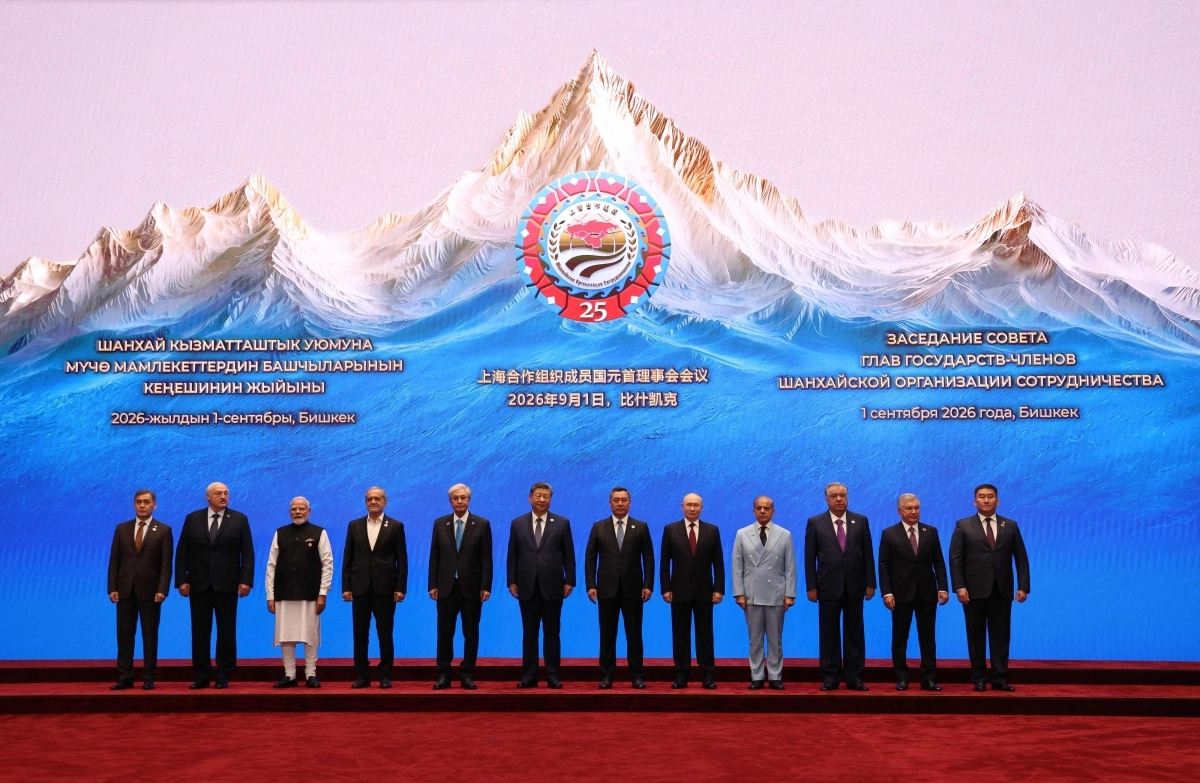
The Photo Lineup That Washington Is Underestimating
The group photograph taken on Sept. 1 outside Bishkek looks like a routine multilateral summit. Ten leaders standing in a row. But the geometry of that photo matters more than the press releases that followed.
Xi Jinping stood next to Vladimir Putin. They had just held a bilateral meeting the day before — not a side conversation, but a scheduled session where they reaffirmed strategic coordination. Across the frame sat India’s Narendra Modi, a country that plays both sides in every great-power equation. And beside him, representing a nation technically still at war with the United States, was Iranian President Masoud Pezeshkian.
This was not accidental staging. It was architecture.
What Xi Actually Said (And What He Didn’t)
Xi’s opening address at the SCO summit ran through the standard vocabulary of Chinese diplomacy: common security, opposition to external interference, the need for countries to defend their political stability against outside threats. Xinhua’s report captured the key phrases — universal security, comprehensive response to traditional and non-traditional threats, strict prevention of outside powers meddling in domestic affairs.
The carefully chosen word was “external.” In Beijing’s lexicon, that means the United States and its allies without naming them. The message was clear: SCO member states should treat Western sanctions regimes not as legitimate policy tools but as acts of interference equivalent to colonial-era coercion.
Putin matched him note for note on multipolarity. His remark that the SCO had become “one of the independent and influential centers of the newly emerging multipolar world” was a direct challenge to the post-1991 order that American power built. Twenty-five years, he noted, since the organization began.
PeZeshkian kept his focus narrower. He told the assembly that Iran would take “immediate corresponding measures” if the United States honored its end of a ceasefire understanding. The implication: Iran’s participation in SCO forums is itself leverage, a signal that Tehran has alternatives to Western isolation.
The Real Shift: From Diplomatic Language to Economic Infrastructure
Western analysts tend to treat SCO summits as diplomatic theater. The rhetoric is familiar — multipolarity, anti-hegemony, non-interference — and the outcomes are usually vague joint statements. But the economic machinery beneath the rhetoric is where the actual transformation is happening.
Here is what the Bishkek gathering quietly confirmed: Beijing is no longer treating sanctions evasion as an ad hoc problem solved by shell companies and front firms. It is being institutionalized as shared infrastructure among SCO members.
The logic is straightforward. Russia faces the most comprehensive Western sanctions regime in modern history. Iran faces similarly aggressive financial isolation. China, the economic engine of both countries’ survival, needs a system that can move goods, energy, and money without routing through New York clearing houses or London correspondent banks.
The answer is not theoretical anymore. It is already operational on a significant scale.
Who Wins, Who Loses, What Happens Next
The winners are the SCO member states that sit at the intersection of Russian energy, Chinese manufacturing, and Iranian labor or raw materials. A triangular trade corridor — Russian oil and gas flowing through Central Asian pipelines into Chinese refining capacity, Iranian petrochemicals entering Central Asian markets, Indian pharmaceuticals and agricultural goods moving north — creates a closed loop that Western export controls cannot easily penetrate.
Central Asian states like Kyrgyzstan and Uzbekistan gain transit rents and regulatory leverage. They become the hinges on which this alternative system turns. Moscow benefits from sanctions endurance. Beijing benefits from reduced dependency on dollar-clearing channels. Tehran benefits from diplomatic legitimacy and an economic lifeline that Washington cannot easily cut.
The loser is the American financial architecture. Every transaction that moves outside SWIFT and the correspondent banking system erodes the enforcement capacity that has been the primary tool of U.S. economic statecraft since the 2008 financial crisis. This is not a sudden collapse. It is a slow leak, and leak rates are accelerating.
Why This Matters Outside the Scope of SCO Announcements
The SCO’s membership expansion tells the story more clearly than any speech. Six founding members in 2001 — China, Russia, and four Central Asian republics. Ten now, with India, Iran, and Pakistan added. Each new member brings something the others lack: India brings manufacturing scale and a strategic balancing act; Iran brings energy and a defiance posture; Pakistan brings geographic access to the Arabian Sea.
What English-language coverage typically misses is the technical work happening beneath the headlines. Banking committees, customs procedures, dispute resolution mechanisms — these are the unglamorous structures that make an alternative financial system functional. The SCO has been building them for years. Bishkek was another milestone, not the announcement of something new.
The signal from Xi and Putin was not that they are creating a military alliance against the West. It is that they are making the Western economic order increasingly irrelevant to a growing share of global commerce. An order that loses relevance loses power, regardless of how much GDP it still represents on paper.
Pezeshkian’s presence in Bishkek was the most concrete evidence of that trajectory. An Iranian president speaking at an SCO forum alongside leaders of countries that have sanctioned Iran is not symbolic diplomacy. It is a statement that the sanctions architecture has a hole large enough for a head of state to walk through.
The question for Washington is not whether this system will replace the dollar tomorrow. It is whether it will continue to grow quietly, transaction by transaction, while the West continues to treat it as rhetorical noise rather than structural competition.