BioWare Is Dead. Its Last Game Just Leaked
EA shut down BioWare and canceled its unrevealed fifth Mass Effect entry. Now a leaked trailer surfaces, showing Liara T'Soni and a new protagonist. It's a ghost of what could have been.
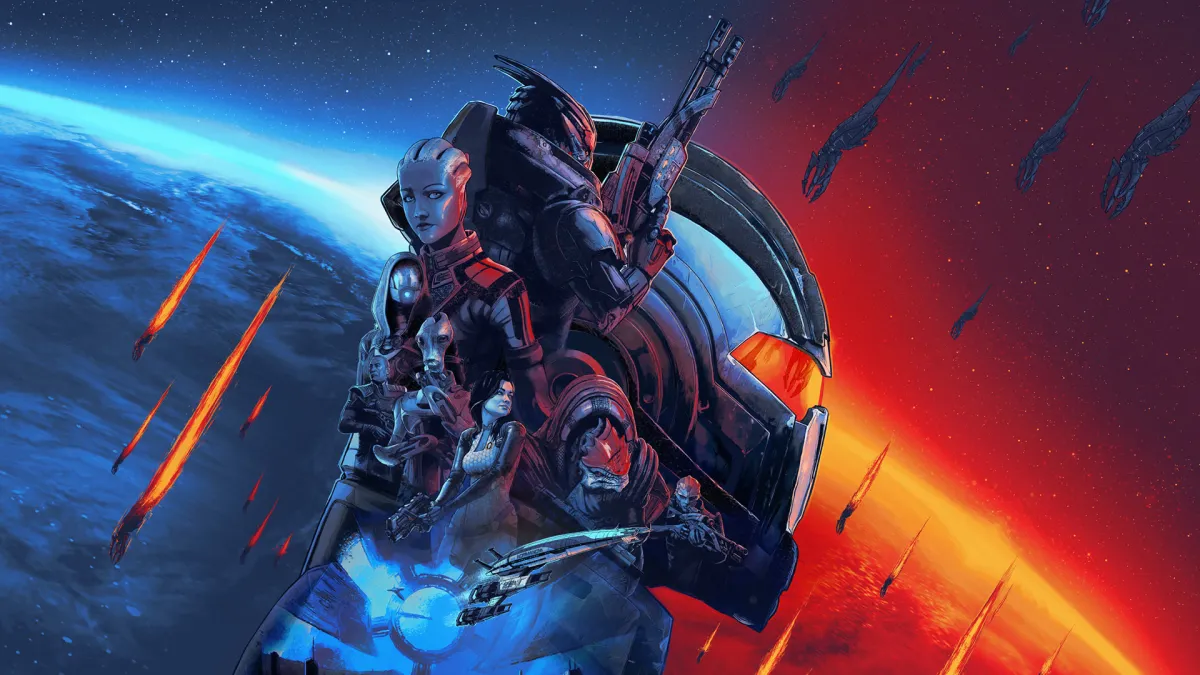
The Last Thing BioWare Made Was Never Meant to Be Seen
BioWare is gone. Not restructured. Not rebranded. Shuttered by Electronic Arts this week after laying off 400 employees, the studio that gave us the Mass Effect trilogy, Dragon Age, Knights of the Old Republic — every franchise built on player attachment and narrative ambition — has been erased.
Its final project, a fifth Mass Effect game, was canceled along with the building. BioWare never announced a title. Never showed a frame. And now, against all odds, we have something.
A trailer. Leaked. Playing on Reddit. Confirmed by Jason Schreier at Bloomberg, who broke the layoff story first, and reportedly verified by IGN as well. The footage carries its own inscription: “in-engine footage from our small team, using pre-production assets.” Small. That word matters.
What remains is a CG cutscene, not gameplay. A new protagonist — a soldier turned spy traveling between planets, stopping conflicts before they begin — meets an asari woman in a crowded bar. She confesses she’s been the one lighting those fires. Behind her, a hooded figure lowers her cowl. Liara T’Soni steps into the light.
Then action. Guns. Telekinetic throws. The screen cuts to black and returns with a title: Mass Effect Universe.
It’s impressive. It’s also useless. The game will never launch. The studio will never finish it. This is a trailer for a graveyard.
Who Dies When a Studio Dies
Let’s be clear about what EA has done. This isn’t a studio pivot or a creative restructuring. BioWare produced some of the most emotionally resonant story-driven games in the history of the medium. Mass Effect (2007) didn’t just tell a space opera — it made players feel responsible for the fate of fictional species. Dragon Age: Origins reframed fantasy RPGs around moral consequence. Knights of the Old Republic gave us one of gaming’s most famous plot twists before most platforms could render a decent crowd scene.
And EA killed it. All of it. The people who built these worlds are now unemployed. The IP remains on a corporate balance sheet, presumably waiting to be harvested by whoever can extract the most quarterly revenue from its name recognition.
This is the pattern. It’s not unique to EA. Activision absorbed Infinity Ward and then let it wither. Sega hollowed out Creative Assembly’s long-term vision. Ubisoft’s centralization model has repeatedly gutted satellite studios. The industry’s default instinct when a franchise slows down is not investment — it’s liquidation.
BioWare’s closure is the latest and loudest example of a structural choice: legacy studios are treated as liability, not asset. Their value is in the IP’s residual pull, not in the teams that created it. Once the next iteration underperforms or stalls in development hell, the math shifts. Shut it down. Sell the license. Repeat.
What the Leak Reveals — and What It Hides
The leaked trailer tells us almost nothing concrete about Mass Effect 5. We see a new protagonist. We see Liara, yes — but we already knew she’d appear. The narrative hints suggest a younger hero operating in the shadows of the broader Mass Effect timeline, possibly bridging the gap between the original trilogy’s events and whatever sequel EA had in mind.
But we don’t know the release window. We don’t know the scope. We don’t know if this was built for current-gen consoles or an older generation. We don’t know how much content existed beyond this pre-production footage.
What we do know is that BioWare’s team was small. The text on the trailer says so explicitly. A small team was working on a AAA-scale franchise. That compression — fewer people producing blockbuster content — is itself a story. It tells us something about the state of game development in an era where studios are expected to deliver 100-hour epics on shrinking budgets and tighter timelines.
Dragon Age: The Veilguard, BioWare’s last completed release, was met with mixed reception and commercial pressures. Anthem, years earlier, was a public reckoning for the studio. Mass Effect: Andromeda arrived with ambitious promises and technical shortcomings. The franchise had been struggling for a decade before EA decided the struggle wasn’t worth continuing.
Why Fans Are Devastated — and Why They Should Be Angry
Grief is the right word. The comments on the leak are saturated with it. These aren’t casual players. These are people who spent hundreds of hours in BioWare’s worlds. Who made choices that mattered. Who cried over fictional characters.
The Mass Effect trilogy changed how many players think about interactive storytelling. The decisions carried across three games. Character deaths felt real. The ending — controversial as it was — invited engagement, debate, obsession. That kind of emotional architecture doesn’t happen by accident. It happens because a studio believes its audience cares enough to build something worth caring about.
EA’s move signals the opposite belief: that audiences are transactional, that loyalty is a metric to be optimized, and that studios exist only to produce hits on schedule.
The anger behind the grief is equally justified. This isn’t market correction. This is corporate decision-making that prioritizes short-term financial engineering over long-term creative value. BioWare had a fanbase. It had a franchise. It had a chance to deliver something meaningful. EA chose otherwise.
What Happens Next
Mass Effect as a brand will not disappear. EA owns it. It will be licensed, revived, or rebooted by another studio — possibly not from Canada, possibly not with any of the original creative lineage intact. The IP is valuable. The question is who captures that value and how.
For the people who built these games, the future is uncertain. Some will find work elsewhere. Some will leave the industry. The institutional knowledge embedded in that studio — the systems, the narratives, the player-relationship engineering — walks out the door or gets archived and forgotten.
The leaked trailer will circulate. It will be dissected frame by frame. It will become a digital artifact of something that almost existed. Future retrospectives will reference it as evidence of what BioWare was attempting before it was too late.
And the industry will continue operating on the same logic that made this possible. Franchises will be nurtured until they’re not. Studios will be built and then dismantled. Players will keep showing up, keeping the demand alive, keeping the cycle going.
BioWare deserved better. The Mass Effect universe deserved better. The 400 people who lost their jobs this week deserved better. None of that happened.
What we got instead is a trailer. A ghost.