BioWare's 31-Year Death Leaves AAA RPG Without a Home
EA has shut down BioWare after 31 years, cancelling the next Mass Effect and laying off roughly 50 staff. The end of a studio that built Baldur's Gate, Knights of the Old Republic, and two iconic sci-fi trilogies marks a decisive pivot away from ambitious single-player RPGs at the world's largest game publisher.
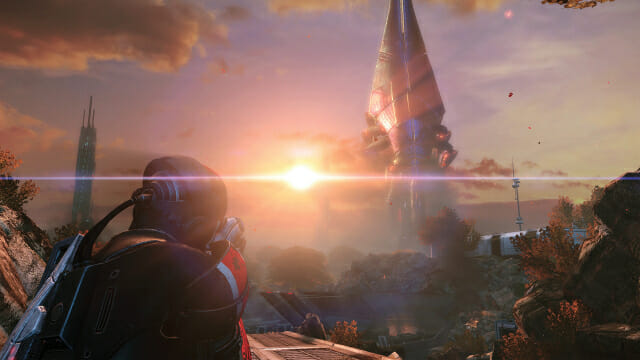
What Died This Week
BioWare, the Canadian studio that built Baldur’s Gate, Knights of the Old Republic, Mass Effect, and Dragon Age, has closed its doors 31 years after founding. EA confirmed the shutdown through an official statement on X, and the fallout is already visible: roughly 50 employees have been let go, and the next Mass Effect game — one still in early development — has been cancelled outright.
EA did not mince words about the restructuring. The company said it is now focusing on supporting its departing team while it sorts through next steps. It thanked players for the decades of engagement that made BioWare’s games matter. That language is carefully measured, but the subtext is unambiguous: the studio is gone, and the projects attached to it are being wound down.
Who Wins, Who Loses
The winners, if you can use that word here, are the few remaining studios that can claim to make big-budget single-player RPGs. Larian — with Baldur’s Gate 3 still going strong three years after launch — is now effectively alone at the top of a genre that used to have three or four viable AAA contenders. Wizards of the Coast, Valve, and perhaps CD Projekt Red are the only other publishers consistently betting eight figures on narrative-driven role-playing games with no microtransactions attached.
EA itself wins in the narrow fiscal sense. The company has been bled by underperforming RPG launches — Anthem in 2019 was a public embarrassment, Dragon Age: The Veilguard in 2024 underdelivered on both revenue and critical reception — and it has decided to stop pouring money into a genre that refuses to cooperate with its service-game economics. Instead, EA will keep investing in sports titles, Apex Legends, Battlefield, the next Star Wars Jedi entry, and an Iron Man game. These are safer bets. They generate recurring revenue. They do not require a studio willing to spend five years polishing a single-player campaign.
The losers are almost everyone else. The 50 BioWare employees who lost their jobs. The thousands of Mass Effect fans who were promised a sequel and received a cancellation notice instead. The broader industry, which just lost one of its last remaining RPG specialists and has nowhere left to absorb that institutional knowledge. And the genre itself, which is now smaller, more concentrated, and riskier than it has ever been.
Why BioWare Was Not Replaceable
BioWare was founded in February 1995 in Edmonton, Canada. It grew into one of the most influential RPG developers in gaming history, first as an independent studio and then as an EA subsidiary after the 2007 acquisition — with the deal closing in 2008. Its legacy includes some of the defining computer RPGs of the 2000s and 2010s: Baldur’s Gate and Baldur’s Gate II set the standard for party-based dungeon crawlers; Knights of the Old Republic proved that Star Wars could sustain deep role-playing mechanics; Mass Effect redefined the third-person shooter by making moral choices matter on a galactic scale; Dragon Age brought political intrigue and moral ambiguity to high fantasy.
These games share a DNA that is nearly impossible to replicate in a single hire or a quick acquisition. BioWare understood how to pace a five-hour story, how to write characters players would remember a decade later, how to balance combat mechanics with narrative consequence, and how to build worlds that felt lived-in rather than procedurally generated. That understanding is embedded in the bones of its former employees, who are now scattered across the industry — some absorbed by other studios, others leaving gaming altogether.
EA’s total layoff figure for this restructuring is roughly 400 people, representing about three percent of its workforce. The 50 BioWare staff are only part of that number; roughly 350 other positions were cut elsewhere. But the BioWare closure is the symbolic center of the announcement, and it is the part that will be remembered. Sports games, Apex, and Battlefield have their own fans. Mass Effect does not have a sequel in development anywhere else.
What This Means for AAA RPGs
The death of BioWare leaves a structural void in AAA game development. Between 2010 and 2020, there were roughly three to four major studios worldwide capable of delivering polished, narrative-heavy single-player RPGs on a budget above $100 million. Now there are two, and one of them is Larian, which is already overextended and has publicly stated it will not take on another project of comparable scope for several years.
This is not a new trend. It has been building for at least a decade. The rise of live-service games, the consolidation of mid-tier publishers, and the increasing cost of AAA development have all pushed companies toward safer, more predictable models. BioWare was the latest casualty in that migration. Its closing is not an anomaly — it is the logical endpoint of a strategy that has been playing out across the industry since the mid-2010s.
But logic and consequence are not the same thing. Even if the closure was foreseeable, it is still devastating. BioWare was the last AAA studio that could claim to make RPGs as its primary identity rather than as a secondary genre experiment. Its departure shrinks the market, reduces creative diversity, and makes it harder for new studios to enter a space that is now dominated by a handful of proven hitmakers.
What Happens Next
EA has stated it will continue investing in sports titles, Apex Legends, Battlefield, the next Star Wars Jedi game, and an Iron Man project. None of those are RPGs. None of them carry the narrative ambitions that defined BioWare’s output. The Mass Effect franchise is effectively dead, at least for the foreseeable future. Dragon Age may survive in some form if EA decides to relocate the IP to another studio, but there is no indication that is happening, and even if it does, the result will lack the creative continuity that made the series work.
The former BioWare team members will disperse across the industry. Some may find homes at other RPG studios — though there are very few left to go to. Others may join live-service projects or leave gaming entirely. The institutional knowledge built over 31 years is being dissolved in real time, with no central archive, no memorial project, and no successor studio prepared to carry it forward.
For fans, the practical advice is simple: play the games you love now, replay them, and accept that the next generation of BioWare-quality RPGs may not arrive within your lifetime. The industry has made its choice. It prefers numbers over narratives, services over campaigns, and predictable returns over creative gambles.
BioWare proved that those gambles could produce masterpieces. It is a pity the math no longer works in their favor.