Bitcoin's Surge to 3-Year High Tests the $100K Thesis
Bitcoin's 25% weekly rally—its sharpest since March 2023—was triggered by US Treasury policy and the promise of a landmark crypto law. What happens next matters for traders, institutions, and markets far beyond America.
Bitcoin Just Had Its Best Week in Three Years. Here’s What Actually Moved the Needle.
Bitcoin climbed to roughly $78,400 on Monday morning, marking a 24.68% weekly gain—the biggest single-week surge since March 2023. The price action was dramatic. The reasons behind it are more interesting than the headlines suggest.
The immediate catalyst came from Washington, but not in the way most retail traders expected. On August 19, the US Treasury announced it would double its Treasury buyback program from $2 billion to at least $4 billion per session. The move was designed to ease liquidity pressure in long-dated bonds after the 30-year yield had spiked to a 19-year high. It worked: the 30-year yield dropped 7 basis points to 4.63%.
That bond market signal rippled through to risk assets faster than most people connected the dots. When long-term borrowing costs fall, the logic is straightforward—companies and investors have more room to take on risk, and capital that was parked in safer instruments starts looking elsewhere. Bitcoin, which has increasingly behaved like a liquidity-sensitive asset rather than a pure safe haven, responded aggressively. Short sellers got caught in the shift. Over the three days following the Treasury announcement, approximately $2.5 billion in leveraged Bitcoin short positions were liquidated, according to Coinglass data. Another $4.5 billion in broader crypto leveraged positions across the market fell in the same window.
A short squeeze is a powerful accelerant, but it is not a foundation. The foundation this time is different—and potentially more durable than previous rallies driven by meme cycles or isolated regulatory news.
The Clarity Act Is the Real Story
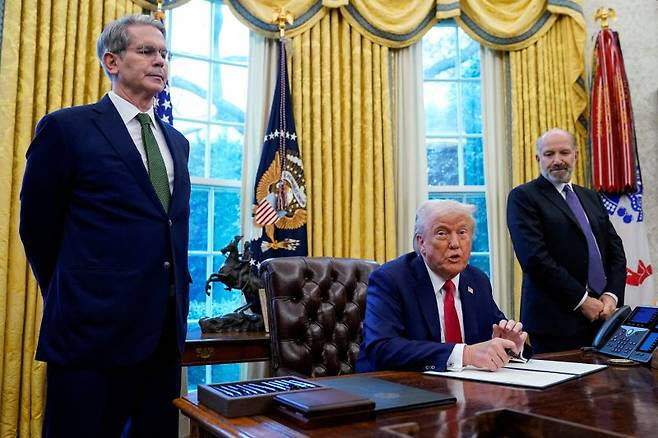
Donald Trump met with Coinbase and other crypto executives at the White House on August 19 and signaled sustained pro-digital asset policy. He also publicly pushed the Clarity Act through the Senate. That single legislative push is why this rally feels structurally distinct from previous speculative surges.
The Digital Asset Market Clarity Act, if passed, would establish the first comprehensive federal regulatory framework for digital assets in the United States. It would clarify whether tokens are securities or commodities, assign enforcement jurisdiction between the SEC and CFTC, and create a licensing pathway for digital asset service providers. For an industry that has operated for years under enforcement-by-action rather than clear rules, this is the single most consequential piece of legislation ever introduced.
Brian Armstrong, Coinbase’s CEO, told Bloomberg he is confident the Senate will pass the bill with 60 or more votes by September 15. If he is right—and that is a significant if—the passage would create the clearest regulatory environment Bitcoin has ever had in its largest market.
For Korean retail investors specifically, the implications are direct. South Korea has long operated in a regulatory gray zone around digital assets. The Clarity Act’s passage would not change Korean law, but it would shift global capital allocation. Institutions that have been waiting for regulatory clarity before committing meaningful capital to Asian markets would have a framework to reference. It would make Korean exchanges and custodians more attractive to international funds seeking compliant on-ramps in the region.
The market is already pricing in some of this optimism. The CMC Fear and Greed Index registered 75—deep into “greed” territory—on Monday. A month ago it sat at 40, in neutral. The shift happened in roughly four weeks, a pace that signals momentum but also fragility.
The Institutional Money Is Back
The most concrete data point behind this rally is not the Treasury announcement or the legislative optimism. It is the money flowing into spot Bitcoin ETFs.
Thirteen US-listed spot Bitcoin ETFs are tracking their largest weekly inflows since January. More than $1 billion entered these funds during the current week alone. This is not retail FOMO chasing a chart. This is institutional capital moving on the back of a regulatory thesis that is finally crystallizing.
Large holders—what the market calls whales—have been accumulating alongside them. Over the past 60 days, addresses holding more than 1,000 BTC have purchased approximately $2.75 billion worth of Bitcoin. These are not day traders. They are entities with multi-quarter horizons, and they are buying into strength rather than selling into it.
Tom Lee, chairman of Bitmine (BMNR), framed this pattern in historical terms. He noted on X that Bitcoin’s annual returns are overwhelmingly concentrated in its ten best days. The current week qualifies as one of those days. His prescription, predictably, is to hold. The data behind that claim is broadly sound: removing the ten best days from any multi-year Bitcoin holding period has historically slashed returns dramatically.
But Lee’s point cuts both ways. If the ten best days are clustered, the ten worst days are likely clustered too. Volatility does not smooth out because sentiment improves. It concentrates.
Can Bitcoin Reach $100K by Year-End?
Geoffrey Kendrick, head of global digital asset research at Standard Chartered, sent a note to clients suggesting his year-end $100,000 target may now be too conservative. He did not revise the target upward formally, but he acknowledged the risk that the current trajectory could breach it.
Standard Chartered is not a speculative boutique bank. It is a global systemically important financial institution with one of the more methodical crypto research teams in traditional finance. When they flag that a forecast might be too low, the market pays attention.
Reaching $100,000 from roughly $78,400 requires an additional 27.5% gain. In a market where Bitcoin has already posted a 25% weekly move, that is not implausible. It is also not guaranteed. The path will likely be nonlinear: institutional inflows supporting the floor, retail leverage adding volatility to the ceiling, and the Clarity Act’s legislative timeline acting as the primary inflection point.
What English-language coverage often misses is how much of this rally is being absorbed by Asian markets. South Korea’s Upbit综合指数 rose 6.28% to 1,964.96 on Monday. Total market capitalization across Upbit’s listings hit 3,384.55 trillion won. Trading volume surged 58.87% in 24 hours. These are numbers that indicate retail participation is intensifying alongside institutional buying—a combination that has historically preceded both the strongest phases and the sharpest corrections in Bitcoin’s cycle.
Who Wins and Who Loses
The winners are clear: spot ETF issuers collecting fees on billions in new capital, large holders who accumulated through the fear phase, and anyone with unencumbered Bitcoin who did not sell during the consolidation periods of 2024 and early 2025.
The losers are leveraged traders who entered short positions after the Treasury announcement, mistaking a liquidity-driven rally for a technical pullback. The $2.5 billion in liquidated shorts is a transfer of wealth from impatient speculators to patient holders.
For Korean retail investors, the critical question is timing and exposure. The rally is real. The fundamentals supporting it—regulatory clarity, institutional demand, improving macro conditions—are stronger than anything seen in previous cycles. But the market is now priced for continued optimism. Any delay in the Clarity Act, any unexpected regulatory friction, or any macro shock that reverses the Treasury’s liquidity easing could trigger a swift repricing.
The $100,000 target is not a fantasy. It is a function of the current trajectory. Whether it holds depends less on Bitcoin itself and more on whether the institutional capital driving this rally continues to flow—or whether it encounters a regulatory or macro headwind it has not faced yet.