iPhone Duo Launches in Japan: What $2,400 Foldable Means for Apple
Apple's first foldable has officially landed in Japan at over ¥360,000, and the launch dynamics reveal more about where foldable phones are headed than any rumor cycle ever did.
The Sellout Speaks for Itself
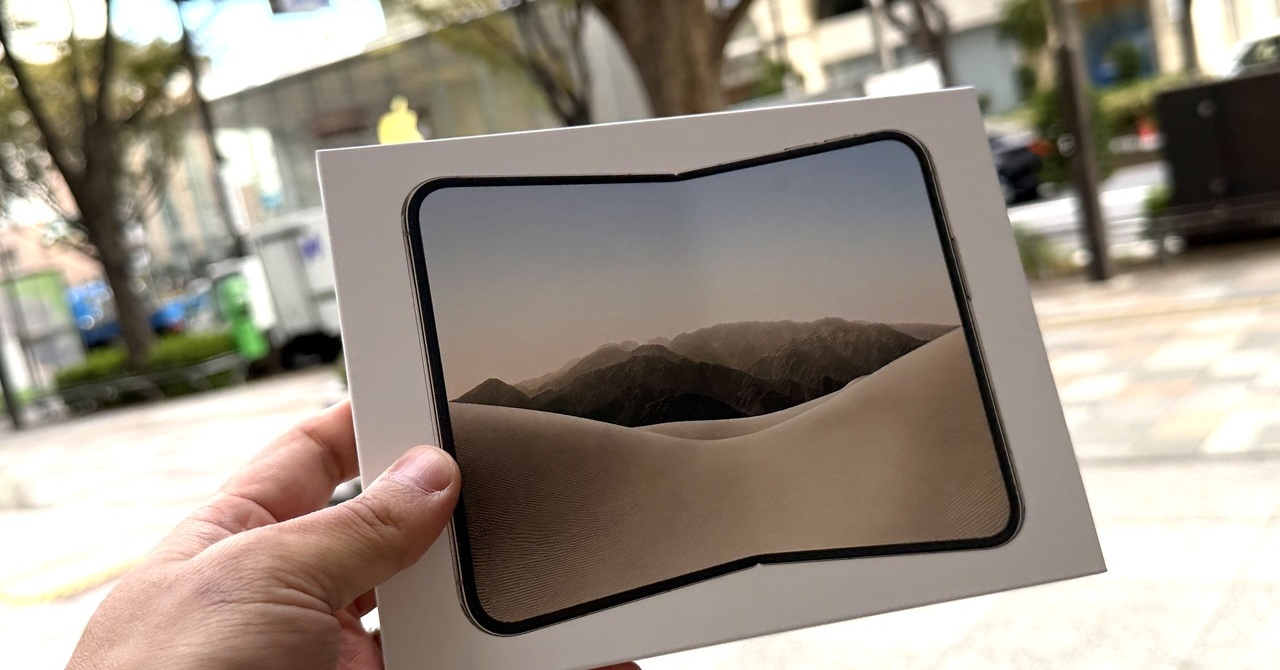
Apple’s first foldable phone, the iPhone Duo, went on sale in Japan on October 23, and the launch dynamics from Tokyo are already telling a story that English-language desks are struggling to read. The base 256GB model carries a starting price above ¥360,000 — roughly $2,400 at current rates — and pre-orders opened on October 16 at 9 p.m., vanishing within a minute for delivery and within minutes for in-store pickup.
This isn’t a lukewarm trial by early adopters. This is a market that bought its way through scarcity before the product even hit shelves.
The ITmedia reporter managed to secure a reservation and collected their device at Apple Omotesando at 8:30 a.m. on launch day. The store was open, but there was no line. The transaction took roughly five minutes from entry to exit. The writer noted they had previously waited ten minutes in line at the same store when collecting a new iPhone, making the Duo experience almost embarrassingly smooth by comparison.
That smoothness masks something more interesting. The absence of a queue didn’t mean low demand — it meant Apple had allocated enough inventory to satisfy the morning’s walk-ins, or that demand, while fierce, had already been filtered through the reservation system in the days leading up to launch.
The Price Is the Product (and the Problem)
¥360,000 and up is a number that defines who this phone is for and, more importantly, who it is not for. In the Japanese market, where the average smartphone replacement cycle runs roughly two to three years and premium device spend has historically hovered well below the ¥200,000 mark for most consumers, the Duo sits in territory previously occupied only by luxury goods or commercial hardware.
Apple has done this before with the iPhone Pro Max and the Plus models. But those were iterations of a familiar form factor. The Duo is not an iteration. It is a category the company has never shipped. At this price, consumers are betting on a design philosophy, not a specification upgrade.
That distinction matters because it changes the risk calculus. Buying a new iPhone Pro is buying into a proven trajectory. Buying an iPhone Duo at ¥360,000 is buying into an unknown one — specifically, whether foldable screens will prove durable enough over multiple years to justify the premium, and whether Apple’s execution will avoid the hinge-and crease complaints that have dogged competitors like Samsung and Huawei.
What English Desks Are Missing
Coverage in Western outlets has largely treated the iPhone Duo as a speculative product — a rumor, a leak, a forthcoming event. That framing was reasonable before launch. It is no longer accurate.
What Western desks are underreporting is the velocity of the Japanese market’s response. A device that sells out in minutes at a price that would make most American consumers recoil is not a niche experiment. It is a signal that the foldable segment, long dismissed as a Korean and Chinese market phenomenon, has crossed a threshold in a market that has historically been slow to adopt non-traditional phone designs.
Japan has never been an early adopter of foldables. Samsung’s Galaxy Z series, which dominates the category globally, struggled for years to gain traction in a market that favored flip phones in the 2000s and then stuck rigidly to bar-style smartphones through the 2010s. Apple entering the foldable space with the Duo changes the geometry of that resistance. If Apple can normalize a foldable form factor at a ¥360,000 price point in Japan, it reframes the entire category for every market that follows.
The Resale Market Is Already Moving
The ITmedia report mentions that resale-market activity is already underway, though it does not detail specific markup percentages. In Japanese electronics markets, devices that sell out at launch typically see resale prices climb within 48 hours. A ¥360,000 device with limited supply and high demand will not stay at list price for long.
This is worth watching because it reveals what the secondary market — the most honest barometer of scarcity — thinks the Duo is actually worth. If resale prices stabilize just above retail, the demand is healthy but contained. If they spike 20 percent or more, the market is pricing in a supply shortage that could persist for quarters.
Apple controls supply more tightly than almost any consumer electronics company. The question is whether it will tighten the Duo further as a pricing lever or flood the market to establish the category. The first move will signal whether Apple sees the Duo as a prestige anchor or a volume play in the making.
Who Wins, Who Loses, What Comes Next
Samsung loses the most on day one. The Galaxy Z Fold line has held the foldable crown in Japan for years, and the Duo’s arrival — backed by Apple’s ecosystem lock-in, retail presence, and brand loyalty — directly threatens that position. Samsung’s advantage remains in pricing and screen maturity; its disadvantage is now brand perception among consumers who may view foldables as Apple’s next natural step rather than Samsung’s innovation.
Huawei loses less in Japan but more in the broader narrative. The company has pushed foldables hard in China, and Apple’s move reinforces the perception that foldables are a mainstream premium category rather than a Chinese or Korean niche.
Apple wins on its own terms. The Duo gives it a product category that no competitor can match with identical force — an ecosystem play wrapped in a new form factor, priced to capture the top of the market while establishing a category that will define the next generation of smartphones.
The next move will be global. Japan is rarely the first market for Apple hardware, but the demand signals from Tokyo will inform how aggressively Apple scales the Duo elsewhere. If the sellout pattern holds in the US and Europe, the ¥360,000 experiment becomes a $2,400 standard.
The Real Story Isn’t the Phone — It’s the Category
The iPhone Duo is not just Apple’s first foldable. It is Apple’s declaration that the foldable smartphone is no longer a speculative format reserved for Korean and Chinese manufacturers. It is a premium category that Apple intends to own.
The launch in Japan proves the category has commercial momentum that goes beyond tech enthusiasm. It has consumer conviction. That is the signal English desks need to stop treating this as rumor and start treating it as reality.