Blizzard's Big Bets Signal a Turnaround Worth Watching
Blizzard returned with concrete release dates for Diablo V and StarCraft's first reboot in nearly three decades — a sharp break from the vague promises that defined its recent decline. What the announcements reveal about where the company is heading matters far beyond its own fanbase.
A company that finally commits to dates
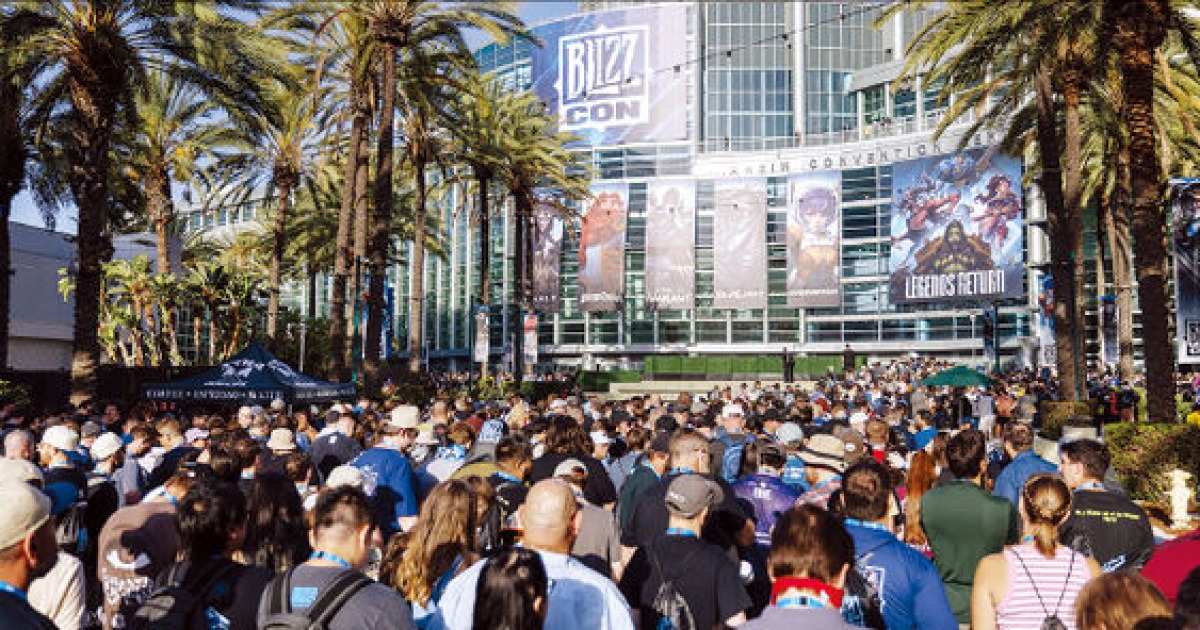
Blizzard returned to BlizzCon on September 12-13 for the first time since 2023, and the headline wasn’t a vague teaser — it was a calendar. Diablo V, targeting Spring 2029. StarCraft’s next entry, targeting Spring 2030. Both dates announced at a press event, not buried in a cinematic trailer.
Johanna Paris, Blizzard’s president, made the shift explicit. She told reporters she now speaks with real confidence about launch years, marking a departure from the company’s habit of leaving releases perpetually “in development”. That habit cost Blizzard credibility throughout the 2020s. Fans learned not to trust dates. This time, they may actually believe the company means what it says.
The StarCraft reinvention that splits its legacy
The StarCraft announcement is the one that will split opinion fastest. The franchise, which defined real-time strategy for nearly three decades, is being reimagined as an open-world shooter. Development is led by Dan Hay, previously the driving force behind the Far Cry series. The story jumps 70 years into the future, and Hay emphasized that the game has a definite ending—it will not be a live-service title built around seasonal content drops.
That distinction matters. Live-service franchises have dominated the industry’s revenue charts for years, but they also carry heavy development overhead and uncertain trajectories. Committing to a finished, narrative-driven shooter is a different bet—and a potentially risky one for a property whose core identity has always been competitive multiplayer. The StarCraft competitive ecosystem in Korea, which still draws crowds and sustains PC bangs 28 years after the original’s 1998 release, will be watching closely. An open-world shooter is not a competition platform. It does not belong on the same stage as the Overwatch World Cup, which returned at this year’s BlizzCon with South Korea defeating defending champion Saudi Arabia in the final.
Yet the creative instinct is not irrational. The StarCraft universe carries immense narrative weight, and 70 years of in-universe time leaves enormous room for storytelling that a tightly scoped RTS cannot accommodate. The question is whether that audience overlaps with the one that built the franchise.
Diablo V inherits a world that already exists
Diablo V takes a simpler structural approach. It is set 100 years after Diablo IV’s events, after Diablo himself won and the Holy Place fell. The game inherits a resolved cosmology and a player base that has already invested hundreds of hours in the previous two entries. There is less creative risk here, but also less mystery about what the game needs to deliver.
More interesting is the parallel move on the animation front. Blizzard confirmed it is producing a Diablo universe animated series with Netflix. The company is treating its intellectual property as a multi-platform brand, not a single-game franchise. This mirrors strategies that have worked for other legacy properties across entertainment, but it is new territory for Blizzard in this form. The Diablo IV 30th-anniversary season, running September 16 through the 30th, brings back Deckard Cain and other original characters—a signal that the company is mining its own catalog for emotional resonance rather than building entirely new worlds from scratch.
The Nexon question
One absence spoke louder than the announcements. Nexon, which recently partnered with Blizzard to launch Overwatch in Korea, was not mentioned as a development partner for either new title. Rumors had circulated that Nexon would co-develop the StarCraft game, given its deep expertise in live-service multiplayer design and its established relationship with Blizzard in the Korean market. The silence on that front suggests Blizzard is keeping those projects internal—or at least, away from the Nexon pipeline.
That choice has strategic consequences. Nexon brings scale in online infrastructure and live-ops capability. Without it, Blizzard carries more developmental risk but retains more creative control. Whether that trade-off pays off will depend almost entirely on whether those Spring 2029 and Spring 2030 dates hold.
Why Korea matters here
These two franchises did not merely gain popularity in Korea—they helped create the modern Korean gaming ecosystem. StarCraft’s 1998 release fueled the PC bang boom that brought online gaming into millions of Korean households and spawned an entire professional league structure. Diablo II, arriving in 2000, reached both PC bangs and homes, shaping what Koreans now call their “gaming generation.” StarCraft remains in the top 10 of Korean PC bang usage rankings nearly three decades later.
The Korean market’s relationship with Blizzard is therefore not a peripheral concern. It is foundational. The company’s ability to regain momentum depends significantly on whether Korean players—who experienced these franchises at their cultural peak—feel the new entries honor that lineage while taking genuine creative risks.
Who wins, who loses, what comes next
If Blizzard hits those dates, it regains credibility in an industry that punished its chronic delays. Competitors like Riot Games and Netmarble, which have absorbed some of Blizzard’s displaced player base over the past five years, face a potential re-consolidation of the franchise loyalist market. If Blizzard misses, the damage compounds: promises made public are harder to explain away than promises made privately.
The StarCraft shooter will test whether a legacy RTS property can successfully leap to a completely different genre without alienating its competitive core. The Diablo series will test whether Blizzard can sustain momentum across a resolved narrative arc without repeating itself. Both questions will be answered by 2029 and 2030.
Right now, Blizzard has done something it has struggled to do for most of this decade: it has committed to a timeline publicly, in front of its fans, with specific dates attached to specific games. That alone represents a meaningful shift in posture. Whether it translates into products that justify that confidence remains the only question that matters.