Brazil's Rightward Lurch Could Redraw Latin America
Flávio Bolsonaro's narrow lead over Lula in Brazil's first round sets up a runoff that will determine not just Brazil's direction but the fate of BRICS cohesion, Amazon policy, and US dominance in Latin America.
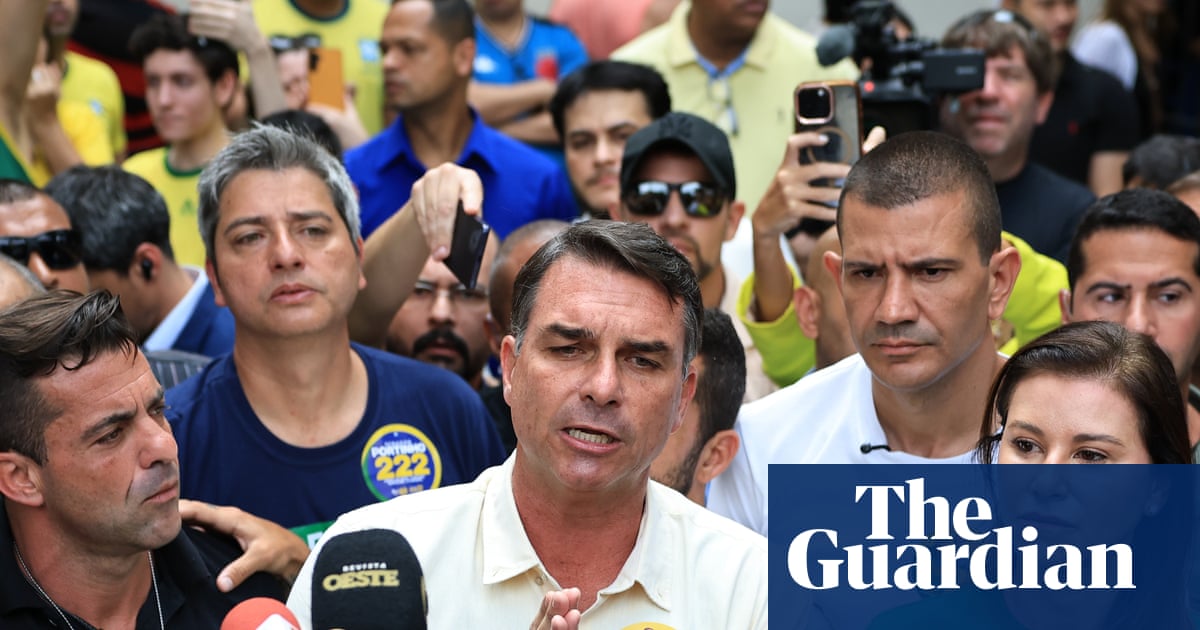
The math that should keep Brasília awake
Flávio Bolsonaro took 47.1 percent of the vote on Sunday. Luiz Inácio Lula da Silva took 45. That is not a mandate. It is a warning shot.
With 99 percent of ballots counted, the 45-year-old son of the impeached former president Jair Bolsonaro now faces the 80-year-old incumbent in a second-round showdown on 25 October. The margin — 2.1 percentage points, roughly 1.5 million votes — is small enough to vanish with the transfer of votes from Ronaldo Caiado (2.1 percent) and Renan Santos (2.2 percent), both rightwing candidates eliminated in the first round.
Pollsters missed this. Throughout the campaign, most surveys showed Lula ahead or within the margin of error. What they failed to measure was the depth of frustration among voters crushed by a cost-of-living crisis and rising urban violence, and the willingness of tactical conservatives to vote not for Bolsonaro but against Lula. One pharmacy worker in São Paulo told reporters he voted for the former infrastructure minister Tarcísio de Freitas in the governor’s race and Flávio Bolsonaro in the presidential one — not out of devotion, but as a calculated strike against the left.
What happened in the Senate matters more than the presidency
While the presidential race grabbed headlines, the parliamentary arithmetic tells an even starker story. Of the 54 senators elected, 34 went to the right or far right. That is a working majority in the upper house — and senators are the only lawmakers empowered to impeach supreme court justices, a power Bolsonaristas have demanded since the court jailed their leader for his role in the January 2022 coup attempt.
The Bolsonaro family dominates this new bloc. Carlos Bolsonaro, the former mayor of Rio de Janeiro, won a senate seat. Michelle Bolsonaro, the former first lady, did the same. Jair Renan Bolsonaro, the youngest son, took a lower-house seat. Tarcísio de Freitas, the former infrastructure minister who governed São Paulo with an iron hand, was re-elected governor of Brazil’s richest and most populous state. This is not a movement on the fringes. It is a dynasty entrenching itself at the centre of Brazilian institutions.
Flávio Bolsonaro told supporters in Brasília that the result marked “the end of an era” for the Workers’ Party. Lula, speaking in São Paulo, called it a lesson in democracy — one he admitted he had not fully appreciated, confessing he had been convinced of a first-round victory.
The Trump factor: Brazil as the linchpin
Here is where the story leaves South America and enters the geopolitical arena.
Donald Trump has made no secret of his interest in Brazil. Lula accused the US president of actively trying to tilt the election toward Bolsonaro, framing it as an attempt to “colonise” Brazil and seize control of its natural resources. Whether or not Washington crossed from encouragement to coordination remains unclear. But the signal is unmistakable: a rightwing Brazilian government would align with Trump’s broader project of consolidating US hegemony across Latin America.
Chile, Colombia, and Peru have already delivered pro-Trump administrations. Brazil is the final piece. If Flávio Bolsonaro wins on 25 October, Washington gains not just a friendly government but the largest economy in the hemisphere, a permanent seat on the UN Security Council, and command over the world’s most important tropical rainforest.
That last point is the one Beijing is losing sleep over.
BRICS on the edge
Brazil co-founded BRICS with Russia, India, China, and South Africa in 2009 as an alternative pole in a multipolar world. Lula has been its most eloquent champion, weaving the bloc into his foreign-policy identity. A Bolsonaro administration would not necessarily pull Brazil out of BRICS overnight — the institutional momentum is too strong and the economic incentives too real. But the alignment would drift. Trade diversification away from China would begin quietly, then faster. Currency arrangements designed to bypass the dollar would stall. The bloc’s cohesion, already strained by India’s balancing act and South Africa’s own domestic turbulence, would fracture further.
The question is not whether Brazil leaves BRICS. It is whether a rightwing Brazil makes BRICS irrelevant by defecting from its centre of gravity.
The Amazon reckoning
Under Lula, the Amazon has seen a measurable reduction in deforestation, driven by stricter enforcement and international climate finance. The numbers are disputed — the government and its critics cite different datasets — but the direction of policy was clear.
Flávio Bolsonaro has promised an “iron-fisted” crackdown on crime, not on logging. His father’s administration presided over the worst deforestation rates in two decades, and the younger Bolsonaro has shown no sign of breaking with that legacy. Agribusiness, the backbone of the Brazilian economy and a powerful lobbying force, would find a sympathetic president. Environmental regulations would soften. International climate commitments — already weak — would likely be abandoned.
The world watches the Amazon not just for carbon reasons but because it is the largest tropical forest on Earth, a carbon sink whose destruction would accelerate global warming beyond any model’s worst case. A Bolsonaro presidency turns Brazil from a reluctant climate partner into an active obstacle.
Who wins, who loses, what comes next
If Flávio Bolsonaro wins, the immediate winners are clear: the Bolsonaro family, agribusiness lobbies, and the Trump White House. The losers are the Supreme Court justices who convicted Jair Bolsonaro, environmental NGOs, and the BRICS project itself.
But the more interesting question is what happens between now and 25 October. Lula has said he will launch a “new campaign” focused on Bolsonaro’s “dark past” — his ties to Rio’s underworld, his father’s coup attempt, his pattern of authoritarian rhetoric. Whether that narrative resonates with voters who have already chosen frustration over caution is an open question.
There is also the matter of the courts. The Brazilian electoral system is robust by regional standards, but the new rightwing supermajority in the Senate could reshape the judiciary itself. Impeachment proceedings against supreme court justices are not impossible. They would be unprecedented in modern Brazil and would send shockwaves through the region’s democratic institutions.
What English-language readers often miss about Brazil is how deeply personal its politics are. This is not an ideological contest between parties. It is a family feud playing out on a national stage, with the fate of an entire continent hanging in the balance.
The runoff is eleven days away. Polls may shift. The courts may intervene. But the trajectory is already set: Latin America has moved further to the right, and Brazil — its largest democracy, its biggest economy, its most powerful voice — is leading the way.