US Pulls B-1 Bombers From UK Over Iran Terror Threats
The US is relocating strategic bombers from RAF Fairford amid credible Iranian terror plots targeting the base. The move signals a shift in how Washington guards its European forward presence — and what it reveals about Tehran's hybrid warfare playbook.
The bomber left. The real story followed.
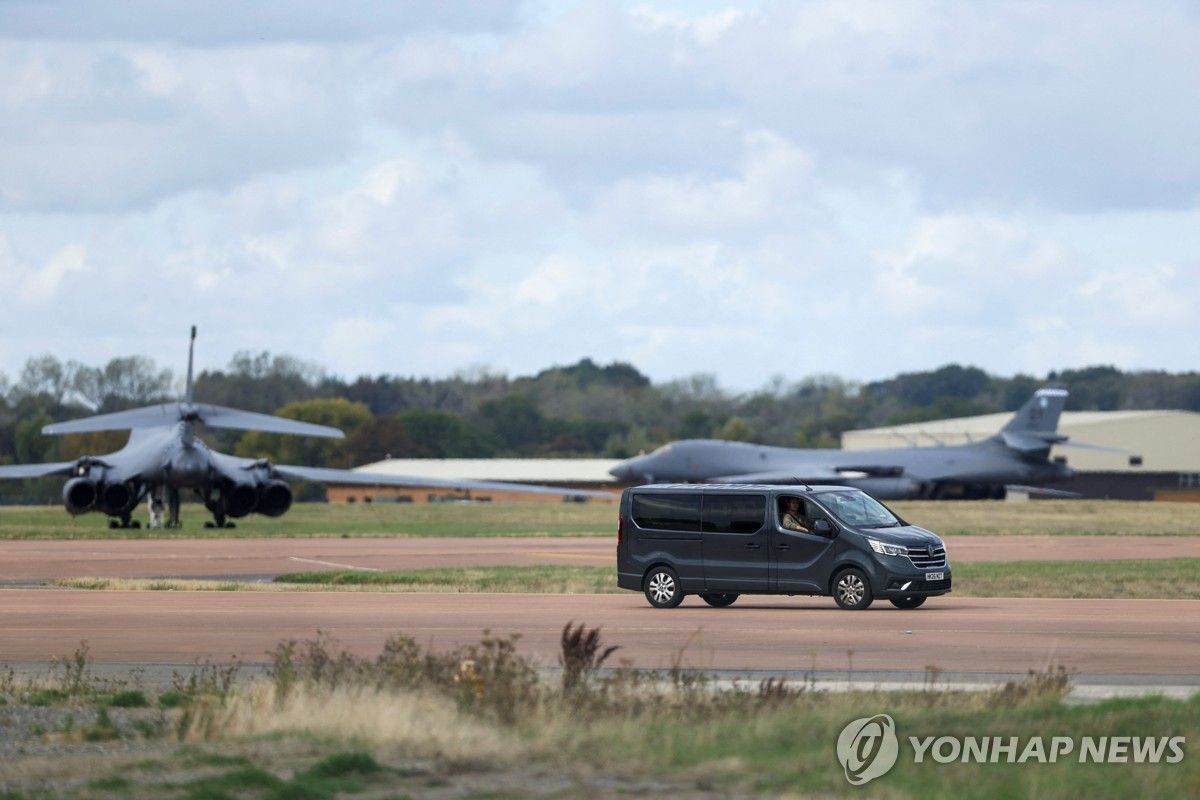
On October 4, a fleet of B-1 Lancers taxiing out of RAF Fairford — one of the United States’ most important strategic bombing hubs in Europe — made a route that should never have been routine: not toward an active combat zone, but back to American soil. A private flight-tracking group caught the withdrawal in real time. Pentagon officials confirmed it shortly after. The message, sent without a single diplomatic cable, was unambiguous.
Washington no longer considered its nuclear-capable assets at a base forty miles from London safe from Iranian handiwork.
The reasoning came fast and furious from three capitals. British Prime Minister Andy Burnham told reporters there were “strong indications” Iran played a role in a conspiracy foiled days earlier near Fairford itself. Donald Trump suggested the suspects had Iranian ties. US Secretary of State Marco Rubio said plainly that “foreign actor hands were clearly involved.” Tehran denied everything.
But the denial, in this case, is almost beside the point. What matters is that the threat assessment — credible, specific, and close to home — prompted the US to physically remove some of its most strategic bomber wings from British soil.
How an air base became a terror target
The timeline matters. The arrests began on October 27, when British police detained five UK nationals near RAF Fairford in Gloucestershire. They were driving three vans. There were no explosives inside — but there was a significant volume of gasoline. Days later, authorities took into custody a British-Iranian dual national on suspicion of plotting terrorist attacks at or near the base.
RAF Fairford is not a minor staging post. Since the onset of the Iran conflict in February, the base has hosted dozens of B-52 Stratofortresses and B-1 Lancers — aircraft central to America’s strategic bombing campaign against Iranian targets. It is, functionally, the main runway from which the US projects heavy air power into the Middle East from European territory. Attacking it would be symbolic as much as operational.
The New York Times reported that Iranian intelligence operatives appear to be borrowing tactics from Russia’s hybrid warfare playbook — recruiting disposable assets online, people with no formal ties to the Revolutionary Guard’s Quds Force, individuals who can plausibly deny involvement if captured. The network is deliberately layered: even if a plot fails, there is no smoking gun pointing to Tehran’s state apparatus. No diplomat gets expelled. No casus belli materializes.
Adrian Stuni, a US counterterrorism expert, told the Times the model is inexpensive and deniable. “The IRGC can hire criminals, teenagers — anyone — on an ad hoc basis,” he said. “There are multiple layers of intermediaries between the Guard and the operative. If it fails, nobody gets deported and there’s no justification for war.”
That calculus explains why the threat feels so insidious. It is not an army massing at a border. It is a gas tank in a van parked outside one of the most heavily defended air bases in Europe.
What this means for NATO’s forward posture
The retreat from Fairford is more than a tactical repositioning. It is a signal — one that will reverberate through NATO capitals and European defense ministries.
For decades, the assumption underpinning US forward deployment in Europe was straightforward: American bases on allied soil are safe because allies share an interest in deterring aggression. Those bases host prepositioned equipment, rotational fighter squadrons, and, increasingly, strategic bombers. The logic was that hosting US forces made allies safer, and that the political cost of defending those bases would bind America irrevocably to continental security.
That logic is cracking.
If Iran — a distant, non-NATO adversary — can mount operations against US assets inside Britain, then every forward basing agreement carries a new vulnerability. Poland, Germany, Italy, Spain — all host US strategic assets. None of them have intelligence services as capable as Britain’s, and none sit as close to a hostile non-state network as the UK does. The implication is stark: the US may need to rethink how far forward it stations its most valuable assets.
The B-1 and B-52 at Fairford represent a concentrated payload. Removing them weakens the US bombing posture in the Middle East — at least temporarily. But keeping them there invites a different kind of risk: an attack that kills American airmen on British soil could trigger a diplomatic crisis between Washington and London, and force America into a retaliatory strike it did not plan. Both outcomes are politically costly.
Who wins, who loses
Iran wins nothing publicly and everything privately. The operation reinforces its strategy of creating friction inside NATO’s rear perimeter without triggering a conventional response. If successive foiled plots keep accumulating, European publics will ask harder questions about hosting American strategic assets — and governments will listen.
The US loses operational flexibility. Pulling bombers back to the continental states shortens their reach into the Middle East, adds fuel-haul weight, and requires tankers and support infrastructure that may not be staged for that mission profile. The Pentagon is clearly uncomfortable admitting that a base in Gloucestershire — a place with no recent combat history — is now considered too exposed for strategic bombers.
Britain’s government is caught in an awkward position. Burnham has been blunt about Iranian involvement, but the arrest of civilians on British soil for plotting attacks against a US base is a domestic security failure regardless of who ordered it. The UK’s alliance with Washington remains indispensable, but the question of whether British soil should continue to host US strategic weapons when the sponsoring government cannot guarantee their safety is one that will surface in parliamentary debates and defense white papers in the coming months.
The broader implication
The Iran conflict that began in February has already redrawn assumptions about how modern wars are fought — and how they are resisted. Hybrid warfare, once the domain of Russia in Ukraine and the Baltics, now has a clear practitioner in the Middle East. The IRGC’s model of online recruitment, deniable operations, and layered intermediaries is low-cost, high-ambiguity, and devastatingly effective at sowing doubt inside allied societies.
The bomber withdrawal from Fairford is the most visible symptom of that strategy. But it is unlikely to be the last. If other US bases across Europe face similar threat assessments — and there is no reason to believe they won’t — the entire architecture of American forward deployment will require renegotiation. Not because the bases are indefensible, but because the cost of defending them has shifted from conventional deterrence to counterterrorism intelligence, domestic policing, and political will.
The US is still at war with Iran. But the battleground, it seems, has expanded — and it now includes the runways of peace-time allies.