Why Britain's Settlement Sanctions Are Rewiring Western Israel Policy
Britain and eleven allies have banned trade with Israeli settlements — triggering Jerusalem's harshest response in decades. The real story isn't Anglo-Israeli rivalry. It's the first coordinated push to enforce the ICJ's occupation ruling through economic leverage.
The Consulate Closure That Signals Something Bigger
Israel’s decision to shut the British consulate in East Jerusalem and withdraw from the International Gaza Support Centre is not merely a diplomatic tantrum. It is the visible tremor of a system recalibrating.
On Tuesday, the UK announced a ban on trade with Israeli settlements in the occupied West Bank alongside eleven countries — France, Spain, Canada, Ireland, New Zealand, Australia, the Netherlands, Belgium, Denmark, Norway, and Switzerland among them. Within days, Israel responded by expelling British diplomatic infrastructure and removing UK representatives from a coordination body established only last year to manage relief efforts in Gaza.
The speed and texture of the Israeli response tell you how deeply the settlement sanctions cut. This was not a measured protest. It was a deliberate escalation designed to signal that London had crossed a line — not because of the economic impact, which is negligible, but because of what the act represents: a group of Western democracies treating Israel’s occupation as legally actionable rather than politically managed.
The closure of the consulate in East Jerusalem is especially significant. That mission has operated since 1994 as a quiet diplomatic channel, a place where issues could be discussed without the theatrics of embassy-level confrontation. Removing it strips away a layer of insulation that both sides had relied on for decades. It forces every disagreement into the open.
Why This Isn’t Just About Trade
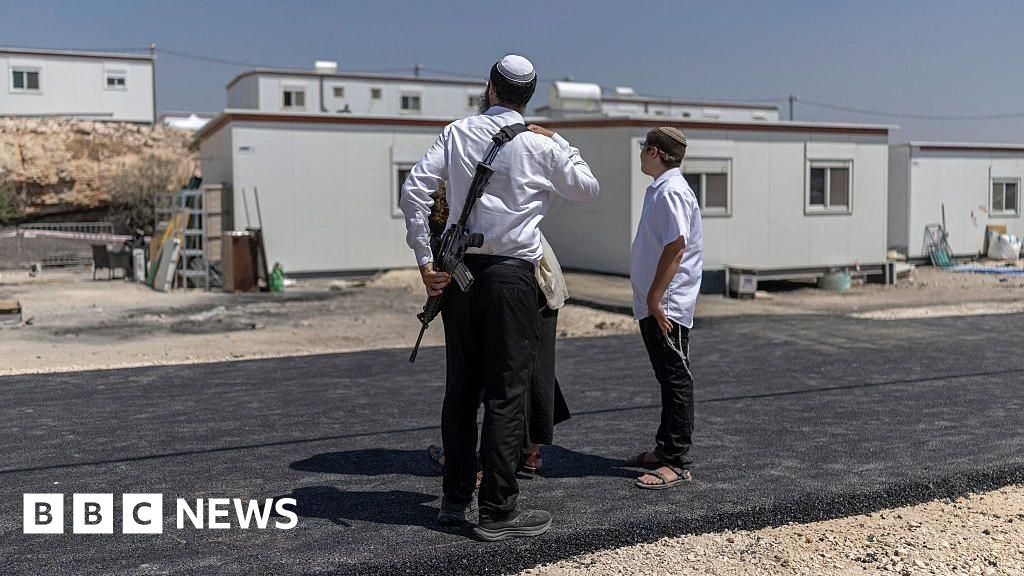
Settlement products represent a fraction of Israel’s total exports — roughly one per cent of goods shipped to the European Union originate from the West Bank. The direct economic hit is marginal. A ban on settlement goods would sting, but it would not cripple. What matters is the precedent being set: twelve governments, acting in concert, are treating the occupation as something other than a political dispute to be managed and a status quo to be preserved.
This is enforcement, not grievance. The distinction is critical and it is not lost in Jerusalem.
Britain has long regarded settlements as illegal under international law. Since 2024, it had issued advisories warning businesses against operating there. But advisories are not sanctions. They carry moral weight but no legal force. The shift from guidance to prohibition represents a qualitative change in British policy — one that transforms the UK from a country that disagrees with settlements into a country that actively penalizes them.
That shift did not happen in a vacuum. It was triggered by a 2024 International Court of Justice advisory opinion declaring Israel’s occupation unlawful as a whole — including its military presence. The ICJ did not stop at characterizing individual policies. It declared the occupation itself a continuing violation of international law and called on all states to avoid rendering aid or assistance to the illegal situation. The British government interpreted that language as a mandate to move beyond diplomacy into enforcement.
Foreign Secretary Ed Miliband did not mince words. He called settler violence “rampant” and accused the Israeli government of turning a blind eye to what he described as ethnic cleansing in parts of the West Bank. He framed the sanctions as a legal obligation, not a political choice. A British foreign secretary using that language is unprecedented in living memory. Miliband, identifying himself as a “proud British Jew” and affirming his support for Israel, made clear this was not hostility toward the Jewish state but a reckoning with how it is governing occupied territory. The rhetoric signals that the government views compromise on this issue as a breach of Britain’s own legal commitments.
Who Wins, Who Loses
For Palestinians, the sanctions feel like vindication after decades of diplomatic stalemate. Dr Husam Zomlot, the Palestinian ambassador in London, called the move a turning point. He is right to see it that way — symbolically and institutionally. But the gap between rhetoric and reality remains wide. The occupation has lasted fifty-nine years. Twelve countries issuing coordinated sanctions will not reverse that in a month. Settlement construction continues. Violence against Palestinian communities accelerates. The ban on trade does not halt building permits or protect villages from raid.
What the sanctions do provide is momentum. For years, Palestinian diplomats have argued that the international community treats Israel’s violations as inconveniences rather than crimes. Coordinated action challenges that framing. It forces every company operating in the West Bank to consider whether its products can be sold in European markets — a calculation that did not exist before.
For Israel, the blow is less economic than existential in tone. The government of Benjamin Netanyahu faces an election cycle already charged with volatility. Foreign Minister Gideon Saar’s blistering response reflects a political calculation as much as a principle — any appearance of weakness on settlements is electorally toxic. The settler movement, which has grown increasingly powerful within Israel’s governing coalition, views the sanctions as an attack on the project of Judea and Samaria, not merely on policy disputes.
But Israel’s outrage also masks a deeper anxiety. The walls of international isolation are not closing in abstractions. Arrest warrants are being pursued by the International Criminal Court for alleged war crimes. Sporting events and cultural platforms are becoming battlegrounds over Israel’s conduct in Gaza and the West Bank. Settlement trade bans are the next layer in a sequence of pressures that have been building for years. Even within Israel, where many disagree with the legal characterization of settlements, there is a recognition that the country is being treated differently by the world — and that most Israelis find that treatment unjust. The question is whether that injustice is structural or strategic.
For the United States, this is the most consequential dimension. Only Washington has the leverage to offset or amplify these sanctions. In 1991, George H.W. Bush and James Baker threatened to withhold $10 billion in loan guarantees to stop settlement expansion. The threat worked. Settlement activity slowed. The United States used its relationship with Israel as a lever for policy change. Today, Donald Trump has shown no interest in curbing Netanyahu’s settlement plans. His ambassador to Israel, Mike Huckabee, is a Christian Zionist who shares Israel’s theological claim to the West Bank. The structural alignment between Washington and Jerusalem makes Britain’s move both bolder and more isolated than it might otherwise appear.
The American position creates a paradox. Britain is enforcing international law in the absence of its most important ally. That is either courageous or reckless, depending on your perspective. It is certainly unsustainable without broader American buy-in at some point. But the current administration is unlikely to provide it.
The Second-Order Effects
The immediate diplomatic friction is the visible layer. Behind it, quieter consequences are already emerging.
European importers of Israeli goods are reassessing supply chains. Companies that previously operated across the Green Line without distinction are now conducting due diligence they had avoided. The British government has published a list of settlement enterprises subject to the ban. That list will grow. Every new entry is a small act of economic pressure that compounds over time.
Within Israel, the defense industry is watching closely. Several settlement-adjacent firms have contracts with the Israeli military. If the sanctions regime expands — as it likely will, given the ICJ’s invitation to states to refrain from assistance — those contracts could become entangled in legal complications for European buyers.
The coalition of twelve is itself a second-order development. The grouping is not permanent. It will test, fracture, and possibly reconstitute. But it establishes a template. If these same countries can coordinate on settlement sanctions, they can coordinate on other measures: arms sales restrictions, targeted financial sanctions against individual settlers or officials, or travel bans. The ICJ opinion provided the legal foundation. Coordinated action provides the mechanism. The mechanism is what matters.
Even countries that have not joined the current round — Germany, Italy, Japan — face domestic pressure to explain why they are not participating. Once the precedent of coordinated enforcement exists, opting out requires a justification that grows harder to sustain with each passing month.
What Happens Next
The immediate fallout will be diplomatic friction — more consulate closures, more expulsions, more rhetorical escalation. Israel will not reverse course on settlements. The UK and its partners will not revoke the sanctions. Both sides are now locked into a posture they cannot easily unwind without losing face.
Expect tit-for-tat measures in the coming months. Britain may recall its ambassador from Jerusalem, or Israel may expel additional diplomatic staff. The Gaza Support Centre withdrawal is just the beginning; Israel has signaled it may review participation in other multilateral frameworks where Britain holds a seat. This is a narrowing, not a severing, of relations — but the narrowing is real and it will affect everything from counterterrorism coordination to academic exchanges.
What is more interesting is the trajectory. The settlement sanctions are an opening move in a strategy that could reshape how the West engages with Israel. If the coalition holds and expands, if the ICJ’s legal framework gains traction in national courts, if companies internalize the risk of operating in occupied territory, the cost of maintaining the settlement project rises incrementally but predictably.
Whether this coalition holds, widens, or fractures depends on domestic politics in each capital. Britain faces its own electoral pressures. Prime Minister Keir Starmer’s government walks a tightrope between pro-Israel sentiment and the legal imperative it has publicly embraced. France and Spain have their own Middle East balances to strike. Canada’s position may shift depending on Ottawa’s broader foreign policy recalibrations. Every capital will reassess whether the diplomatic cost of standing with Britain is worth the principle.
For Israel, the challenge is strategic. The settlement project is entrenched — roughly half a million settlers live in the West Bank and East Jerusalem, embedded in infrastructure that cannot be removed without catastrophic political consequences. The international response is hardening. The question is no longer whether Israel will face consequences but which consequences it can absorb and which it cannot. The settlement ban is the opening move. How Israel responds will define the next phase of its relationship with the West — and with the occupied territories it has controlled for six decades.
The Real Stakes
British-Israeli relations are at their lowest point in decades. That is the headline. But the deeper story is about whether the international community will treat occupation as a legal violation requiring enforcement or continue to manage it as a political problem requiring accommodation. The settlement sanctions are a test case. If they hold, the framework for future action changes — not dramatically, but fundamentally. International law moves from declaration to deterrence. If they falter, the message is that international law remains aspirational when it conflicts with strategic interests, and that declaration without enforcement is merely theater.
The Palestinians are watching carefully. So is Israel. So should everyone else. The next twelve months will determine whether this moment represents the beginning of a new era in how the world engages with occupation — or simply an episode in a long pattern of outrage followed by abandonment.