Buffett Steps Down, But the Real Test Begins for Berkshire
Warren Buffett has left the chairman seat after 56 years, handing it to his son Howard — but the real question isn't who sits where. It's whether Berkshire can still deploy $364 billion in cash the way Buffett taught the world to invest.
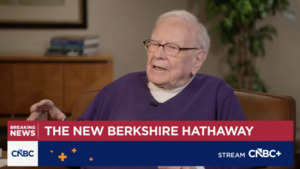
The Chairman Is Gone. The Culture Has a Guardian Now.
Warren Buffett stepped down as Berkshire Hathaway chairman on June 18, ending a 56-year reign that began when he took over a struggling textile mill and turned it into a $1.1 trillion conglomerate. He will remain honorary chairman and, crucially, a board member — meaning he will still weigh in on major decisions until the very end. At 96, that sounds like a partial exit. It is.
What actually matters here is not the title but what the transition reveals about the kind of company Berkshire has become and whether its investment philosophy can survive the man who built it.
His eldest son, Howard Buffett, takes the chairman seat. Howard has sat on the board since 1993. He is a philanthropist, a former farmer, and a former deputy sheriff in Douglas County, Nebraska. He has never run a publicly traded company. That is not an accident — it is the point. Berkshire’s board wants a chairman who guards culture, not one who chases deal flow.
Greg Abel, who became CEO nine months ago, is the one actually running the business. He oversees operating subsidiaries, makes investment calls, and has already started steering Berkshire in his own direction: buying homebuilder Taylor Morrison, expanding the Alphabet stake, deploying $16.8 billion in a single two-day stretch in April.
The division of labor is deliberate. Howard protects the ethos. Abel deploys the capital. Buffett, for now, watches from the sidelines with roughly 13 percent of outstanding shares and 30 percent of voting power.
The Cash Mountain Is the Story
Berkshire held $364.7 billion in cash and equivalents as of June 30 — the highest level in the company’s history. That number alone reframes everything about this succession.
For decades, Buffett was the world’s most powerful allocator of capital. When he bought a stock, entire sectors moved. When he stayed idle, the market interpreted it as a signal. Abel is now the one holding that gun. And he is firing it — aggressively. The Taylor Morrison acquisition and the Alphabet increase suggest a CEO willing to stretch Berkshire’s traditional boundaries, moving beyond the consumer staples and financials Buffett favored into sectors that attract younger executives and different kinds of risk.
Analysts at CFRA put it bluntly: Berkshire was a company led by a famous value investor. It is no longer. The question investors face is whether Abel’s deployment style will satisfy a shareholder base that bought into the Buffett model.
Value Investing Without the Prophet
Buffett’s greatest legacy is not any single investment. It is the idea that patient, disciplined capital allocation — grounded in fundamental analysis and long time horizons — can compound wealth across generations. He made that philosophy legible to millions through his annual letters, turning complex accounting into plain-spoken advice that anyone could follow.
Howard Buffett has never articulated a investment thesis in public. What he has said about culture is telling. In a January 2025 Wall Street Journal interview, he described Berkshire’s approach in three words: keep it simple. “Don’t do a lot of things that aren’t necessary,” he said. That is Buffett language. Whether it is enough to guide a $364 billion cash pile through volatile markets is another question entirely.
The Not Dame business school’s Michael Whiddett framed it well: the test for Abel and Howard is not whether they preserve Buffett’s legacy but whether they give Berkshire room to adapt to a market environment that looks nothing like the one Buffett grew up in. Interest rates are higher. Tech dominance is entrenched. Geopolitical risk is structurally elevated. The playbook Buffett wrote for the 1980s through 2010s does not fit 2026.
Who Wins, Who Loses
The winners in this transition are the ones who believed all along that Berkshire was a system, not a personality. The company survived the loss of Charlie Munger. It survived the CEO handoff. It will survive the chairman change because the infrastructure — the decentralized operating model, the fiduciary culture, the emphasis on rational capital allocation — predates any single individual.
The losers are shorter-term investors who priced Berkshire as a proxy for Buffett himself. When Buffett bought, they bought. When Buffett sat on cash, they worried. That dynamic is over. Abel’s investment cadence will not match Buffett’s sporadic but thunderous moves, and shareholders will need to adjust their expectations accordingly.
There is also a subtle redistribution of influence. Howard Buffett’s accession confirms that Berkshire’s leadership remains firmly within the Buffett family, but it also formalizes a separation between cultural stewardship and operational execution. That is healthier than having one person embody both. It is also riskier in the near term, because nobody outside the company yet knows whether the separation will hold under stress.
What Happens Next
Buffett’s share donations to family foundations will gradually reduce his ownership stake below the current 13 percent. He has given away more than half his Berkshire shares since 2006. The voting control remains intact for now, but the trajectory is clear: the family’s direct influence will shrink even as their cultural authority stays embedded in the chairman’s chair.
Abel has shown willingness to act. The market will soon find out whether he acts wisely. The cash mountain means Berkshire can afford mistakes — for a while. But the longer Abel operates without Buffett’s public endorsement of each move, the more the market will judge him on results, not reputation.
Buffett himself said time has been generous to him. The next chapter of Berkshire will test whether that generosity was a feature of the system or a once-in-a-lifetime accident.
The chairman’s seat is now Howard’s. The capital allocation pen is now Abel’s. The market is waiting to see whether the ink still writes the same way.