Trump's Oil Blackmail Rewrites G7 Alliance Politics
The G7's decision to release 100 million barrels of strategic reserves wasn't an organic energy policy — it was extracted under threat of American trade weaponization. Korea and Japan face a同盟 dilemma.
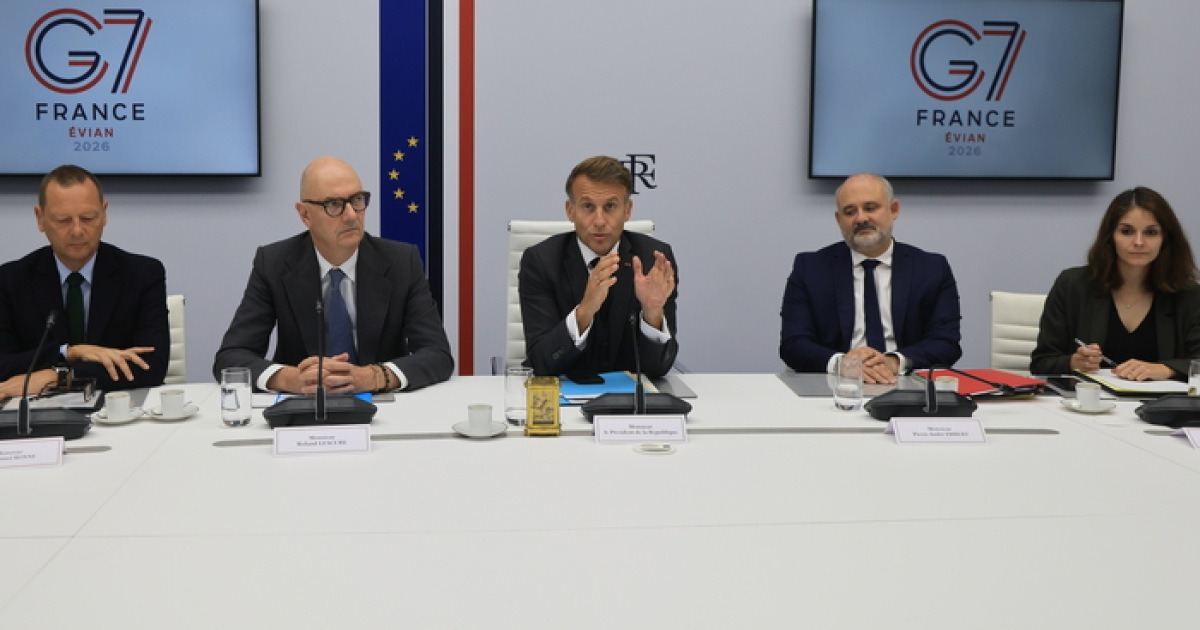
The barrel that bought silence
On October 2, French President Emmanuel Macron hosted G7 leaders at the Élysée Palace. The public narrative: allies coordinating to stabilize global energy markets through the International Energy Agency. The private reality: Donald Trump had spent weeks threatening to block European diesel imports unless they emptied their strategic reserves.
The result was a joint release of 100 million barrels — 50 million in refined diesel from European states, 50 million in crude from the full 32-member IEA coalition — deployed over four months. Within hours of the announcement, WTI dropped 1.9% to $91.11 a barrel. Brent dipped slightly to $102.25.
Trump posted on Truth Social almost immediately: Europe had agreed to release massive diesel reserves. Procedures would begin instantly. He had won.
This is not how energy alliances are supposed to work.
The threat behind the treaty
The mechanism was blunt. The Trump administration — with midterm elections six weeks away and gasoline prices a live political wound — told European capitals through backchannels that continued refusal to release reserves would trigger an immediate ban on U.S. diesel exports to Europe.
The leverage was structural, not incidental. Roughly one-third of Europe’s diesel imports come from America. No diesel flow means idling factories, stalled logistics chains, and winter heating shortages waiting to happen. The threat wasn’t hypothetical.
France proposed the compromise: European members would release 50 million barrels of refined product first, with the remaining 50 million coming from the broader IEA pool over the following months. It was a face-saving architecture that let everyone claim victory while conceding the core demand.
Members also agreed not to restrict intra-G7 diesel exports and to coordinate refinery maintenance schedules to avoid supply gaps. A follow-up IEA meeting was scheduled within days to discuss further releases if needed.
The language in the joint statement was careful — “refrain from export restrictions” rather than “will not impose export restrictions” — a drafting choice that leaves room for ambiguity when pressures mount again.
Behind closed doors, Italian Prime Minister Giorgia Meloni reportedly warned that southern Europe’s refined product margins were already thin enough that a forced release could trigger domestic refinery closures. German Chancellor Friedrich Merz countered that inaction would cost more in political capital. Neither side got what they wanted. Both signed anyway.
What Korea and Japan just learned
For Seoul and Tokyo, the G7 outcome carries a quieter, more unsettling message than any energy market analysis can capture.
Both countries import nearly all their crude. Japan’s LNG and crude dependency approaches 90%. Korea’s is slightly lower but still dominates its energy bill. Both rely on refined product flows that can be disrupted with a signature.
The United States is now the first party both nations must consult before any major energy policy decision. Not the IEA. Not their own planning agencies. Washington.
This creates a structural dependency that transcends the current administration. Any future president inherits the same leverage — American refining capacity, American shipping routes, American financial clearinghouses. The threat doesn’t need to be executed to work. The mere possibility recalibrates behavior.
Korea’s government will face particular pressure. Its petrochemical complexes and semiconductor fabs consume diesel and naphtha at industrial scales. A supply interruption doesn’t inconvenience consumers — it halts production lines worth billions. Samsung Electronics and SK Hynix alone represent enough concentrated risk to make any supply disruption a national security event, not merely an economic one.
Japan’s keiretsu energy traders and trading houses that manage strategic reserve logistics will need to recalibrate their risk models. The assumption that energy security flows through multilateral institutions like the IEA is no longer valid. It flows through bilateral relationship management with Washington.
Tokyo’s response has been characteristically subtle but telling. Finance Minister Satsuki Katayama issued a statement praising the “cooperative spirit” of the G7 while simultaneously announcing a review of Japan’s own reserve release protocols — widely interpreted as a move to ensure future consultations with Washington happen automatically rather than reactively.
The alliance cost
The immediate market effect was modest — a few dollars per barrel, temporary relief. The institutional effect could endure for decades.
The IEA was created in 1974 precisely to prevent this scenario: individual members panic-selling reserves while allies free-ride. The collective release mechanism was supposed to be governed by data, not political blackmail. This episode inverts that logic entirely.
European leaders accepted the deal publicly but the private calculus is clear. France hosted the meeting. Germany will absorb the industrial consequences if demand surges again. Eastern European members face heating vulnerabilities closer to home. The unity on display in Paris masks fractures that will reappear at the next crisis point.
For the transatlantic relationship, the precedent matters more than the barrels. When an alliance partner can dictate reserve releases through trade threats, the foundation of collective energy security dissolves into transactional bargaining.
Norway, a non-EU IEA member and major European energy supplier, saw its Statoil-equivalent holdings quietly repositioned. The country’s sovereign wealth fund — the world’s largest — increased its exposure to U.S. refiners in the weeks following the announcement. Corporate behavior confirms what diplomats won’t say publicly: the risk profile of European energy assets has shifted.
Second-order ripple effects
The consequences extend beyond reserve politics. European automakers already grappling with transition costs now face additional uncertainty as diesel demand curves become politically negotiated rather than market-driven. Fleet operators in logistics — DHL, Maersk, Deutsche Post — have begun hedging strategies that assume irregular access to refined products, not just volatile prices.
Insurance markets are repricing energy infrastructure across the region. London-based underwriters have tightened terms on European refinery projects, citing “geopolitical supply-chain dependency” as a new material risk category. These premiums will bake into project economics for years.
China watched carefully. Beijing has no strategic petroleum reserve mechanism comparable to the IEA framework and has long relied on bilateral deals with Russia, Iran, and Saudi Arabia. This episode validates Mao-era instincts about self-reliance in energy. China’s recent acceleration of reserve expansion and its willingness to accept discounted Russian crude now look less like opportunism and more like strategic preparation for exactly this kind of alliance realignment.
OPEC+ members are recalibrating too. The cartel’s strategy has always depended on disciplined supply restraint. If the world’s largest consumer bloc can extract concessions through threat rather than market competition, the pricing power that sustained OPEC+ through the 2020s erodes. Desert Sunlight, the straggling California field that once anchored U.S. shale narratives, now sits inside a geopolitical landscape far more complex than anyone predicted in 2018.
Who wins, who loses, what comes next
Trump wins politically. Midterm gas prices matter more than alliance architecture. The market reaction — WTI below $92, Brent stabilizing near $102 — gives him a headline about restoring affordability.
European refineries win temporarily. Diesel glut eases margin pressure in the short term. But they’ve just demonstrated that their energy sovereignty has a ceiling defined by Washington.
American refiners win structurally. They’ve secured a captive export market with geopolitical enforcement behind it. European buyers now know their alternative to U.S. diesel isn’t just more expensive — it’s politically conditional.
Korea and Japan lose strategically. Their energy independence was always theoretical. This episode proves it.
The follow-up IEA meeting within days suggests this isn’t a one-off settlement but an ongoing negotiation framework. Every future supply shock will be preceded by the same implicit question: how much leverage does Washington want to extract before it grants relief?
The 100 million barrels are a number. The real product being traded is autonomy.
By spring, European politicians will begin asking whose interests the IEA actually serves. Japan’s Ministry of Economy, Trade and Industry has already classified “allied energy coordination” as a top-priority research theme for fiscal year 2026. Korea’s Energy Economics Institute published a working paper questioning whether the IEA’s emergency framework survives political conditioning — a remarkably bold move for a government-run think tank.
The G7 statement calls this “stabilizing global energy markets.” The smarter reading is simpler: the alliance system now prices American political needs into every barrel it moves. And the next crisis won’t wait for consensus.