BYD Banned From US Base in Japan — What Comes Next
Okinawa's Kadena Air Base has become the first US facility in Japan to ban BYD vehicles over connected-car security fears. The move signals a broader crackdown that could reshape how Chinese EVs operate across allied nations.
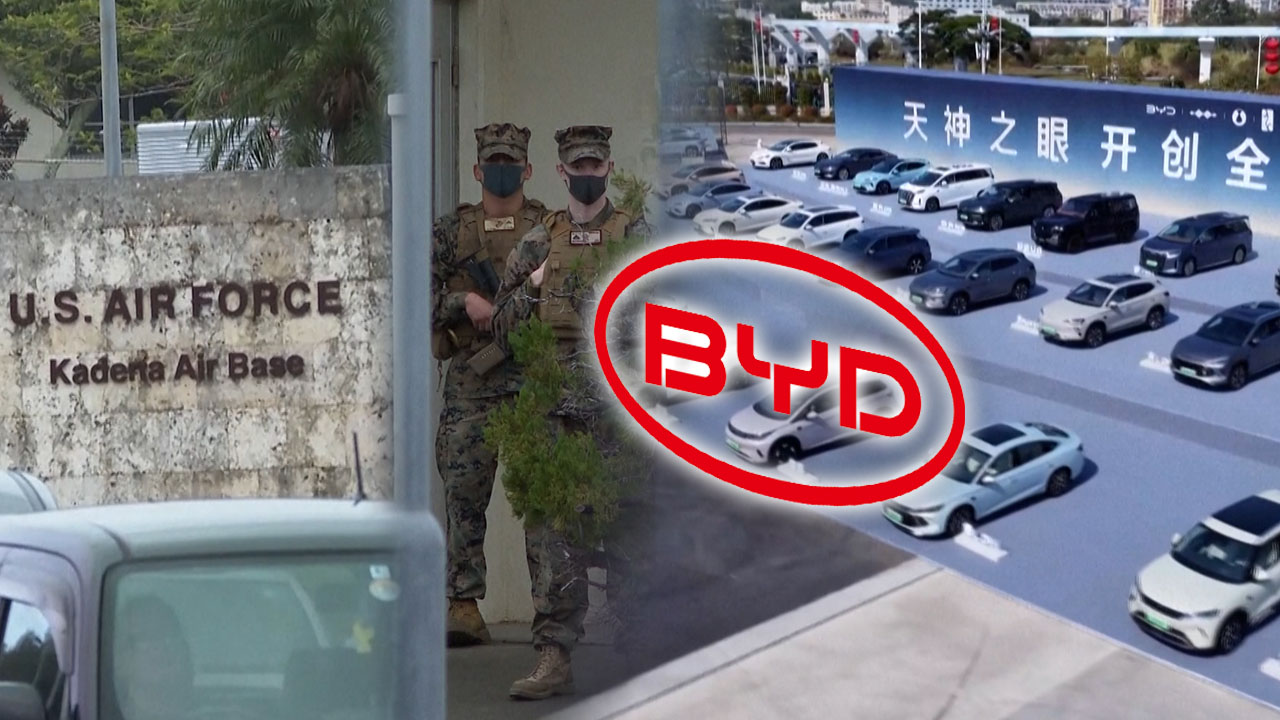
A Gate Closes at Kadena
Starting October 26, 2026, BYD vehicles will not be permitted onto Kadena Air Base in Okinawa. The ban covers everything — personal cars owned by base personnel, contractor fleet vehicles, taxis shuttling between terminals and lodging, delivery vans. No exceptions were announced.
Kadena is one of the largest US military installations in the Asia-Pacific region and a linchpin of Washington’s strategic posture toward China. Its closure to a single brand of vehicle may look like a narrow administrative measure. It is not.
The Connected-Car Threat
The rationale, as reported by multiple Japanese outlets citing US military sources, centers on what officials call a “potential risk” — a term that deserves unpacking.
Modern connected cars like BYD’s fleet rely on arrays of cameras, lidar, radar, and GPS sensors. They process location data in real time, transmit telemetry to cloud servers, and offer remote control features through smartphone apps. To a base commander, a vehicle rolling through a checkpoint is no longer just transportation. It is a mobile sensor platform with a data pipeline stretching back to Shenzhen.
This is not theoretical speculation. In July 2026, during a National Assembly defense committee hearing, lawmaker Cheon Ha-ram of the Open New Party noted that a BYD equipped with 12 cameras had entered the grounds of South Korea’s Ministry of National Defense compound. When pressed, Defense Minister Kang Shin-chul admitted that no regulations currently governed such access.
That admission — even before the Kadena decision — exposed a gap in allied-nation defense perimeters. BYD’s vehicles were rolling into sensitive zones with no legal framework to stop them.
Washington Was Already Moving
The Kadena order did not emerge in isolation. It follows a deliberate Trump-era escalation against Chinese technology companies operating in or transiting through American jurisdictions.
In March 2025, the United States imposed restrictions on the import and sale of connected-car communications software, autonomous-driving systems, and related components linked to Chinese firms. The rule targeted the software layer — the code that collects driving patterns, geolocation, and environmental data and routes it to servers outside US control.
By June 2025, the list of targeted entities expanded. BYD, along with Alibaba and Baidu, was added to the Commerce Department’s roster of “Chinese military companies operating in the United States.” That designation carries real consequences: it triggers export controls, limits access to American financial systems, and signals to allied governments that these firms are considered national-security risks.
Kadena is the first concrete enforcement action against BYD on Japanese soil. If the pattern holds, it will not be the last.
Who Loses When the Gate Closes
BYD is the clear loser in this framing. The company has positioned itself as the world’s most aggressive Chinese EV exporter, with a pipeline of models designed for markets from Europe to Southeast Asia. Adding Japan — the third-largest auto market globally — to the list of restricted zones narrows its operational runway significantly. Even a partial ban on military-base-adjacent commerce affects brand perception. Contractors who cannot drive BYD to work may choose not to buy one. Taxi fleets serving base personnel will switch brands. The signal reaches far beyond the gate.
The US military gains a cleaner perimeter. Data-collection risk drops to zero for any BYD rolling through Kadena. The cost of enforcement is minimal — a posted notice and a checkpoint denial.
South Korea faces an immediate embarrassment. The Ministry of National Defense acknowledged it had no rules governing connected-car access to secure facilities. If Kadena can draw a line, Seoul should be able to do the same. The pressure now falls on Korean officials to close that regulatory gap before the next lawmaker spots a camera-equipped Chinese EV on defense ministry grounds.
China’s EV industry loses a precedent. Once Kadena establishes that connected-car data risk justifies brand-level bans at military installations, other bases in Japan, Guam, and potentially allied nations like Australia and the Philippines face the same logic. The restriction is small today but structurally repeatable.
The Cascade Is Already Underway
What makes this story worth tracking is not the ban itself — it is the replication risk. Connected-car security is not unique to Kadena. It is a category-wide problem that applies to every US military facility worldwide, and every sensitive government compound in allied nations.
The US has already established the policy framework. March 2025 restricted the technology. June 2025 named the companies. October 2026 enforced the ban at a specific site. The next step is automatic: other bases will issue similar notices, other governments will draft analogous regulations, and the commercial market for Chinese EVs in strategic zones will contract.
For BYD, the question is whether the company can redesign its connected-car architecture to mitigate data-exfiltration concerns — for example, by offering a version of its software stack that stores and processes all sensor data domestically, with no cloud transmission to Chinese servers. Whether it chooses to do so, and whether allies find the solution acceptable, remains unclear.
What Happens Next
Expect Kadena to serve as the template. Other US bases in Japan — Yokosuka, Sasebo, Misawa — will likely follow within months. European and North Atlantic allies with similar security frameworks may adopt parallel restrictions. The connected-car ban could become the new normal for Chinese EV brands operating in allied military and government zones.
The broader implication extends beyond autos. This is the first sustained enforcement action against a consumer technology category — connected vehicles — on national-security grounds. If it holds, it sets a precedent that will shape how Washington and its partners regulate Chinese-made smart devices across every sector where sensors meet connectivity.