Canada's $20 Billion Retaliatory Tariffs Are a Blueprint for Middle-Power Pushback
Canada has matched the U.S. 50 percent tariff dollar-for-dollar and rate-for-rate, targeting politically sensitive U.S. states with a $20 billion retaliation that now frames the dispute as sovereignty infringement, not just trade friction.
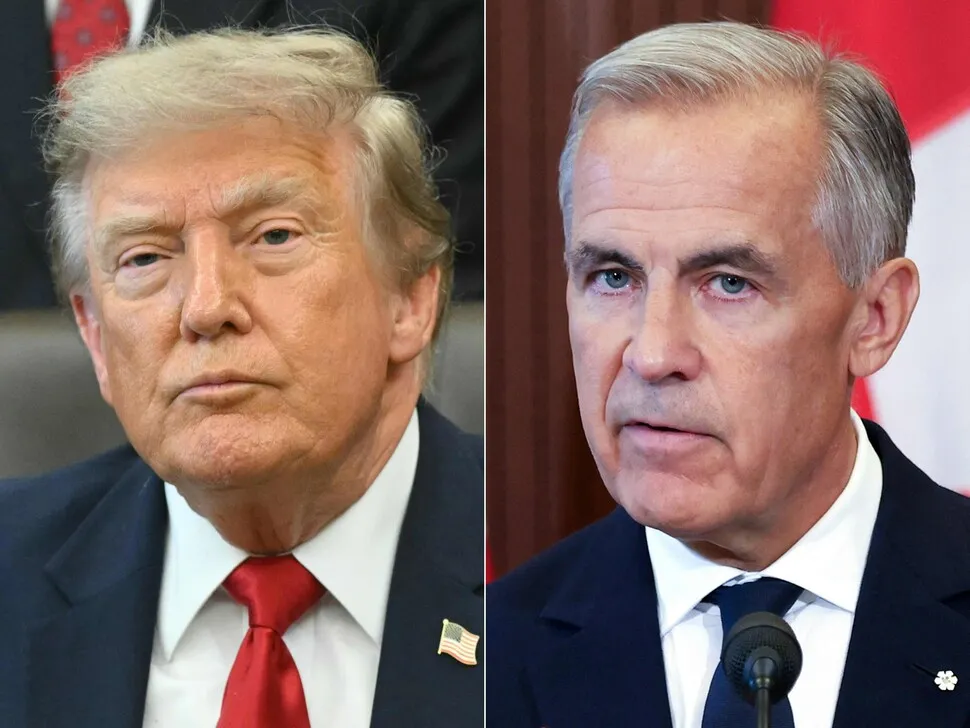
Canada Is Not Just Countering — It’s Targeting
Canada announced $20 billion in retaliatory tariffs on Monday, matching the United States dollar-for-dollar and rate-for-rate after Washington imposed a 50 percent levy on more than 550 Canadian goods last week. But the numbers are only part of the story. What makes this escalation unusual is that Ottawa is deliberately aiming at American political geography.
Melanie Joly, Canada’s minister of innovation, science and industry, told reporters that the product list was selected to hit states where political pressure would be most acute. The Wall Street Journal identified Wisconsin processed cheese, Maine seafood, and laundry appliances from Kentucky — where General Electric operates major facilities — as likely targets. A senior Canadian official later told journalists the electoral map was a secondary consideration, not the design principle. Either way, the implication is the same: Canada is treating American politics as terrain it can shape.
The tiered rates themselves are calculated. Steel and aluminum, furniture and clothing attract 50 percent. Appliances, dairy, and fish carry 25 percent. Selected tools and machinery sit at 15 percent. Ottawa layered the new retaliatory rates on top of existing duties rather than replacing them, which means the cumulative burden on affected American exporters is steeper than the headline number suggests.
The Deal Broke at the Last Minute Over Trucks
The current crisis did not emerge from nowhere. It followed negotiations that reached apparent agreement through last week. Two officials from each side confirmed they had aligned on a framework that would have reduced tariffs on steel, aluminum, autos, and softwood lumber.
Then Commerce Howard Lutnick placed brakes on the deal. According to people familiar with the discussion, he objected to lowering the auto tariff cut broadly and insisted on capping the volume of aluminum eligible for a reduction. He also drew a line on large and medium trucks, arguing they should not receive the same tariff treatment as passenger vehicles. Ottawa read the shift as the goalposts moving. The United States read the same move as Canada introducing new demands at the eleventh hour — specifically around truck tariffs.
That disagreement over trucks may sound narrow. It is not. Canada’s heavy-truck industry is concentrated in provinces like Ontario and Quebec. An American tariff that treats trucks differently from cars hits those provinces disproportionately. For Ottawa, accepting unequal treatment on trucks would have been a political signal — that certain industries do not deserve parity. That is a line it is unlikely to cross quietly.
From Trade Dispute to Sovereignty Fight
What has pushed this conflict beyond a routine tariff row is Canada’s claim that the United States attempted to restrict its sovereignty during the final round of talks. Dominic LeBlanc, Canada’s minister of international trade, told BNN Bloomberg that Washington tried to insert conditions limiting Canada’s ability to conclude free-trade agreements with other countries. Mark Carney, the prime minister, said the United States also challenged Quebec’s French-language labeling requirements and streaming-platform content rules as trade barriers.
Carney was blunt. He said French language and Québécois culture are fundamental rights in Canada, not negotiating chips, and would not be accepted as concessions. “The United States may find our French and our Québécois culture uncomfortable,” he said, “but here they are basic rights.”
The United States denies this entirely. Jamieson Greer, the USTR representative, told CNBC that Washington was prepared to cut steel and aluminum tariffs in half and substantially ease duties on autos and softwood lumber. He said Canada simply wanted more. He called the claim about French-language policy a “laughing fake story.” Trump responded on Truth Social, saying he has never intended to interfere with Canadians speaking French and called Carney a “weak and incompetent prime minister” fabricating the allegation to gain political support in Quebec.
Neither side is backing down. That is how sovereignty disputes escalate.
The Cards Canada Has Not Yet Played
Analysts in Canada are now discussing options beyond tariffs. The most consequential would be restrictions on electricity and critical-material exports. Ontario supplies power to New York, Michigan, and Minnesota. Cutting or conditioning that flow would hurt American states that are already feeling tariff pain. The United States imports roughly 60 percent of its aluminum, and more than half of that comes from Canada. Disrupting either stream would ripple through North American manufacturing instantly.
These are nuclear options in a relationship built on integration. Both governments understand that. That is why neither has moved toward them yet. But their existence changes the calculus. The United States is betting that Canada will blink first because it needs access to the American market more than America needs Canadian aluminum on short notice. Canada is betting that the political cost of a full rupture will force Washington to offer a better deal.
Why This Matters Beyond North America
Korean financial dailies are already framing the Canada-U.S. exchange as a blueprint for middle-power resistance. The logic is straightforward: if a close ally and neighbor can match a superpower’s tariff dollar-for-dollar while targeting its electoral map and raising sovereignty claims, smaller states have a template for pushback that does not require military weight.
Japan, South Korea, and European capitals are watching closely. None of them wants a trade war with the United States. All of them depend on it for security. Canada’s move shows that economic retaliation and legal framing can coexist without immediate collapse. It also shows that the United States is willing to treat alliance partners as adversaries in trade negotiations — a shift that changes how middle powers plan their risk.
The deeper lesson is structural. The United States has moved toward reciprocal tariffs as a default tool. Canada’s response proves reciprocity is not purely American. When the target is integrated enough — in supply chains, in electricity grids, in political geography — retaliation can be surgical rather than suicidal. That is not a guarantee of success. But it is a starting position most middle powers have not tested before.
What Happens Next
Trump has threatened an additional 50 percent tariff on Canadian autos, trucks, and parts starting in January, along with steel. He also floated renaming Lake Ontario the “Lake America” lake, a joke that signals how personal this has become. The White House says it offered favorable market access and was ready to cut duties significantly. It accuses Canada of abandoning reason.
Ottawa says it is defending its industries, its trade agreements, and its language laws. It has timed the retaliation to maximize political pressure before the November midterms. Neither side has offered a face-saving off ramp yet.
The most likely near-term outcome is a temporary de-escalation — a pause to talk, with both governments claiming credit at home. The structural outcome is less certain. If the United States follows through on January tariffs, Canada will likely respond with energy or material restrictions. The dispute then moves from trade policy into infrastructure policy, where the damage is shared more evenly and the political accountability is harder to assign.
For companies on both sides of the border, the signal is clear: integration is no longer insurance. Allies are not immune. The question now is whether middle powers treat Canada’s playbook as a model or as a warning.
The answer will shape trade policy in Tokyo, Seoul, Brussels, and New Delhi long after the next round of negotiations.