HSBC Says Hormuz Could Be Obsolete in Five Years — Here's Why That
HSBC's CEO claims the Strait of Hormuz could become redundant within five years as Gulf states accelerate alternative pipeline investment driven by Iran tensions. The shift reshapes global energy routes — and Asia's import security is the biggest stake.
The Chokepoint Nobody Wants to Lose — But Might Have To
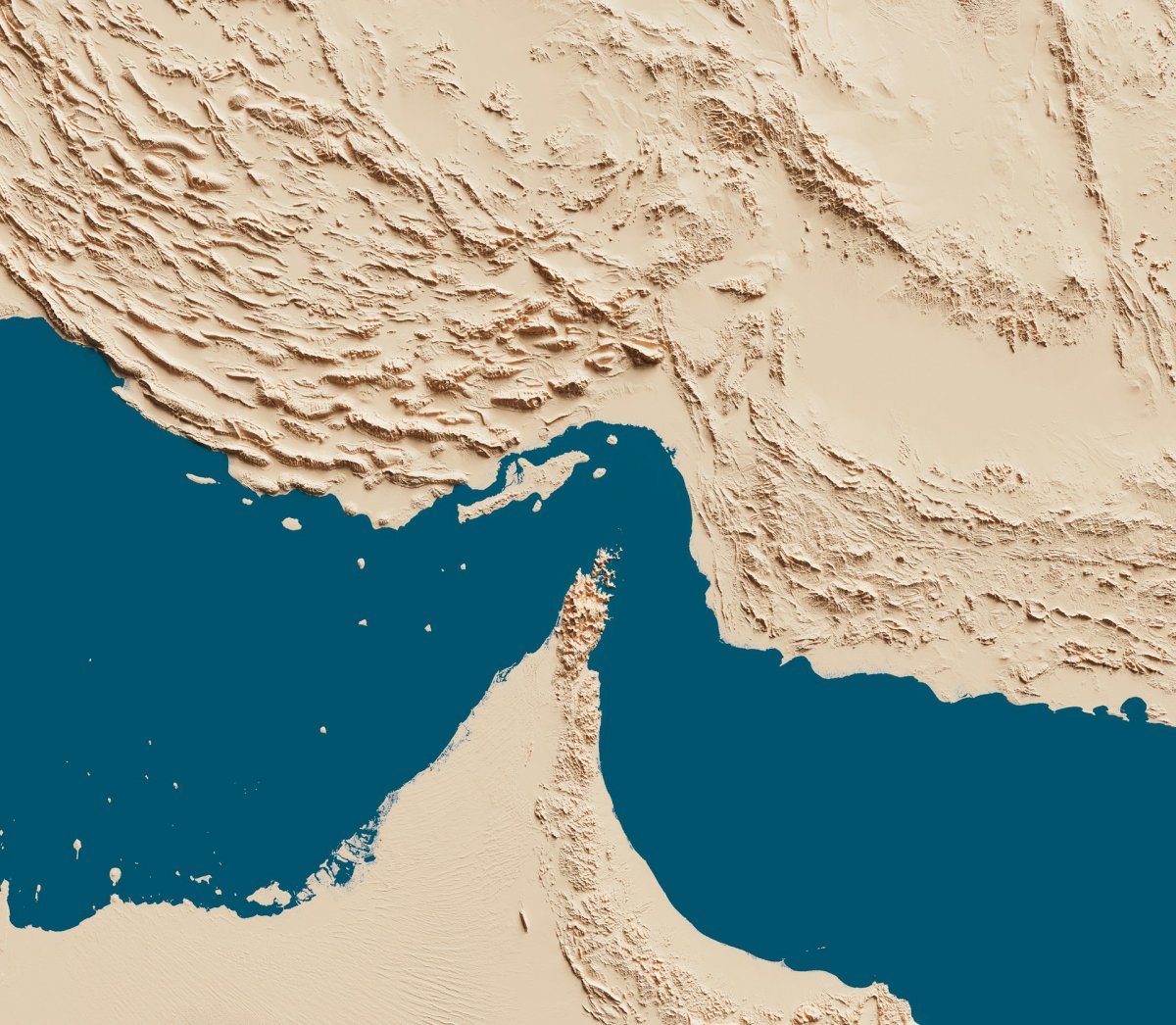
The Strait of Hormuz has been the single most important maritime chokepoint in global energy since the 1970s. Roughly a quarter of the world’s seaborne oil — about 20 million barrels a day before the 2025 conflict with Iran — flowed through its 21-nautical-mile corridor. Most of it headed east to China, India, Japan, and South Korea. For Western consumers and allies, Hormuz was always a vulnerability you could talk about but never escape.
Now a man who should know — Jorge El-Hedery, CEO of HSBC — told the bank’s Future Forum in Dubai on October 20 that the strait could be functionally redundant within five years. Not closed. Not nationalized. Just bypassed. Gulf states are pouring capital into pipelines, ports, and logistics corridors that route oil and gas around Hormuz entirely. The investment is real. The timeline is aggressive. And the geopolitical read-through is rarely being said out loud in English-language markets.
What HSBC Is Actually Signaling
El-Hedery did not frame this as dystopian. He said the region would recover and grow — but only with massive capital expenditure. His exact words, per Reuters: “Of course we wish for the conflict to be resolved and we are hopeful. But perhaps in five years’ time the Strait of Hormuz may not be needed.”
That phrasing matters. He is not predicting war escalation. He is predicting strategic irrelevance. If you believe a senior banking executive with deep Middle East exposure is saying a centuries-old chokepoint is about to go the way of the Suez Canal for tankers above 200,000 deadweight tons — you should adjust your risk models.
HSBC’s own data backs the scale of the bet. The bank cited MEED, a Dubai-based construction intelligence firm, which reports that $1.4 trillion in infrastructure projects across the Middle East, North Africa, and Turkey are in the planning or pre-contract stage. That is up from $792 billion in January 2023, $1.22 trillion by January 2026, and now $1.4 trillion this October. Of that total, $872 billion is contract-specific — meaning developers and construction firms already have awarded projects to chase. The capital is moving.
This is not only about oil pipelines. It covers ports, railways, free zones, and energy hubs. But the Hormuz bypass is the anchor thesis pulling the rest together.
The Bypass Capacity — Real, But Narrow
Saudi Arabia and the UAE already operate two critical detour corridors. The east-west pipeline, owned by Saudi Aramco, runs from the Eastern Province fields to the Red Sea port of Yanbu, clearing the strait entirely. In March 2025, Aramco announced a capacity expansion to 7 million barrels per day. Whether it can sustain that rate over extended periods remains unproven — the test has not happened at scale. The UAE’s Abu Dhabi Crude Oil Pipeline runs from Habshan to Fujairah on the Gulf of Oman, well outside Hormuz. Its design capacity sits at roughly 1.8 million barrels per day; pre-conflict throughput was closer to 1.1 million.
The International Energy Agency estimates the combined spare detour capacity of both systems at 3.5 to 5.5 million barrels per day. That is substantial — roughly a quarter of the flow that used to transit Hormuz. But it is not the whole picture, and it is not symmetric.
Other major producers lack viable alternatives. Kuwait, Qatar, the UAE’s remaining fields, and Iran itself all depend on the strait. There is no pipeline from Kuwaiti fields to the Red Sea. There is no equivalent for Qatar’s liquefied natural gas. That asymmetry is the structural flaw in the five-year thesis.
The Gas Problem Nobody Is Solving Quickly
In 2025, Hormuz carried more than 110 billion cubic meters of gas in LNG form — a figure that makes the crude bypass look like a partial fix. Qatar, the world’s largest LNG exporter by volume, routes the overwhelming majority of its gas exports through the strait from its South Pars field. Building equivalent pipeline or port capacity for LNG is a different engineering and financial challenge. Pipelines move oil efficiently over land. They move gas poorly — unless you compress it, refrigerate it, and build regasification terminals on the other end. Or you build dedicated LNG export terminals on the Arabian Sea coast, which is what the UAE is doing at Fujairah and what Qatar would need to replicate at scale.
That takes years, not months. It takes tens of billions in capital. And it requires buyer contracts that lock in revenue for decades. No Gulf state is racing to build that today at Hormuz-scale volumes. Which means the five-year redundancy claim is strongest for crude and weakest for gas — and gas demand in Asia is growing faster than oil demand.
Why Asia Should Be Listening Closely
Here is where the angle most English-language readers miss. About 80 percent of Hormuz’s oil flow targets Asian markets — China, India, Japan, South Korea. These are the countries most exposed to a chokepoint disruption and, equally importantly, the countries most motivated to pay for its elimination. China already finances and builds ports across the Gulf. The Belt and Road Initiative has a dedicated maritime arc through Gwadar, Dubai, and Djibouti. Beijing has every incentive to fund detour pipelines in Saudi Arabia and the UAE because it reduces its own vulnerability.
This is not new. It is an acceleration. And it changes the bargaining position of every Asian importer. If Hormuz is trending toward irrelevance, then the pricing power of chokepoint risk disappears from your cost model. That is a structural shift in how energy costs are calculated across Asia — one that favors diversified suppliers and penalizes those who relied on maritime transit premiums.
The Investment Paradox
HSBC surveyed more than 1,600 corporate executives and roughly 820 institutional investors and found the Gulf still rated as an attractive destination. That seems contradictory until you separate narrative from financials. War damages sentiment. Infrastructure spending rewards conviction. The two can coexist — and that is exactly what is happening. Capital is flowing into detours while the strait remains the default route for most flows today. The paradox is the point: the bet on Hormuz’s redundancy is being funded precisely because the current system still works.
The World Bank painted a starker near-term picture in October, projecting real GDP growth in the Middle East and North Africa region — plus Afghanistan and Pakistan — to fall from 3.3 percent in 2025 to minus 2.1 percent in 2026. The conflict is compressing activity across aviation, tourism, and logistics, not just energy. Those sectors do not benefit from pipeline investments. They require peace dividends.
Who Wins and Who Loses
The winners are clear. Saudi Aramco and ADNOC gain optionality. Their detour assets appreciate in strategic value whether the strait closes or not. Asian importers who can secure long-term pipeline access prices underwrite less transit risk. Infrastructure contractors and financiers who win bids on the $872 billion in contracted projects capture near-term revenue regardless of the geopolitical endpoint.
The losers are less visible but real. Maritime insurance markets that priced Hormuz risk lose a premium line. Tanker operators serving the strait face volume erosion if detours scale as El-Hedery expects. Countries without detour access — notably Kuwait and, asymmetrically, Qatar on the gas side — retain structural exposure. And Western economies that treated Hormuz disruption as an episodic shock rather than a solvable engineering problem may find their resilience assumptions outdated.
What Comes Next
Five years is a bold horizon for infrastructure. The pipelines exist. The capital is being raised. The LNG gap is unresolved. The most honest reading of HSBC’s commentary is not that Hormuz will close — it is that the region is hedging against closure and building alternatives fast enough that closure loses its strategic punch sooner than most planners expect.
The broader signal is about trade corridor power. Chokepoints matter when there is no credible alternative. The moment alternatives appear, the leverage shifts from geography to finance. The Gulf states are buying that finance. Asia is financing it. Europe and America are watching.
If El-Hedery is right, the question is no longer how to protect Hormuz. It is who benefits when it stops being the bottleneck everyone feared.