Canadas Dollar-for-Dollar Trade War Strategy Changes Everything
Canada is matching US tariffs dollar for dollar in what could become a blueprint for US trade disputes. The $2 trillion USMCA pact hangs in the balance as supply chains across North America face unprecedented disruption.
A New Model for Economic Warfare
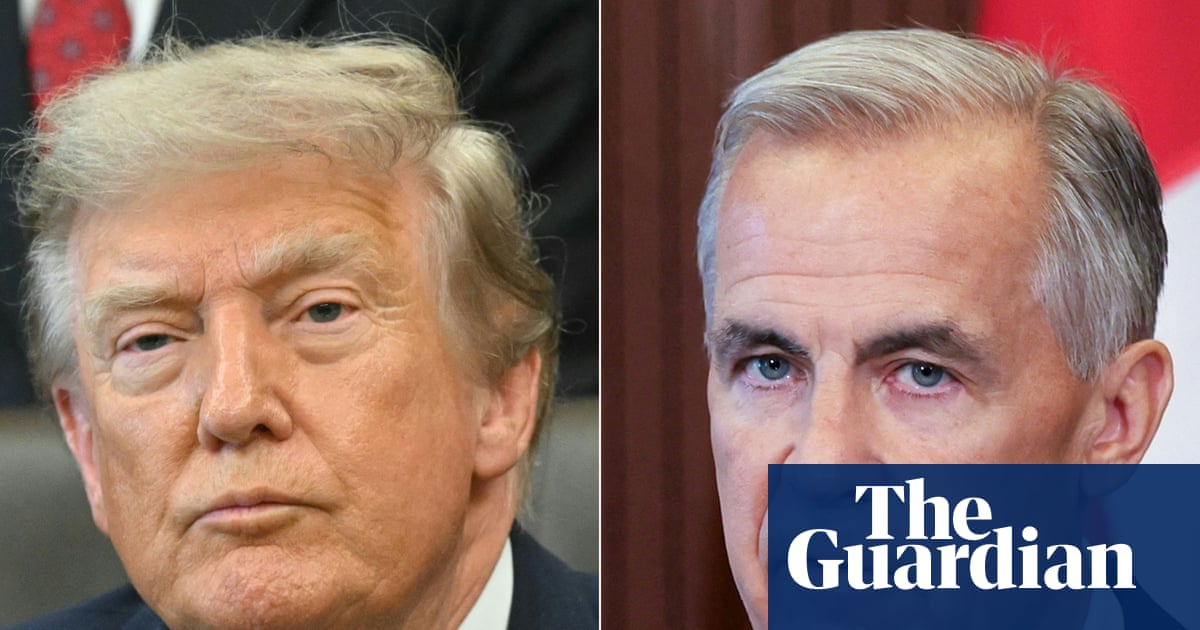
Canada did not negotiate. It did not blink. When the United States imposed 50 percent tariffs on $20 billion worth of Canadian goods last Saturday — hitting everything from hockey sticks to tongue depressors — Prime Minister Mark Carney announced a dollar-for-dollar retaliation strategy that takes effect September 8. The targets: steel, dairy, appliances, and electronics.
This is not merely a trade dispute. It is the emergence of a playbook.
Carney, the former Bank of England governor turned elected leader, understood something Trump did not anticipate. The American president builds leverage through unpredictability, through escalating demands that smaller trading partners absorb rather than resist. Canada’s choice to match every dollar of tariff imposed suggests the Trump approach has a breaking point — and that point may have been crossed.
Who Wins and Who Loses
No one wins a trade war above a certain threshold of escalation. But the distribution of losses reveals who holds vulnerability.
The United States, for all its economic size, imported an enormous volume of Canadian goods — roughly $400 billion annually before these tariffs. Fifty percent on half of that flows directly to American consumers and manufacturers who rely on Canadian inputs. Steel producers in Michigan and Wisconsin now face higher costs for raw materials sourced north of the border. Dairy processors in Vermont and Wisconsin lose access to a market that supplies their ingredients. The auto industry — the thinnest vein in North American manufacturing — depends on parts crossing the border six or seven times before a vehicle is finished. Those parts are now 50 percent more expensive overnight.
Carney’s retaliation targets the right American sectors. Steel plants in Pennsylvania and Indiana, dairy operations in Wisconsin and California, appliance manufacturers in the Rust Belt. These are constituencies Trump needs. The tariff war forces those constituencies to pressure Washington for relief — or to vote differently next cycle.
The political calculus is straightforward: Trump chose escalation on Friday. Carney chose response on Saturday. The question is no longer whether Canada will retaliate but whether anyone else follows.
The USMCA Death Spiral
The North American treaty governing $2 trillion in annual goods and services trade was already on life support. Trump refused to renew it this summer after Canada and Mexico formally requested a 16-year extension. The refusal was not an accident. It was leverage — an attempt to punish Canada for its tariff stance and force concessions from Mexico simultaneously.
But refusing to renew a trade agreement without offering a replacement is economically incoherent. The USMCA provides rules, dispute mechanisms, and certainty that ad hoc tariff regimes cannot replicate. Removing it without replacement creates a legal vacuum that hurts American exporters more than any foreign government.
Carney called the US-Canada breakdown “certainly not good news.” That was the careful translation. The actual assessment: the entire architecture of North American trade is unraveling because one party refuses to play by rules it previously wrote.
Supply Chains in Freefall
The second-order consequences will arrive before the retaliation takes effect. Manufacturers do not renegotiate supply chains during a tariff dispute. They absorb, they delay, they plan for worst-case scenarios.
Canadian exporters have begun diverting goods to alternative markets — a slow, expensive process that reduces margins and disrupts established relationships. American buyers face shortages or price spikes. Auto plants may slow production lines. Agricultural sectors on both sides of the border, already exposed to Russian grain competition and Chinese market dependencies, lose a reliable partner.
The timeline matters. US tariffs took effect immediately. Canadian retaliation arrives September 8. That two-week window is not mercy — it is strategic ambiguity designed to maximize uncertainty for American businesses that must decide whether to stockpile, pivot, or wait. Most will do none of those things efficiently. They will wait, and the longer they wait, the more damage compounds.
The Carney Doctrine
What makes Canada’s response historically significant is not the tariffs themselves but the signal they send. Other countries facing US tariff escalation — India, the European Union, Japan, South Korea — are watching closely. If Canada absorbs the hit, the message is: negotiate from weakness. If Canada matches dollar for dollar, the message is: there are consequences.
Carney understands central banking. He knows that credibility matters more than any single transaction. The Bank of England learned this repeatedly during the financial crisis. The lesson applies here: a central bank that blinks first loses its anchor. A trade partner that bends first loses its leverage.
Trump’s comment that Canada “wants the benefits of being a State, without being one” reveals the personal dimension underlying what should be a structural dispute. The American president has previously suggested he wants to absorb Canada through economic force. Carney’s retaliation says, in effect: try it.
What Happens Next
The most likely outcome is not resolution but managed deterioration. Both governments have incentives to de-escalate without appearing to concede. But the September 8 retaliation date passes regardless. The question is what happens after.
If Carney’s strategy holds — if Canadian retaliation pain exceeds Canadian political cost — then the United States faces a dilemma it cannot tariff away. Its own industries will demand relief. Its political base will feel the squeeze. The USMCA collapse will create uncertainty that investment markets dislike. Eventually, someone blinks.
If the strategy fails — if Canada’s economy contracts faster than America’s — then the precedent is set: larger economies win trade wars through attrition. Small states learn to absorb rather than resist.
The second scenario is far more dangerous for global trade. It makes unpredictability the primary tool of economic statecraft. It rewards escalation. It punishes restraint. And it makes every future US trade dispute harder to resolve, because every partner now knows that resistance carries cost — but that cost may be survivable.
The Unanswered Question
Trump’s tariffs cover $20 billion of Canadian exports. Canada’s retaliation covers roughly the same. The total value of bilateral trade before tariffs was approximately $400 billion. These numbers mean the dispute touches a small fraction of the overall relationship — but a strategically disproportionate fraction. The affected sectors are interconnected, politically concentrated, and highly visible.
The real question is not whether this episode will end. It is whether the end looks like negotiation or retreat. Canada’s dollar-for-dollar strategy gives Trump a clear answer if America blinks: escalate further. But it also gives Canada a clear answer if America wavers: the strategy works.
North American manufacturing was built on the assumption that borders would not disrupt supply chains. That assumption is now dead. The question is what replaces it.