Canada's $6.2B Trade Shield Signals End of Integrated North American
Canada's $6.2 billion industrial shield marks a structural break from US trade dependence. With auto exports down sharply and Washington accusing Ottawa of midterm interference, the real question is what happens to supply chains caught between two nations that can no longer agree on the rules.
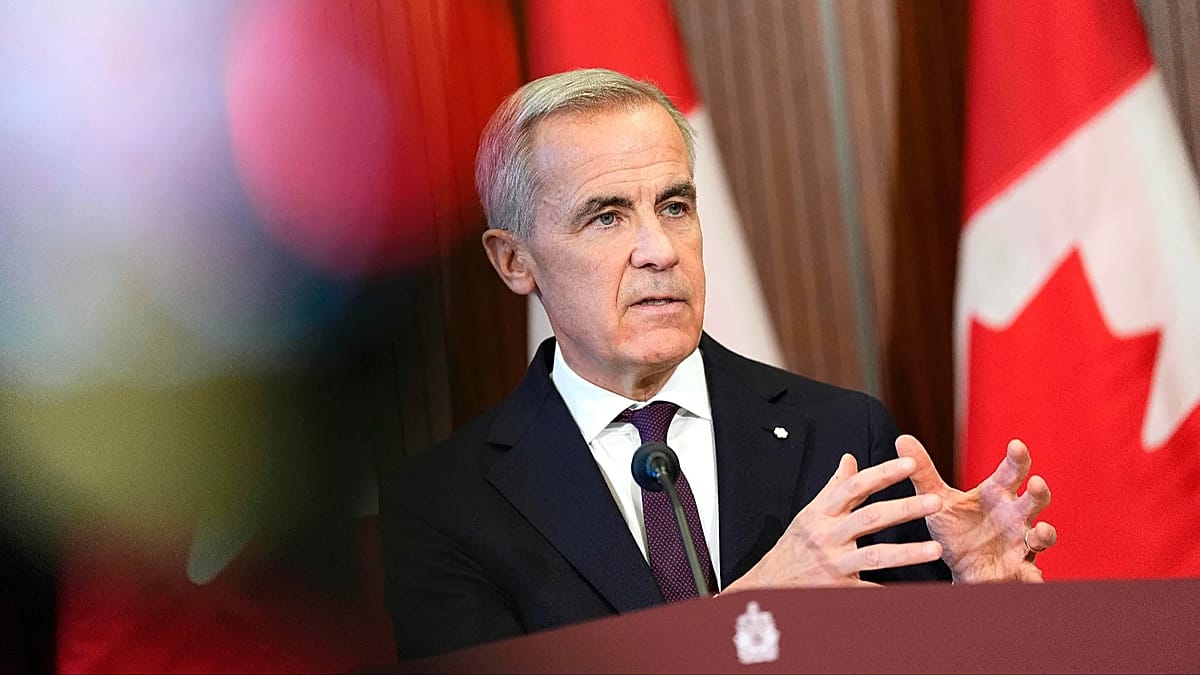
Canada’s $6.2 billion bet that the old order is dead
Prime Minister Mark Carney didn’t mince words on Wednesday. Washington had “upermanently altered” a trade relationship built over decades, and Canada was responding with its most aggressive industrial shield in modern history.
The numbers tell a story of rupture, not negotiation. Carney and Ontario Premier Doug Ford unveiled a package directing $3.7 billion to steelmakers and $1.8 billion to automakers over five years, with $1.1 billion of the auto funding coming directly from Ottawa. That leaves $700 million — or roughly 39 percent of the auto allocation — to be shouldered by provincial coffers, a split that already raises questions about implementation speed and political endurance beyond the next election cycle.
The announcement landed on the same day Cleveland-Cliffs confirmed layoffs at its Hamilton, Ontario, plant. The timing wasn’t coincidental. It was a visual reminder that this isn’t about future projections — it’s about human cost being counted right now, in the teeth of a trade war that shows no sign of thawing.
The auto sector is bleeding on both sides
The damage is already visible in the trade data. Canadian auto exports to the US have fallen more than 10 percent, while US exports to Canada have dropped more than 20 percent. Carney framed this as mutual harm, and the numbers support that reading. But the asymmetry matters: Canada’s economy is far more exposed to US demand than the reverse, which makes the government’s posture here a mix of genuine grievance and calculated defiance.
For US automakers, the calculus is becoming increasingly painful. The integrated supply chain that made North American car production one of the world’s most efficient manufacturing ecosystems is fracturing. Parts cross the border up to seven times during assembly. Each tariff hit raises costs across the entire chain, and the burden doesn’t fall evenly.
General Motors, Ford Motor Company, and Stellantis all have significant production in Ontario and Quebec. The tariffs hit their Canadian-costed components directly, squeezing margins at a time when the industry is already navigating expensive transitions to electric vehicles. The $1.8 billion shield helps, but it doesn’t recreate the conditions that made integrated production profitable in the first place.
What’s left of the borderless supply chain
Carney’s declaration that Canada will target doubling exports to non-US markets within a decade sounds ambitious. It also signals a fundamental reassessment. For thirty years, the implicit bargain was that open borders would lock in prosperity on both sides — Canada gets access to the world’s largest consumer market, and US manufacturers get seamless supply chains running north.
That bargain is broken. Carney acknowledged as much, and Ford went further: “No matter what happens in the midterms, no matter who sits in the White House, we’re not going back to the way things were.”
That last line is the most important one in the entire announcement. It’s not negotiation-speak. It’s a statement that Ontario’s political establishment has already written off the possibility of restoration under any foreseeable US administration. That changes the investment math for everyone operating in the region.
The midterm interference row adds a new dimension
The day took a sharper turn when the US Embassy accused Canada of meddling in next month’s midterm elections. Industry Minister Mélanie Joly was cited for discussing retaliatory tariffs targeting Republican states. Ford was named for running a US television ad featuring Ronald Reagan criticizing tariffs — the same ad that, according to the source, prompted Trump to walk away from trade talks in October 2025.
Both leaders rejected the allegations. So did independent analysts. Daniel Béland, a political science professor at McGill, called the assumption that Canada could significantly alter midterm outcomes “absurd.”
But the accusation itself matters more than its plausibility. It’s a deliberate escalation in rhetorical temperature, and it reframes a trade dispute as something closer to a diplomatic confrontation. Whether it’s genuine concern about electoral interference or a cynical diversion from the substance of the trade war, it raises the stakes for bilateral relations and makes any negotiation more politically costly for both sides.
The question no one is answering
Talks collapsed in August after Trump imposed 50 percent tariffs on roughly $20 billion in Canadian goods, prompting Canadian retaliation. Carney confirmed he spoke with Trump on Wednesday about trade, Iran, and the Middle East. No breakthrough was signaled.
The $6.2 billion package is a response to a broken system, not a bridge back to it. That’s the critical distinction. If the goal were reconciliation, the money would be directed toward lobbying, diplomatic engagement, and supply chain adaptation strategies aimed at keeping integrated production viable despite tariffs. Instead, it’s structured as defensive industrial policy — a shield against an adversary.
US automakers are the canaries in this mine. They built their North American operations on the assumption that the border between Canada and the US was economically invisible. That assumption is now formally dead, and the companies caught between two diverging trade policies face a choice: absorb higher costs, relocate production, or restructure around a less integrated continental model. None of those options are easy. All of them are expensive.
Carney’s signal is clear. Canada is preparing for a North America where the US is no longer the gravitational center of trade policy. The real test will be whether the rest of the continent — and especially the manufacturers who built their fortunes on integration — can adapt fast enough.