The Midterm Trigger: Why Iran War Timing Is Now a US Election Calculus
New reporting reveals Washington and Jerusalem are drafting a second-strike plan against Iran timed for after the November midterms. The political timetable — not just military readiness — has become the operating trigger.
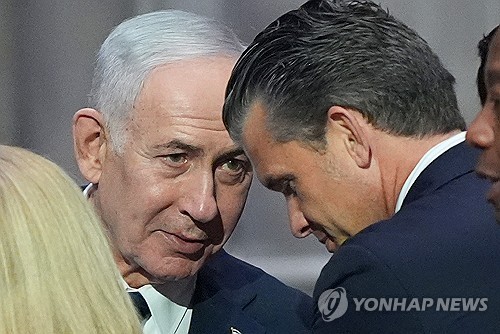
A Post-Election Strike Plan Is Now on Paper
The New York Times reported Monday that the United States and Israel have moved beyond vague contingency planning and are now drafting a concrete military operation against Iran — with the timing anchored not to battlefield conditions but to a single political date: the US midterm elections in November.
According to the report, which cited unnamed US officials, the two governments are developing a short, concentrated campaign aimed at degrading Iran’s remaining war-making capacity. The target list is severe: energy infrastructure, the nuclear facility at Kuh-e Khondab (the source material translates this as ‘곡괭이산’), and missile and drone forces. The implication is clear — this is not a raid. It is an attempt to finish what the February through April campaign started, when US and allied strikes hit Iranian military and nuclear sites across the region.
The political sequencing behind the plan is what makes this newsworthy beyond the usual strategic-analysis fare. Washington is not waiting for Iran to weaken further, nor for an Israeli crisis to force its hand. It is waiting for Americans to vote.
The Unannounced Visit That Was Not So Unannounced
Defense Secretary Pete Hegseth’s surprise visit to Israel on October 19 fits the pattern. On its face, a US defense chief descending on Tel Aviv without prior notice looks like the drama of personal diplomacy. In context, it looked like the operational coordination step between two militaries that have been circling the same target set for months.
Hegseth met with Prime Minister Benjamin Netanyahu. They discussed additional strike options. The timing was not accidental — it came just weeks before Israel’s own election on October 27, which introduces its own uncertainty into an already volatile equation. If Israel’s government shifts after that vote, a US-israeli synchronized operation could lose its political anchor at precisely the moment military planners want final alignment.
The report suggests the US and Israel are treating the midterms as a natural boundary. Hegseth’s early November timeline aligns with public statements from President Donald Trump’s administration that he will not authorize strikes before the election. That is the same Trump who, according to officials, has repeatedly vetoed the operation even as preparations reached their final stages — most recently early this month, when the president called off a planned launch at the last moment.
Who Benefits From Delayed Aggression
There are winners and losers baked into this timeline, and they are not always where you would expect.
For hawks in the Trump administration, the calculus is straightforward: Iran’s military and economic position has been degraded since the early-year strikes, but not destroyed. A second, heavier campaign now — after the midterm dust settles and carrier groups complete their positioning — could push Tehran to the negotiating brink. The hope is that exhaustion, not deterrence, produces concessions.
That logic depends on a chain of assumptions. It assumes Iran is brittle enough to break from a single additional blow. It assumes the Chinese and Russian response to a major escalation is manageable. It assumes the electoral reward for appearing tough abroad outweighs the domestic pain of oil-price spikes and inflation — precisely the same backlash that followed the first campaign.
The February through April strikes produced all of those consequences. Global oil prices surged. Inflation pressure returned in key economies. US missile-defense inventories took hits. Regional allies found themselves pulled into trajectories they had not planned for.
The Energy Market Reads the Calendar Differently
What Wall Street and London energy desks read from this reporting is not just that a strike is being planned, but that the market’s exposure window is being quantified in real time.
The US Strategic Petroleum Reserve, tanker routing through the Strait of Hormuz, and November natural-gas futures all move differently when a military timeline is attached to a fixed electoral date. Traders do not need to know whether the strikes will happen. They need to know when the decision date lands. That is November.
Three US carrier battle groups and Marine expeditionary units are not expected to be fully positioned in the Middle East until early November. That creates a hard logistical ceiling. Any operation before that date would require accepting incomplete force integration. That may be acceptable for limited raids. It is not acceptable for the kind of concentrated campaign the targets suggest.
The result is a narrow operational window — roughly the last ten days of November — during which military planners believe conditions align with political timing. If something disrupts that window — Israel’s October 27 election produces a hostile government, Iran moves assets to dispersed locations, or Trump reverses course again — the entire timeline fractures.
The Unspoken Risk Is Not Just Military
The most dangerous dimension of this planning is not what happens if the strikes proceed. It is what happens if they are delayed indefinitely.
An operation that is announced in planning terms, then suspended repeatedly by presidential veto, sends mixed signals to every actor in the region. Tehran interprets hesitation as space to rebuild. Jerusalem interprets it as unreliable partnership. Gulf states interpret it as American unpredictability — the very condition that makes long-term security commitments difficult to price.
Trump’s pattern is well established. He has publicly committed to not striking before the midterms while simultaneously approving operational preparations. That contradiction is not necessarily a bug. It is a feature of an approach that wants the benefits of deterrence without the costs of execution. But features accumulate. Each veto raises the question of whether the next one comes before or after the election.
What Happens Next
Several outcomes are plausible, and none is clean.
If Trump authorizes the strikes after the midterms, the region faces a second wave of escalation within months of the first. Oil prices spike again. Iran’s remaining forces scatter or retaliate asymmetrically. The diplomatic off-ramps that existed after April close further.
If Trump blocks the strikes again, or delays them indefinitely, the planning cycle itself becomes the message. Adversaries learn that US political calendars matter more than US military readiness. That lesson repeats until the next president decides whether to live with it or exploit it.
If Israel’s October 27 election produces a government unwilling to coordinate on strikes, the US-Israel operational alignment fractures at a critical moment. Hegseth’s visit was intended to lock in that alignment before the Israeli vote. Whether it succeeded is unknown.
The common thread across all scenarios is the same: the midterm election is no longer background noise. It has become a trigger date. That is unusual for military planning, which normally follows enemy movements and force availability. When the schedule follows voters, the result is a strategy that is part war game and part campaign calendar — a combination that rewards precision in intelligence and punishment in execution.
For markets, the takeaway is simple. The November timeline creates a visible risk window. For diplomats, it creates a visible decision point. For Tehran, it creates a countdown. All three read the calendar differently. None can ignore it.