Canada Fires Back With 50% Tariffs — Trump's Trade Leverage Meets a Wall
Canada has formally imposed retaliatory tariffs of up to 50% on US goods, doubling down on some steel and aluminum levies. The move marks a dramatic escalation in North American trade tensions and reveals the limits of Trump's tariff leverage on Canada's most vital trading partner.
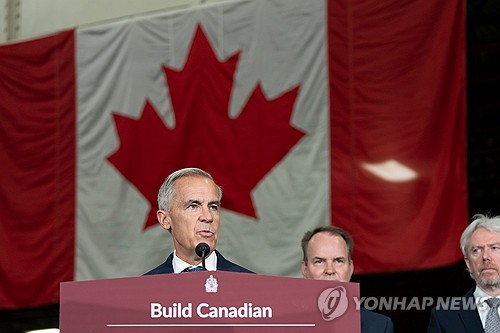
Canada Isn’t Blinking
Canada has formally enacted retaliatory tariffs of up to 50% on approximately $27.6 billion CAD (roughly $20 billion USD) in American goods, effective September 8 at midnight Eastern time. The move is a direct response to the US, which began applying 50% tariffs on about $20 billion worth of Canadian products starting September 22 — a sequence that has now flipped into a tit-for-tat spiral threatening to upend the world’s largest bilateral trading relationship.
The tariffs hit hard on familiar flashpoints. Canadian duties on certain US steel and aluminum products have doubled from 25% to 50%. An additional 25% now applies to some steel and aluminum derivatives, household appliances, dairy products including cheese, and fish and seafood. Industrial tools face a 15% levy.
Canada’s strategy is deliberately symmetrical. The government has publicly stated it is matching the US dollar for dollar and rate for rate — a precise mirror designed to transmit maximum political pain back to American constituencies. It is also carefully framing the measure as a defensive counterstrike, not an escalation, which matters for diplomatic optics even as the trade war itself intensifies.
The Targeting Is Calculated
This is not a scattergun approach. Canada’s tariff schedule was clearly engineered to strike where it hurts most in US political geography.
Steel and aluminum — the doubled 50% rate — target regions with significant manufacturing and political weight. Dairy and cheese bring pressure on states like Wisconsin and Vermont, where agricultural voters carry outsized influence. Seafood hits coastal districts with commercial fishing economies. Appliances and industrial tools reach into the rust belt and beyond.
The pattern is deliberate. Each category maps onto constituencies that form part of the Republican base or swing-state coalitions that any US president needs to manage. Canada’s message is unambiguous: we know exactly which votes this can disrupt.
What Canada Is Actually Trying to Do
Brian Clough, who served as an advisor on US-Canada relations during Prime Minister Justin Trudeau’s tenure, told Bloomberg that the objective is to make American businesses and consumers feel the cost of this trade war in their wallets — thereby creating domestic political pressure that forces Washington back to the negotiating table.
That framing is critical. Canada is not seeking to sustain a trade war indefinitely. The tariffs are a bargaining lever, not a long-term policy stance. The country’s economy is fundamentally asymmetric — the US absorbs roughly three-quarters of Canadian exports — so prolonged conflict would be self-destructive. Canada is betting that the pain will be sharper and faster on the American side than on its own, and that political pressure will arrive before the economic damage becomes irreversible.
It may be right. American steel producers benefit from protection but face higher input costs from downstream manufacturers. US dairy exporters lose a reliable, nearby market they cannot easily replace. Food processors and appliance makers absorb margin compression that does not sit well with shareholders or workers alike.
Who Loses First
US exporters are the immediate casualties. The $20 billion in Canadian goods now subject to steep American tariffs has already disrupted supply chains, particularly in energy and raw materials where Canada is the single largest foreign supplier. Those same supply chains now face a reciprocal wall on the way south.
Automakers are the canary in the coal mine. Steel, aluminum, and auto parts cross the border repeatedly during production. A 50% tariff on either side adds a friction cost that erodes the competitive advantage of integrated North American vehicle manufacturing — the very model the USPTA and subsequent agreements tried to lock in. Even before full implementation, inventory rerouting and order delays have been reported across the sector.
Small and mid-tier US producers lack the scale to absorb the hit or diversify export markets quickly. For those businesses, the tariff is not a negotiating chip — it is a direct margin event.
The Broader Signal
Canada’s response carries implications beyond the bilateral relationship. It is the first major ally to respond to Trump’s tariff regime with a measured but unequivocal escalation of this magnitude, and it is doing so on its own terms rather than waiting for Washington to blink first.
Mexico, the other pillar of USMCA, has not yet matched Canada’s tariff intensity. That divergence matters. If Ottawa demonstrates that retaliation can be calibrated, precise, and politically damaging without triggering a full blowback, it changes the calculus for every other US trading partner watching from the sidelines.
European Union officials are already monitoring the situation closely. The EU has faced its own tariff confrontations with the US and has been debating whether to respond with targeted measures or to pursue a different strategy. Canada’s move provides a live case study in what symmetric retaliation looks like in practice — and whether it actually changes American behaviour.
What Happens Next
The tariffs are now law in both countries. The question is timing and political response. US businesses are likely to begin lobbying intensively, particularly from sectors directly exposed to Canadian duties. Congressional pressure will follow, especially from affected districts.
Canada’s government faces its own constraints. The economic damage from reciprocal tariffs will not be zero-sum, and Ottawa will be keen to de-escalate at the earliest viable moment — but only after it has extracted concessions that appear tangible to domestic audiences.
Negotiations could begin immediately, or they could stall. What is clear is that the tariff wall between the two countries is now a structural feature of the trading relationship, not a temporary posture. Every day it remains in place, supply chains adjust, contracts are rewritten, and alternative sourcing patterns begin to emerge.
Trump’s original bet was that tariffs alone would compel concessions from Canada. The evidence so far suggests the opposite: that tariffs have produced a harder, more organized, and more politically calibrated response from America’s closest neighbour. The trade war has moved from threat to reality. The next phase will determine whether it ends at the negotiating table — or deepens into something more consequential.