Trump's Diesel Bargain With Putin Undermines Sanctions
Trump's move to ease sanctions on Russian diesel looks like a price-lowering stunt, but it also signals a weakening of Western sanctions architecture and raises uncomfortable questions for Kyiv.
A Deal That Looks Like Pressure, Felt Like Surrender
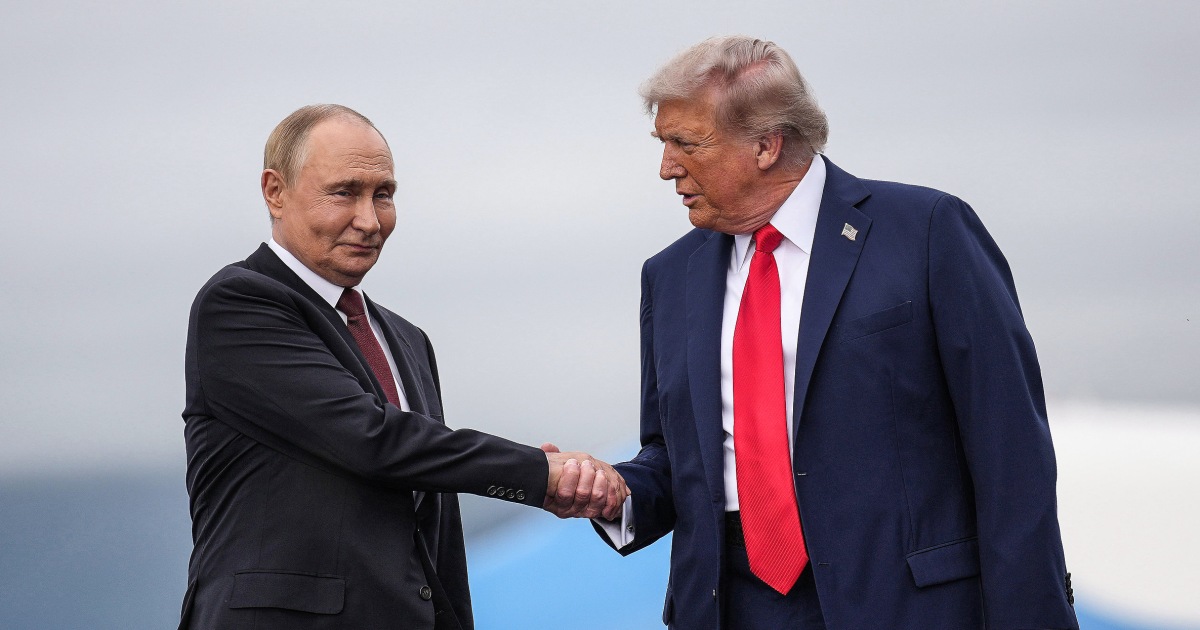
Donald Trump announced on Truth Social on Friday that Vladimir Putin would “immediately” release hundreds of thousands of tons of diesel onto the global market, a move the Treasury Department backed with a temporary general license lifting sanctions on Russian diesel fuel through April 7, 2027. The immediate effect was a 4 percent drop in diesel futures. The long-term effect may be harder to see: a precedent where the United States treats its own sanctions framework as a flexible commodity, loosened the moment prices inconvenience voters.
Diesel has surged nearly 70 percent since the start of the Iran war in February 2026, and repeated all-time highs followed escalating Russia-Ukraine fighting. Brent crude was essentially flat at $104 a barrel. The markets heard the headline, took a shallow breath, and moved on.
This is not the first time Trump has attempted this playbook. The Treasury Department issued a series of 30-day sanctions waivers for Russian oil on the water earlier this spring. They expired. Prices continued climbing. If history is any guide, today’s relief will look like political theater in three months.
What American Media Is Missing
US coverage has centered on the political calculus: inflation, midterms, and the personal diplomacy between Trump and Zelenskyy. That framing misses the structural story. By issuing a temporary general license that explicitly authorizes importation into the United States of Russian-origin diesel, the Treasury is not simply facilitating a one-off supply increase. It is normalizing the idea that sanctions on Russian energy can be toggled on and off at the whim of a price spike.
General licenses are not ad hoc waivers. They apply across the board. Any trader with the capital and the logistics can move Russian diesel to American ports under this authorization. That is a far more significant erosion of the sanctions architecture than a case-by-case exemption would be.
The timing compounds the problem. Ukrainian negotiators had just departed for the United States for a new round of peace talks. Special envoy Steve Witkoff and Jared Kushner were expected to lead discussions. Whether those talks proceed remains unclear. But the optics are unambiguous: Washington is offering concessions to Moscow at the same moment Kyiv is asking for political will.
Zelenskyy’s Diagnosis Was Blunt
Volodymyr Zelenskyy did not mince words. He called the sanctions easing “an obvious weakness” and argued it plays into Russia’s hands, allowing it to “kill more, wage war for longer, have even less respect for America, and inflict even greater losses and damage on the world.”
That last phrase is worth sitting with. Zelenskyy is not just describing a tactical grievance. He is describing a strategic consequence: every time the United States blinks on sanctions, Russia recalibrates its assessment of American resolve. The message is not lost in Moscow.
Zelenskyy also pushed back on Trump’s claim that he and Putin had agreed on September 14 to stop targeting energy infrastructure. He said he would only halt strikes on Russian oil and gas targets if Russia agreed to the same. The Kremlin has, in fact, increased its targeting of Ukrainian cities and critical infrastructure this summer and fall.
Trump’s public pleas to Zelenskyy to stop bombing Russian diesel refineries — “Got to stop,” Trump told reporters — framed a wartime strategy as a consumer pricing issue. The equation is reductive and revealing: Ukrainian military action is, in Trump’s telling, a variable in diesel margins.
The Real Cost Is Not On the Pump
The most important number in this story is not the 4 percent futures drop or the 70 percent year-over-year spike. It is the fact that diesel remains up more than 110 percent since the start of 2026, and crude has barely moved. The sanction relaxation is a bandage on a hemorrhage.
But the deeper cost is institutional. The post-2022 sanctions regime against Russia was built on the premise that energy exports would be systematically constrained, forcing Moscow to either adapt its economy or negotiate. Easing those constraints because domestic prices rise flips the logic: sanctions are no longer a tool of foreign policy but a lever to be pulled when politically convenient.
That flip matters beyond the current administration. Future presidents, Democratic or Republican, will inherit a sanctions framework that traders and adversaries alike now understand as conditional. The credibility premium of American sanctions — the reason they compress Russian revenues despite vast smuggling networks — depends on predictability. Today’s general license erodes that predictability.
Who Wins, Who Loses, What Comes Next
Russia wins. It gains access to American markets at a time of its own export ban, and it receives a signal that pressure is temporary. Indian and Turkish traders who have built parallel supply chains will also benefit from the clarified legal pathway into the United States.
American diesel refiners with access to Russian cargoes win, at least temporarily. Consumers may see a fractionally lower pump price for a few weeks. But the macro trajectory of energy inflation is unchanged, and the political cost falls on anyone who supported the original sanctions regime.
Ukraine loses. Its military strategy is reframed as a market distortion. Its negotiating position is weakened just as envoys arrive in Washington. And its ally is signaling, through action if not through words, that energy sanctions are negotiable.
What comes next depends on whether this general license becomes routine or remains exceptional. If subsequent price spikes trigger similar relaxations — for crude, for natural gas, for other Russian commodities — the sanctions architecture collapses into a series of temporary accommodations. If it stands as a one-off tied to a specific supply disruption, it still leaves a crack in the foundation.
The markets already know which outcome they prefer. The question is whether policymakers do.