Canada-US Tariff War: How North America's Supply Chains Survive a 50% Shock
The collapse of trade talks and the imposition of 50% tariffs between the US and Canada marks the sharpest rupture in North American commerce since the Cold War. What looks like a bilateral spat is already sending shockwaves through auto manufacturing, energy policy, and alliance economics — and every major trading power from Brussels to Beijing is watching closely.
The Deal That Never Was
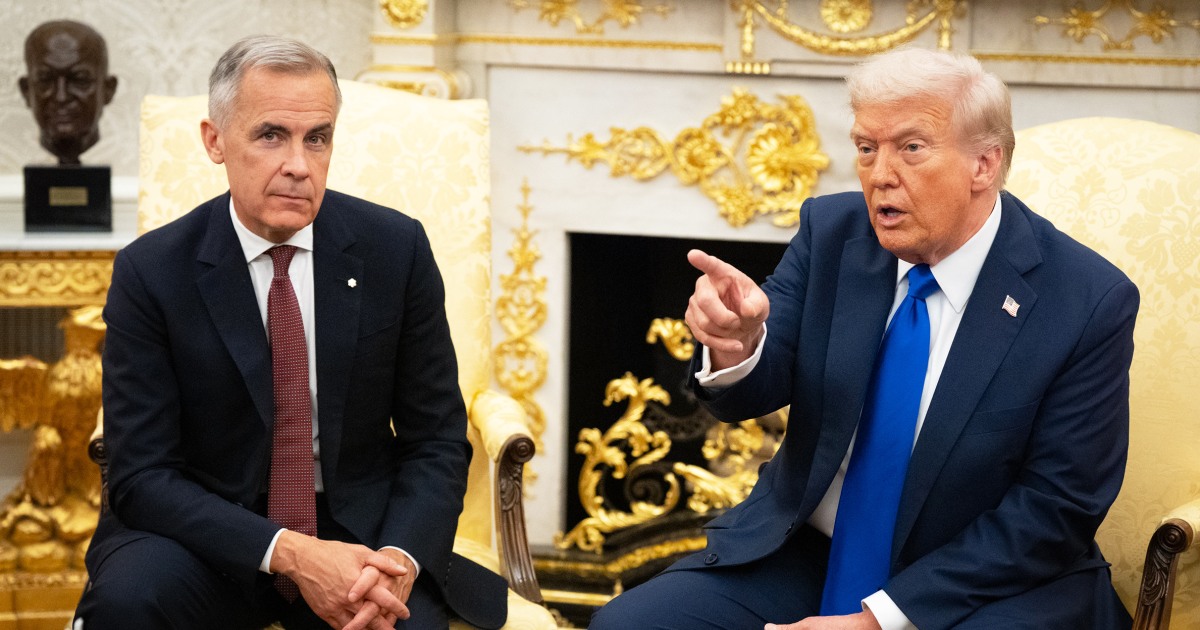
Trade negotiations between the United States and Canada ended late Friday night in a way that should concern every reader of markets and supply chains. Prime Minister Mark Carney announced the suspension of talks, declaring that last-minute changes to the American proposal were “unfair, uneconomic” and undermined the reliability of any future agreement. Within hours, 50 percent tariffs took effect on approximately $20 billion in Canadian goods crossing into the United States.
What makes this moment structurally distinct from the tariff sparring of 2018 is not the volume or the headline rate. It is the legal mechanism behind it. The Trump administration deployed Section 338 of the Tariff Act of 1930 — a statute never before used — to justify duties against a country that, under the very agreement Trump himself signed, should be shielded from such action. The United States-Mexico-Canada Agreement was supposed to lock in predictability. Section 338 just broke it.
Canadian Trade Minister Dominic LeBlanc had left the USTR office Thursday evening telling reporters, “We’re very close.” That optimism evaporated by Saturday morning, when USTR Jamieson Greer accused Canada of reneging on commitments and maintaining provincial bans on American alcohol. Greer did something unusual: he publicly compared Canada to China. “I’ve got two countries in the world that have retaliated against the United States for trade measures,” he said. “That’s not the kind of company you really want to be running in.”
The comparison was calculated. It was also historically careless.
Who Actually Pays
The political theater of tit-for-tat rhetoric obscures a basic arithmetic problem. Fifty percent tariffs on Canadian imports do not tax Ottawa. They tax Detroit, Milwaukee, Buffalo, and every American consumer who buys building materials, liquor, hockey equipment, or clothing that originated south of the border. The U.S. Chamber of Commerce put the number at 13 million jobs tied to the USMCA. The Canadian Chamber of Commerce said Americans would see their costs rise while Canadians watch customers and investment disappear.
The auto industry is already moving. Canada is not merely a neighbor; it is a node in the integrated manufacturing system that makes modern vehicles possible. Parts cross the border up to seven times during assembly. A 50 percent duty on Canadian steel, aluminum, and auto components does not create leverage — it creates a production stoppage. Japanese automakers with plants in Ontario, German companies supplying components across the Great Lakes, and American brands sourcing parts in Windsor are now recalculating whether they can absorb the cost or must exit the market entirely.
Carney’s government has promised dollar-for-dollar retaliation. That is politically resonant in Ottawa and will play well in provinces like Manitoba, where Premier Wab Kinew urged the federal government to “fight.” It will also raise prices for American farmers and manufacturers who sell into Canada. The question is not whether Canada will hurt the United States back. The question is whether the damage will accelerate before it plateaus.
The Provinces Are the Real Story
Any analysis that treats Canada as a unitary actor misunderstands the pressure inside the country. The federal government is negotiating with 13 provincial governments that control their own economic portfolios. Quebec Premier Christine Fréchette told CBC she was still analyzing the request to lift alcohol bans. Ontario Premier Doug Ford, who leads the most populous province, waited until after the announcement to post on X: “The prime minister has my full support for a strong response — tariff for tariff, dollar for dollar.”
That sequence matters. Ford did not endorse the position preemptively. He endorsed it only after the talks collapsed. Provincial premiers are not rubber stamps in trade disputes. They are the people who feel the impact of lost export revenue in their constituencies. If Carney’s government cannot hold a coalition together over tariffs, the next round of escalation will not be between Washington and Ottawa. It will be between Washington and the provinces, each one making separate deals or breaking them on its own terms.
What the World Is Watching
Every major trading power is reading these events as a test case. China watched Trump raise tariffs into triple digits against its retaliation and then negotiate a de-escalation. The difference now is that Canada is not China. It is an ally, a treaty partner, and a neighbor that shares the most militarily defended border in human history. The signaling value of punishing a treaty ally with a novel legal tool is not lost on allies from Brussels to Tokyo.
Europe has spent years trying to rebuild transatlantic trade coherence after the Trump administration’s steel tariffs of 2018. Those disputes were resolved through negotiation and temporary truce. The Section 338 move against Canada suggests that resolution is no longer guaranteed. If the United States can unilaterally reinterpret a trade agreement with its closest partner, what obligation remains to the European Union?
Asia is calculating something else. China and India and Vietnam are all watching whether the United States can sustain a strategy of punishing its own supply chains. The argument Trump makes is that coercion produces better deals. The argument history suggests is that coercion produces fragmentation. The auto industry is the first sector feeling the friction. Energy, agriculture, and technology will follow.
The Legal Challenge Is Inevitable
Legal experts and trade lawyers in both Washington and Ottawa agree: the tariffs will face immediate challenge in court. Section 338 has never been used. Its deployment requires a finding that a foreign nation is “discriminating” against U.S. commerce. Canada has not discriminated against American goods in any formal trade barrier sense — it has imposed retaliatory tariffs in response to prior American actions, which is standard practice under the WTO framework. The USTR’s own description of the duties as “payback” undercuts any legal argument that the statute’s ordinary criteria are being met.
A court ruling that the administration exceeded its statutory authority could invalidate the tariffs before they meaningfully affect commerce. A court ruling that the administration acted within its authority would set a precedent that reshapes American trade law for decades. Either outcome creates uncertainty. Markets hate uncertainty more than they hate bad outcomes.
What Happens Next
Carney’s statement contained a line that deserves attention: “Canada has what the world wants. And we will not allow any nation to determine our future.” That is a pivot, not a threat. It signals that Canada will accelerate diversification away from the United States — deepening trade ties with the European Union, pursuing stronger links with Indo-Pacific partners, and investing in sectors that reduce dependency on American demand.
The United States faces the mirror image. If Canada diversifies, American exporters lose their largest market. If Canada aligns with Europe on standards and regulations, American companies lose influence over the rules that govern the goods they sell. The auto industry already has contingency plans. Other sectors are still formulating theirs.
Negotiations are suspended, not dead. But the next round will not begin under the same assumptions. The United States entered talks offering “significant tariff reductions on steel, aluminum, autos, and lumber” while simultaneously imposing 50 percent duties it has no legal precedent for defending. Canada entered talks demanding the Section 338 tariffs be dropped entirely. Those positions are incompatible without a framework neither side currently trusts.
The most consequential consequence of this tariff war is not the price of lumber or the cost of American groceries. It is the erosion of the institutional architecture that made North America the most integrated economic zone on earth. Once that architecture is questioned, it does not snap back. It fragments. And fragmentation is a slow process that feels sudden right before it happens.